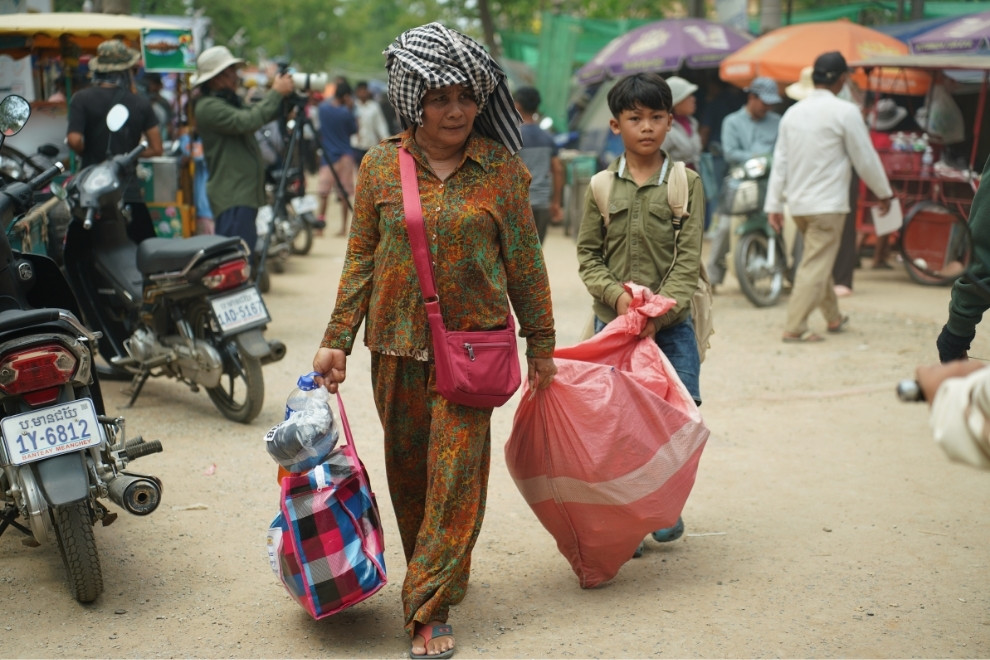
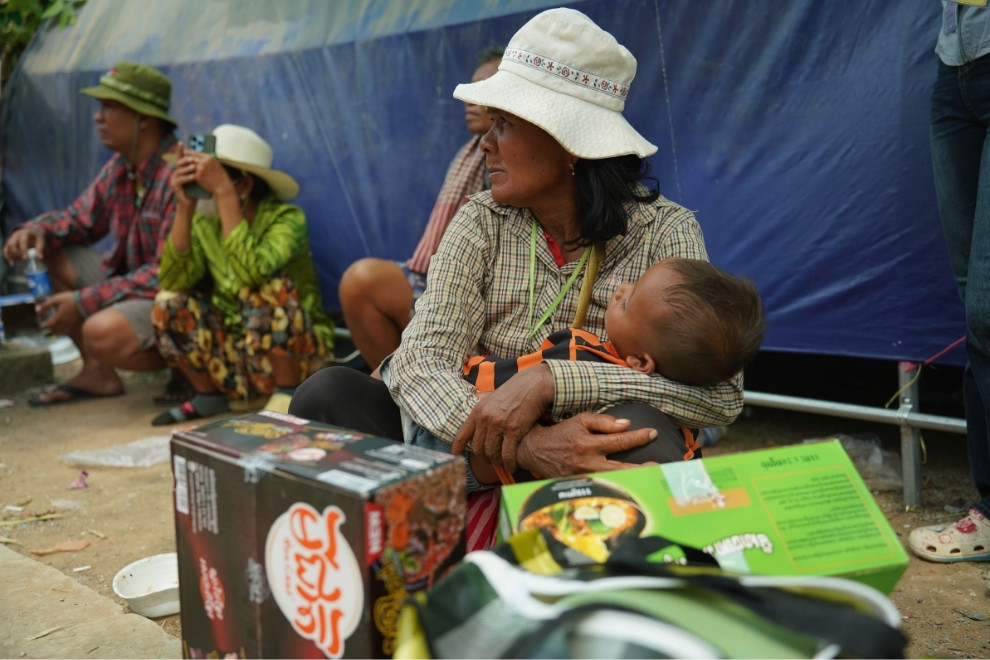
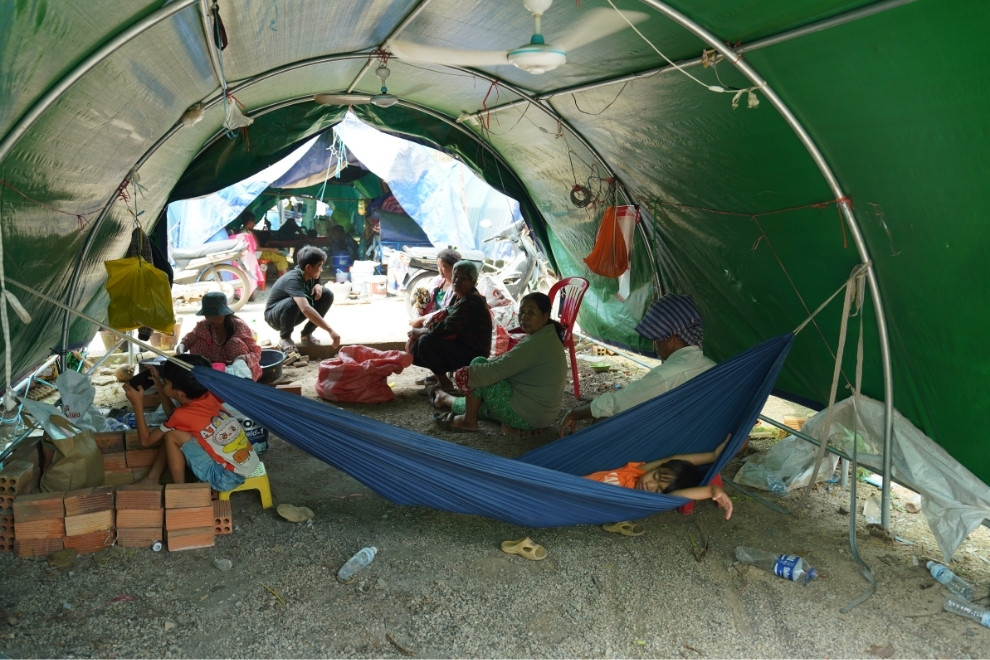
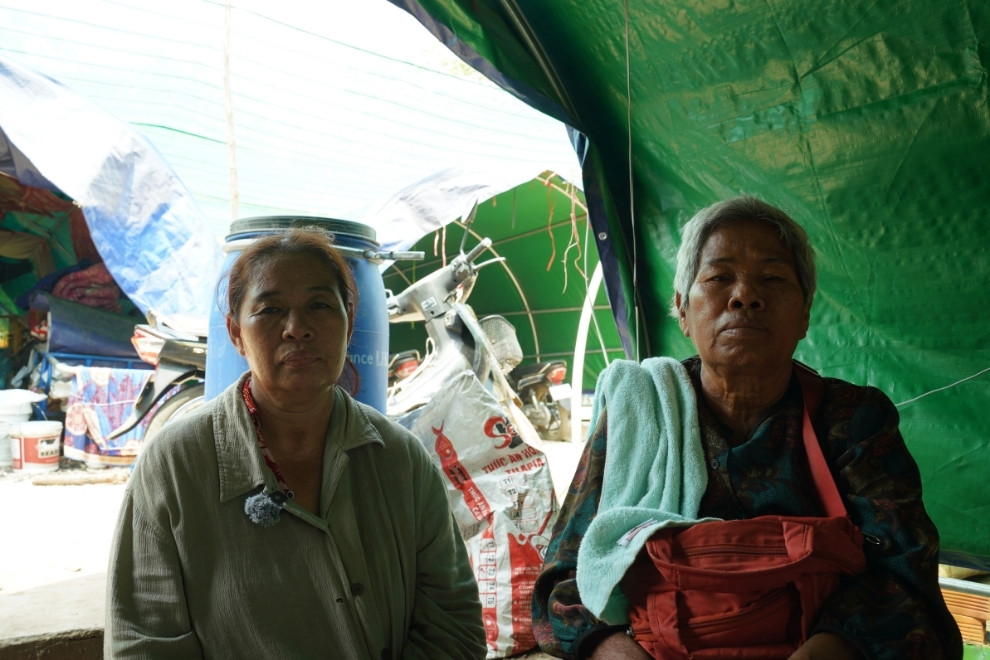
Inside a small tent at Wat Kandoul displacement camp, 56-year-old Chhou Toch sits quietly, thinking about the house she had just finished building less than a month before it was lost in the recent border clashes.
For the past three months, she has lived as a displaced civilian — months marked by hardship and longing.
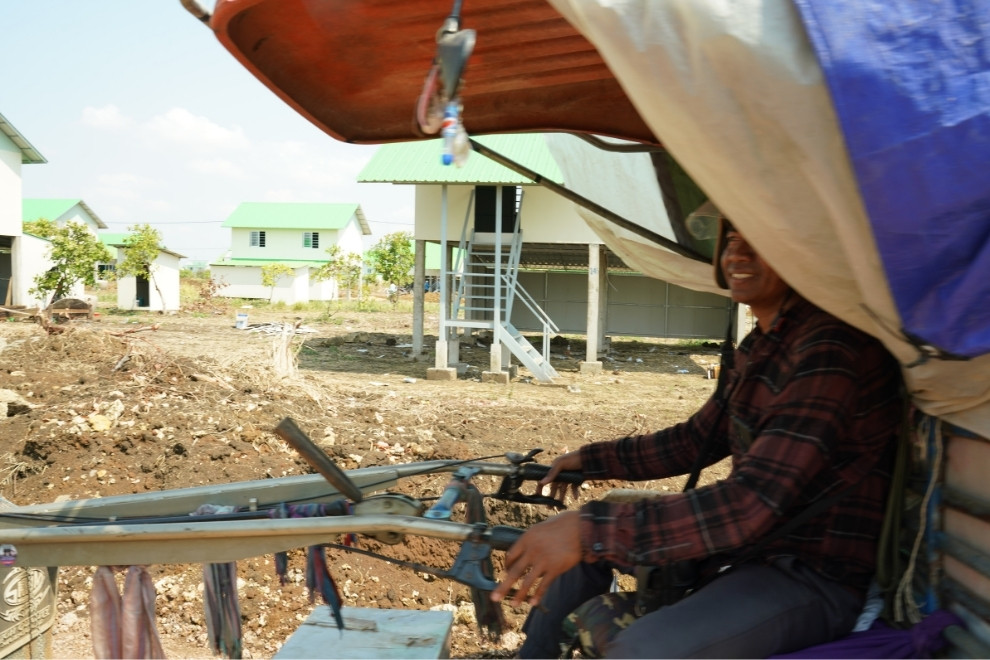
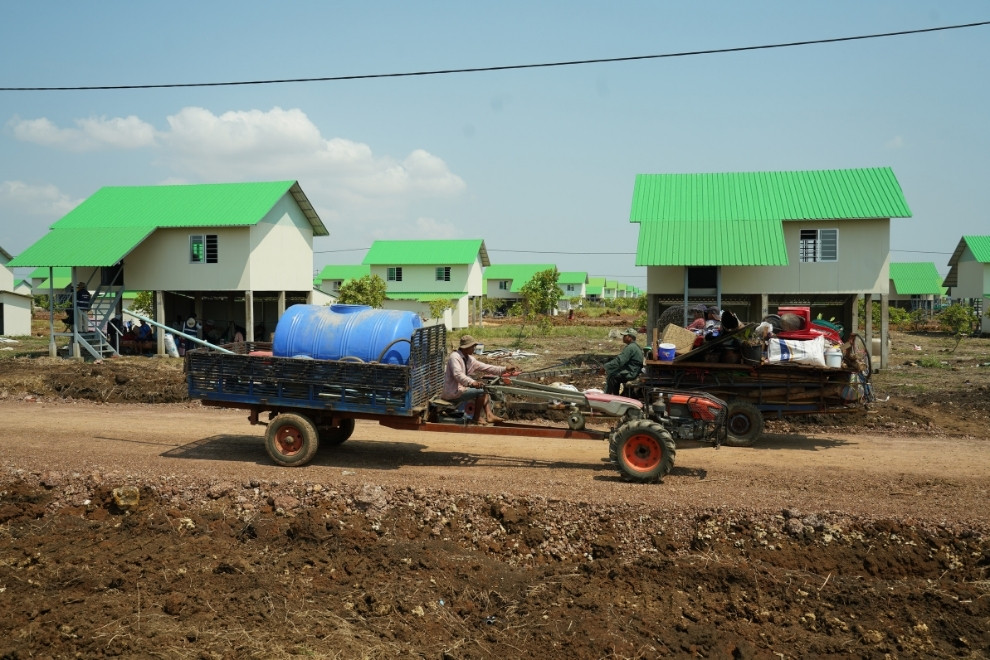
The recent move from makeshift tents, exposed to heat and flooding, into newly built shelters has brought some relief.
But as Sangkranta approaches — a time traditionally reserved for family reunions and home preparations — the contrast has been stark.
“We used to clean the house and the children would play happily. Now, there is nothing,” she said.
The home she spent nearly her entire life saving for is now gone.
“I worked since I was young, almost 60 years, to have a house. Now it’s all gone,” she added.
Most of her family members are migrant workers in Thailand, still struggling with debts and unable to return. At the relocation site, Toch plans to grow vegetables to sustain herself, despite an uncertain future.
Nearby, Liem Kim Seng, who fled with his family, said he intends to continue farming to earn a living. But his goal remains unchanged — to return home.
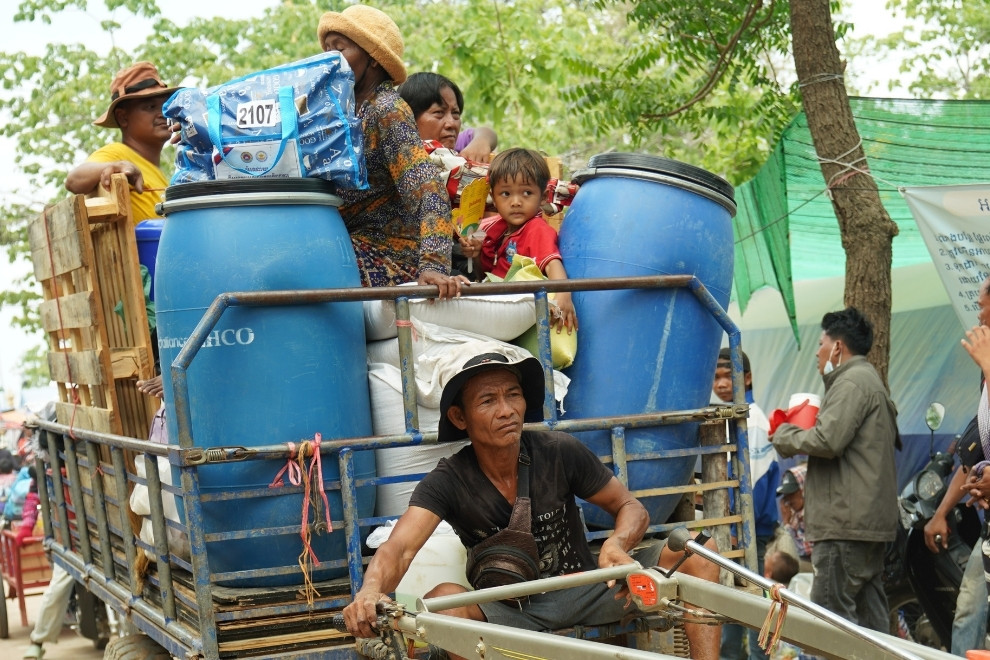
“When I get to the new temporary shelter, I will be able to work as a cashew nut harvester, potato harvester and weed remover, which I did in the past,” he told The Post.
For 10-year-old Oun Sreylak, the wish is simple: “I want to go home and return to school.”
Rim Lay Khim, a small shop owner, lost both her business and belongings after stocking up goods ahead of Celebration of New Year 2026.
“I had just bought supplies three days before the fighting broke out. Everything was destroyed,” she said.
Despite having a chance to save her possessions, she chose instead to help neighbours — including a pregnant woman — flee to safety.
“I couldn’t take my things and leave people behind,” she told The Post.
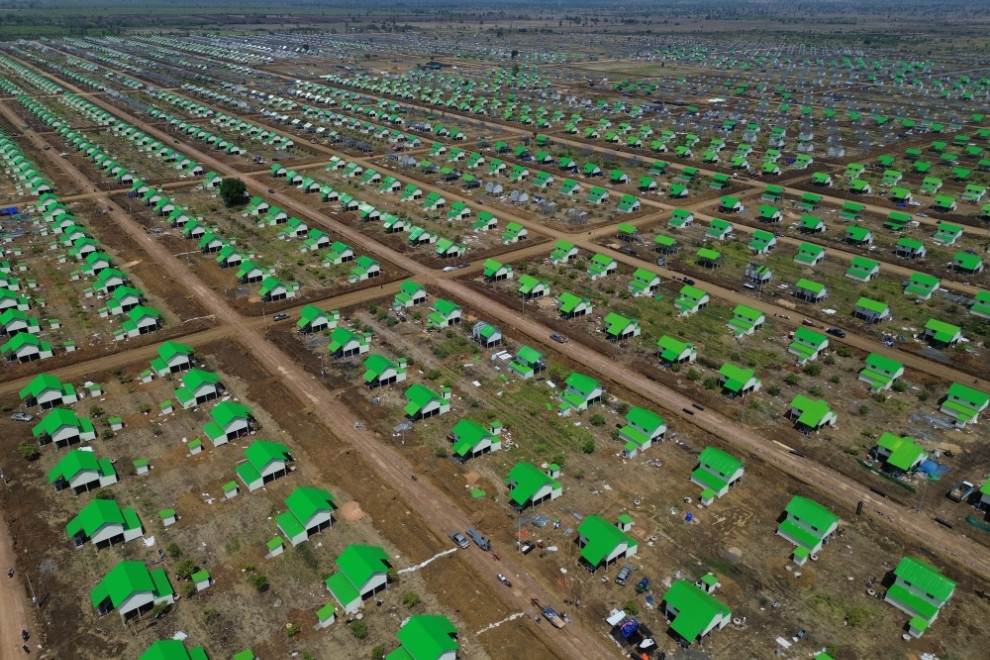
According to authorities, more than 800 displaced families have been relocated in the first phase to temporary shelters in Svay Chek district.
Over 300 houses have already been completed, with plans to reach 3,000 units before the New Year. The sites are equipped with water, electricity, schools and health centres to support temporary living conditions.
“The second phase of the lottery will be held on April 10. Each temporary housing unit allocated to displaced families will measure 20 by 30 metres and include a bathroom,” explained Khlok Nuoy, deputy governor of Banteay Meanchey Province.
He added that, to support displaced residents, the government will subsidise water and electricity costs for one year, with household electricity usage capped at 30 kilowatts per month.
However, officials stress that these are only interim solutions, as the government continues to pursue peaceful resolution efforts while safeguarding territorial integrity.
Despite a ceasefire, tensions remain in the Boeung Trakuon area. Authorities report that around 292 hectares of land and more than 1,365 houses remain under occupation, while over 6,000 residents have been forced from their homes.
The Ministry of Foreign Affairs and International Cooperation has reported seeing smoke rising from certain occupied areas, believed to be civilian homes, and has lodged repeated diplomatic protests over actions seen as violating Cambodia’s sovereignty.
Amid the uncertainty, efforts are underway to ensure displaced communities are not left behind during the New Year period.
A three-day Sankranta event will be held at relocation sites across Siem Reap, Banteay Meanchey and Preah Vihear from March 29 to 31, ahead of the large-scale Nokor Sankranta celebrations in Phnom Penh in mid-April.
Hun Many, president of the Union of Youth Federations of Cambodia (UYFC), said the organising team — joined by private sector representatives, artists and comedians — will visit displaced communities to bring encouragement and a sense of celebration.
As of March 22, out of more than 640,000 displaced people, over 610,000 — representing more than 94 per cent — have returned to their homes.
However, 36,320 people remain unable to return, including 18,805 women and 12,292 children.
The decision to proceed with large-scale festivities has sparked public debate, with some critics arguing that such events risk overshadowing ongoing border tensions, where troops remain deployed and civilians are still unable to return home.
In response, Many reaffirmed that both frontline soldiers and affected communities would be meaningfully included in the celebrations.
Funds raised from UYFC product sales — including mascot merchandise and keychains featuring frontline soldiers — along with private sector contributions, will be used to support both troops and displaced families. Additionally, 10,000 kramas will be distributed.
For Toch and many others, the new shelters offer temporary protection, but cannot replace what has been lost.
“We don’t just want shelter,” she said. “We want our homes back.”
Cambodian Prime Minister Hun Manet stated that providing temporary shelter to displaced people who are not yet able to return home is a measure to ensure their well-being and living conditions. However, this does not mean that the government is relinquishing its territorial claims.
The government maintains a firm and resolute stance in safeguarding territorial integrity and continues to pursue peaceful solutions through diplomatic channels.