A global agreement aimed at preventing future pandemics risks being delayed as disputes over equitable access to vaccines and treatments intensify, with health advocates in Cambodia urging European leaders to drop resistance to binding commitments.
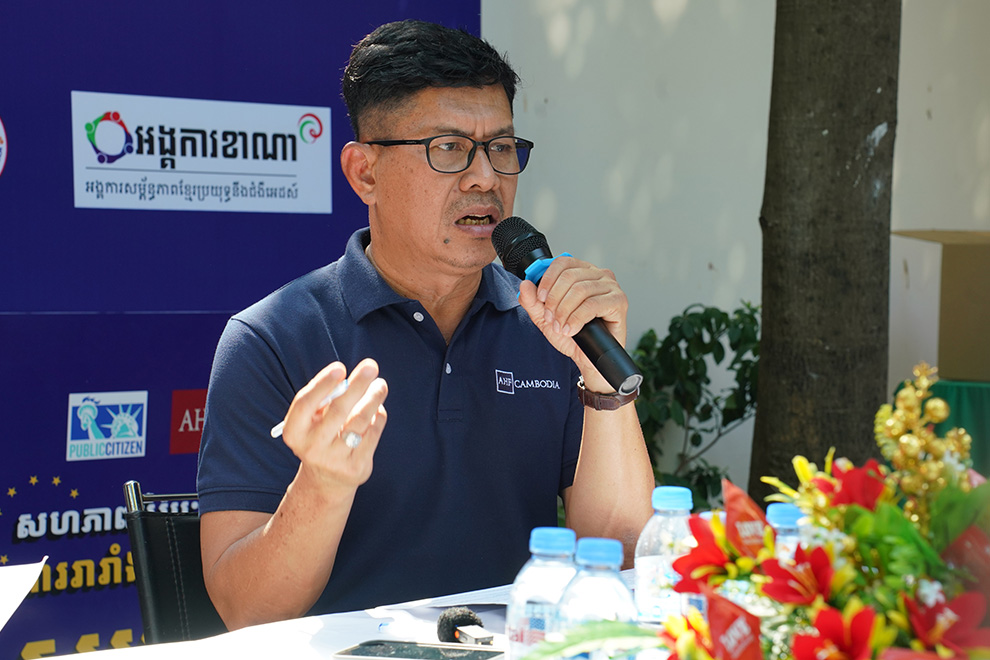
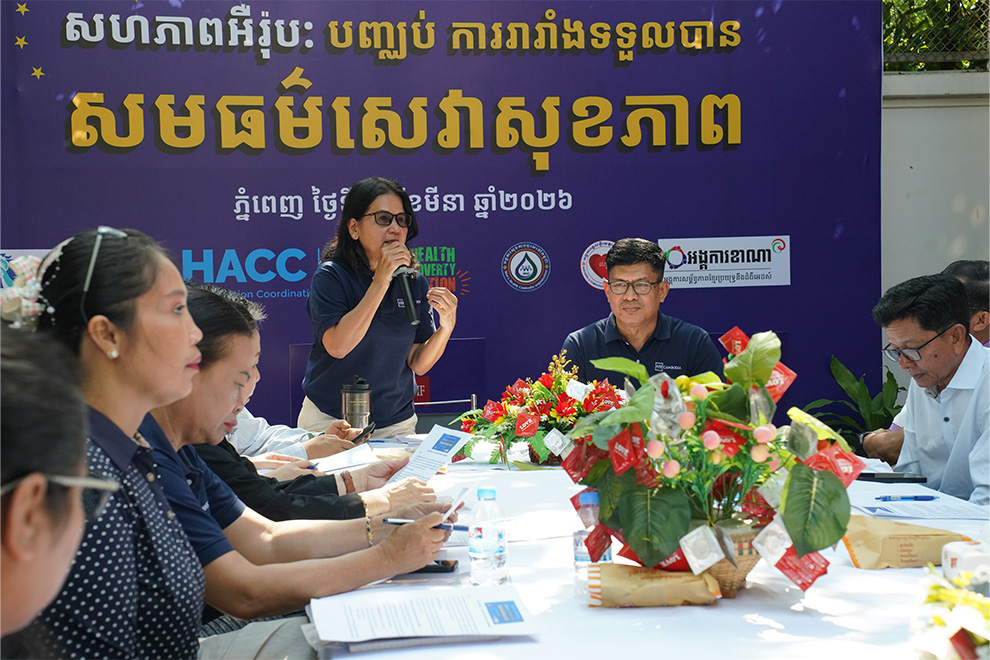
During the March 18 “EU: Stop Blocking Health Equity” press discussion in Phnom Penh, the AIDS Healthcare Foundation (AHF) called on the European Commission to support stronger equity provisions under the pandemic accord negotiated through the World Health Organization.
The agreement, adopted in May 2025 in the wake of the Covid-19 crisis, cannot move forward until a key component — the Pathogen Access and Benefit-Sharing (PABS) Annex — is finalised, participants said.
“The pandemic agreement cannot be ratified without the PABS Annex, and this Annex should not be approved without binding equity provisions,” said Dr Chan Phanna, AHF Cambodia country programme manager.
He warned that approving a weak annex would risk repeating the failures seen during Covid-19, when poorer countries struggled to access life-saving vaccines despite contributing to global research efforts.
The PABS system is intended to govern how countries share pathogen samples and genetic data used to develop vaccines, diagnostics and treatments, as well as how benefits from those innovations are distributed.

However, negotiations remain deadlocked over whether those benefits should be legally binding.
According to AHF and other public health advocates, several high-income countries — including Germany and Switzerland — have resisted provisions that would require pharmaceutical companies and other commercial users to share profits, technology or supplies.
“This cannot be a system of extraction,” Phanna said.
“Those who benefit must also contribute, through mandatory mechanisms that ensure fairness and accountability,” he added.
The debate reflects broader tensions between developed and developing countries over access to health technologies, a fault line that became highly visible during the Covid-19 pandemic.
While lower-income nations shared virus data early, they were often last in line for vaccines and treatments.
Participants at the Phnom Penh meeting stressed that without enforceable rules, countries may be reluctant to sign or ratify the agreement, effectively stalling its implementation.
“If we do not know who is accessing the system, we cannot hold them accountable,” Phanna added, calling for mandatory user registration and traceability requirements to prevent abuse.
Civil society representatives also underscored the need for greater transparency and inclusion in the negotiation process, warning that sidelining community voices could weaken trust in the final agreement.
With a May 2026 deadline approaching, health advocates cautioned that failure to reach consensus could undermine global pandemic preparedness and delay efforts to strengthen regional manufacturing capacity in developing countries.
“Without equitable benefit-sharing, regional production and health sovereignty risk becoming hollow promises,” Phanna said. “A weak annex puts all countries at risk.”
The AHF, which provides HIV/AIDS care to more than 2.8 million people across 50 countries, said it would continue advocating for a legally binding framework to ensure that future pandemic responses are more equitable and effective.