



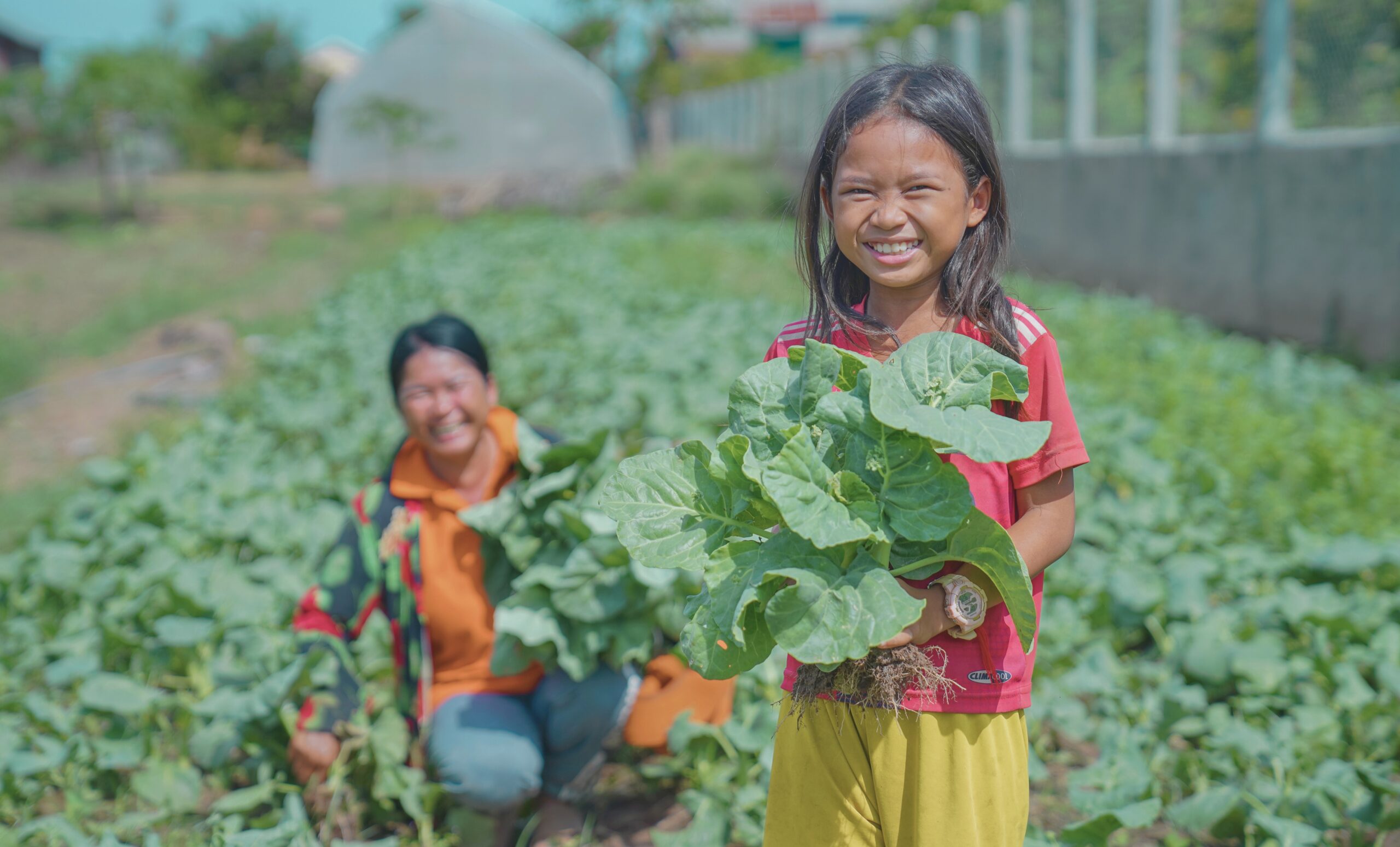
A new Australia-funded agricultural initiative aimed at strengthening climate resilience and promoting social inclusion was officially launched in Kratie province on February 5, with more than 9,000 people expected to benefit from improved farming systems and market access.
The Building Climate-Adaptive Solutions through Inclusive Market Networks (BASIN) project is being implemented by World Vision International in Cambodia with support from the Australian government through the Mekong-Australia Partnership.
Running until April 2029, the programme seeks to build inclusive, climate-resilient agricultural value chains while empowering women, persons with disabilities and marginalised households.
According to World Vision, the initiative will directly support communities in the districts of Prek Prasob, Sambor and Snuol, reaching more than 2,100 women, nearly 500 persons with disabilities and about 4,700 children.
Speaking at the launch ceremony, World Vision Cambodia national director Janes Imanuel Ginting noted that the project aims to reshape agricultural markets so vulnerable groups can take on leadership roles rather than remain on the margins.
“BASIN goes beyond increasing agricultural productivity,” he said.
“This project is about transforming market systems so that women, persons with disabilities and marginalized households are no longer left behind, but are recognised as leaders and drivers of inclusive, climate-resilient value chains,” he added.
The initiative forms part of a broader regional effort spanning Cambodia, Laos and Vietnam to strengthen economic integration and climate resilience across the Mekong subregion.
Australia reaffirmed its commitment to sustainable development through the partnership.
Nikki Wright, first secretary (development) at the Australian Embassy in Thailand, said the programme reflects shared priorities between Australia and Mekong countries.
“Australia is proud to support initiatives like BASIN… to enhance climate resilience, promote inclusive economic development and advance gender equality, disability equity and social inclusion,” she said, adding that growth in the subregion should be “inclusive, sustainable and driven by the voices and priorities of local communities”.
Provincial authorities welcomed the initiative, noting that agriculture remains central to Kratie’s economy despite mounting environmental pressures.
Deputy provincial governor Hang Chandy described the project as timely support for farmers grappling with climate risks and market uncertainties.
“Agriculture is the backbone of Kratie’s economy, but our farmers face increasing climate risks and market challenges,” he said.
“BASIN brings timely support by linking farmers to markets, promoting climate-smart practices, and ensuring women and persons with disabilities can fully participate in and benefit from economic growth,” he added.
Officials from the Ministry of Agriculture, Forestry and Fisheries also highlighted the project’s alignment with national priorities.
Minitry undersecretary of state Chan Phalleon said the initiative complements Cambodia’s agricultural development strategies, particularly efforts to promote climate-smart farming, strengthen cooperatives and improve value chain competitiveness.
The project is expected to support the implementation of Cambodia’s Nationally Determined Contribution (NDC) 3.0 by enhancing adaptive capacity among vulnerable groups and reinforcing local delivery of climate actions.
More than 100 participants attended the launch workshop, including representatives from government ministries, civil society organisations, agricultural cooperatives, private sector actors and technical experts.
World Vision, a Christian humanitarian and development organization, works with communities to address poverty and improve economic opportunities, child protection and education systems regardless of religion, race, ethnicity or gender.
Launched in 2020, the Mekong-Australia Partnership focuses on addressing shared regional challenges such as climate change, water security, economic resilience and inclusive development, with the goal of supporting a stable and prosperous Mekong subregion.
