



Cambodia is signalling a firm, compliance-first approach to workforce restructuring as businesses grapple with economic uncertainty and the accelerating impact of artificial intelligence (AI), with government officials and industry leaders warning against rushed or poorly managed job cuts.
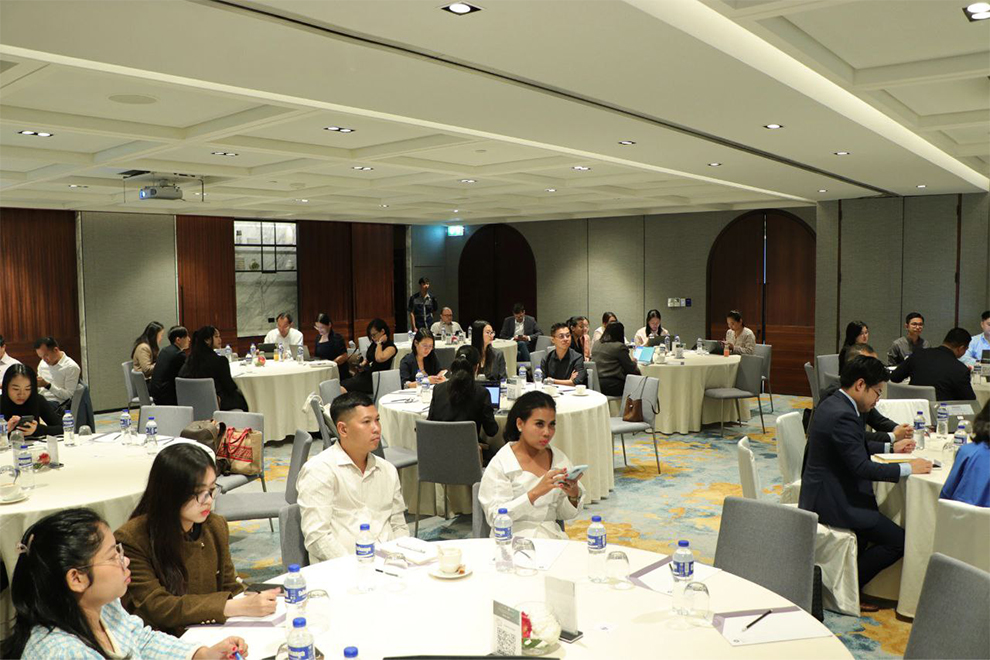
The message emerged from a high-level labour forum hosted by DFDL Cambodia in partnership with the European Chamber of Commerce in Cambodia (EuroCham), which brought together government representatives, legal and tax experts, HR leaders and technology specialists to debate how employers should navigate workforce transformation in 2026.
As he opened the event, Kuoch Somean, secretary of state at the Ministry of Labour and Vocational Training, said Cambodia was facing a “dual challenge” of economic volatility and rapid AI adoption, requiring labour frameworks that protect workers while allowing businesses to remain resilient.
“Cambodia is not shifting away from the dual challenge of economic uncertainty and AI transformation,” he said.
“Therefore, we are not just building a skilled workforce; we are building a resilient, adaptable, and protected workforce,” he added.
He pointed to the expansion of the gig economy, emerging robotics, workforce migration and the urgent need for upskilling as issues that will shape labour policy and enforcement in the coming years, signalling that regulators expect employers to adapt responsibly rather than rely on short-term cost-cutting measures.
Legal and tax compliance featured prominently in the discussions, reflecting growing concern over disputes linked to layoffs and restructuring.
Raksa Chan, senior consultant at DFDL, told participants that workforce restructuring should be treated as a strategic process, not a purely operational decision.
“Workforce restructuring is not just an operational decision. It is a strategic process that must be carefully designed to balance business sustainability, employee protection and regulatory expectations,” she said, warning that non-compliant procedures could expose companies to disputes and long-term instability.
Her presentation outlined restructuring options under Cambodian labour law, severance obligations and dispute-resolution mechanisms, while DFDL partner Diberjohn Balinas highlighted the tax consequences of employee termination under Director Tax Instruction 19116, urging employers to integrate legal and tax planning when managing workforce changes.
A fireside discussion featuring Seng Vuoch Hun, president of ASIA Cambodia Law Group and a commercial and labour arbitrator at the Arbitration Council, focused on case preparation and dispute prevention, underscoring the importance of documentation and early engagement with labour institutions.
The forum concluded with a panel on “Workforce Restructuring in the Age of AI”, examining how technology is reshaping job functions and management decisions.
Panellists stressed that AI adoption must be accompanied by governance frameworks, internal policies and training to avoid legal, ethical and reputational risks.
“Before considering leveraging AI for upskilling or workforce decisions, it is helpful to reflect on the risks of overreliance on systems and to assess organisational readiness,” said Adrienne Ravez-Men, strategic adviser in AI, blockchain and Web3.
She added that responsible deployment requires clarity on use cases, capacity and alignment with ethical standards.
The strong turnout reflected growing anxiety among employers across sectors, as slowing growth and digital transformation place pressure on existing business models.
While participants acknowledged that AI and economic uncertainty pose serious challenges, discussions repeatedly returned to the need for compliance, transparency and investment in reskilling.
By convening regulators and private-sector experts in the same forum, DFDL and EuroCham positioned the event as a signal that Cambodia is seeking to manage workforce disruption through law, dialogue and planning — rather than allowing technology and market pressure to dictate outcomes.
