



Cambodia’s Ministry of National Defence has accused Thailand of continuing armed aggression into its territory for an 11th consecutive day, citing repeated ceasefire violations and the use of heavy and destructive weapons that Phnom Penh says breach international law and threaten regional stability.
In a December 17 statement, the ministry said the scale and nature of the weapons used, combined with the deployment of large numbers of Thai troops into Cambodian territory, constituted “clear and irrefutable proof” of violations of the UN Charter, the ASEAN Charter and fundamental principles of international law.
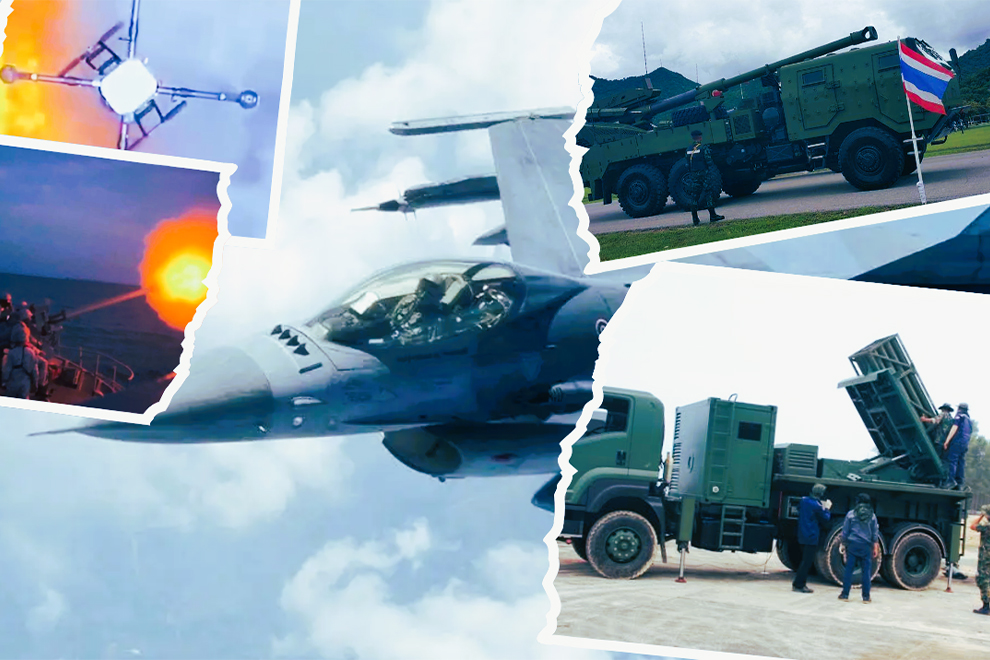
“The use of F-16 fighter jets, DTI-2 missile systems, bombing drones, cluster bombs and toxic gas goes far beyond defensive military action,” said ministry spokesperson Maly Socheata.
The ministry warned that such conduct poses “a grave danger not only to regional peace and stability, but also to the very foundations of international order”.
These weapons were employed during coordinated air, artillery and ground operations in areas of Banteay Meanchey and Pursat provinces, where Cambodian authorities say Thai forces crossed the border and carried out attacks near civilian communities.
Cambodia maintains that its own military actions have been strictly limited to Thai military targets and conducted in accordance with the right to self-defence under international law.
“Cambodia’s rights to self-defence are solely targeted at the Thai military targets. We have never targeted civilian areas,” it said.
The ministry stressed that the alleged use of cluster bombs and toxic gas is particularly alarming, given their long-term humanitarian consequences and the widespread international norms restricting or prohibiting their use.
It said such actions reflect “irresponsible and illegal behaviour” that risks escalating the conflict beyond a bilateral dispute.
Cambodia has called on the international community to condemn Thailand’s actions and hold Bangkok accountable for what it described as repeated war crimes and unlawful military activities.
The ministry urged Thailand to immediately cease hostilities, withdraw its forces from Cambodian territory and respect Cambodia’s sovereignty and territorial integrity.
“The continued use of heavy and destructive weapons undermines ASEAN’s principles of peaceful coexistence and threatens stability across the region,” the statement said, adding that failure to address the situation could have broader consequences for international norms governing the use of force.
The statement detailed sustained attacks across the 4th and 5th Military Regions from 5pm on December 16 to 8am on December 17, including airspace violations, shelling, drone strikes and ground-based fire targeting multiple locations inside Cambodian territory.
In the 4th Military Region covering Oddar Meanchey and Preah Vihear provinces, Thai forces intensified attacks on the evening of December 16, using heavy artillery in the area of Hill 333 and Ta Krabei Temple.
At 5.35pm, Thai F-16 fighter jets were reported to have violated Cambodian airspace over the Ta Krabei Temple area, followed by further attacks later that night.
In the early hours of December 17, Thai forces allegedly escalated operations by firing machine guns and 100mm tank-mounted guns into the Ta Thav area, while deploying bombing drones and heavy artillery against Ta Krabei Temple, Ta Mone Temple and Thmar Daun.
Additional drone and artillery bombardments were reported at around 7am, the ministry said.
Similar attacks were reported in the 5th Military Region, encompassing Banteay Meanchey and Pursat provinces.
The ministry said Thai forces used reconnaissance drones to violate Cambodian airspace near Chok Chey village, shelled civilian areas, and continued artillery fire into multiple locations, including O’Phlok Damrei and the C1 area.
