



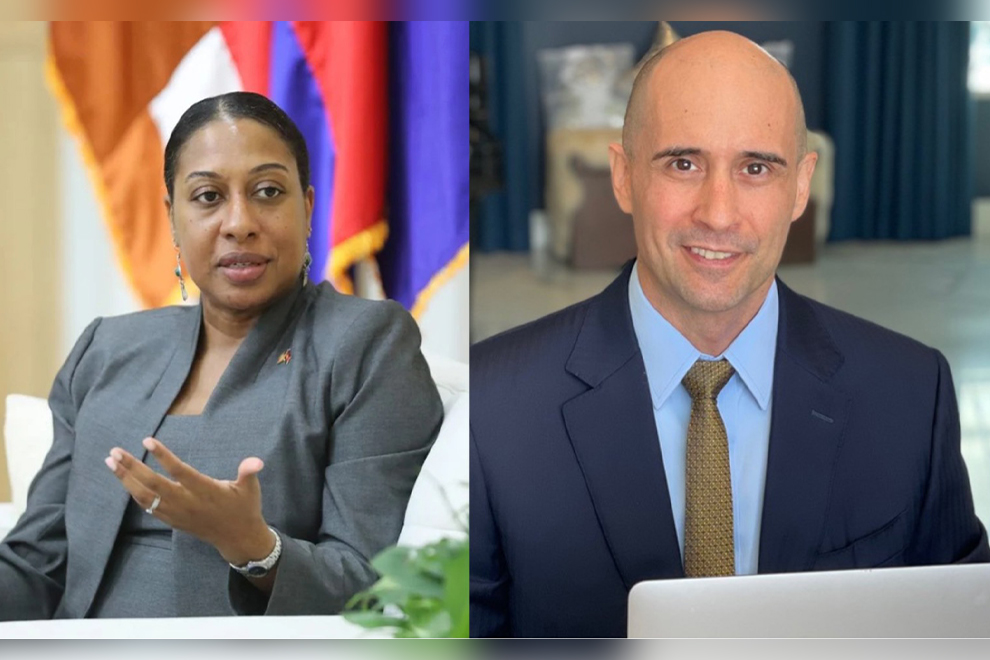
The president of the American Chamber of Commerce in Cambodia (AmCham) has published an open letter to the US embassy expressing urgent concern regarding Thai military statements that Thailand may designate Cambodian ports “high risk” and blockade shipments of fuel and other goods.
In a December 15 letter, addressed to Bridgette Walker, chargé d’affaires of the US Embassy in Phnom Penh, Casey Barnett, AmCham president, requested that the embassy convey the concerns of American businesses to the US government, as well as the Thai leadership.
According to Barnett, there are approximately 865 American-owned businesses registered in Cambodia, and hundreds more work with Cambodian manufacturers to produce goods for American brands. These companies represent billions of dollars of US investment in Cambodia, providing high-quality, affordable goods and services to both Cambodian and American families and consumers.
He noted that the relationship between the US and Cambodia has grown stronger in recent years, especially in 2025 with the signing of the Agreement on Reciprocal Trade. Thousands of Americans live in Cambodia with their families, children and loved ones. Americans have established a number of schools and healthcare services in Cambodia.
“Therefore, we have noted with great concern Thai military statements on December 14, threatening to designate Cambodian ports as high-risk and to blockade sea-borne shipments of fuel and other goods,” he wrote.
The Thai statements were made on December 14 by Captain Nara Khunkothom, assistant spokesperson of the Royal Thai Navy, at a Joint Thailand-Cambodian Border Situation Press Centre at Army TV. During the briefing, he described Thai military proposals to block and monitor shipments of fuel and other supplies to Cambodia as well as to declare the territorial waters around Cambodian ports as a “high-risk area”.
“A blockade of fuel would have devastating consequences for the American families and businesses in Cambodia. American businesses would close, and American families would face challenges in meeting basic daily transportation and energy needs, including for schools and medical treatment. American civilians will suffer,” said Barnett.
According to Barnett, most trade between the US and Cambodia is conducted via sea freight. The designation of Cambodian civilian ports as high-risk will make insurance and shipment costs unaffordable, devastating the growing trade between the US and Cambodia.
“It will also push into poverty more than one million of the poorest, most vulnerable manufacturing workers. The Thai threats to Cambodian ports and fuel shipments is an unnecessary and cruel escalation of the conflict, placing immense suffering on the civilian population,” he added.
