



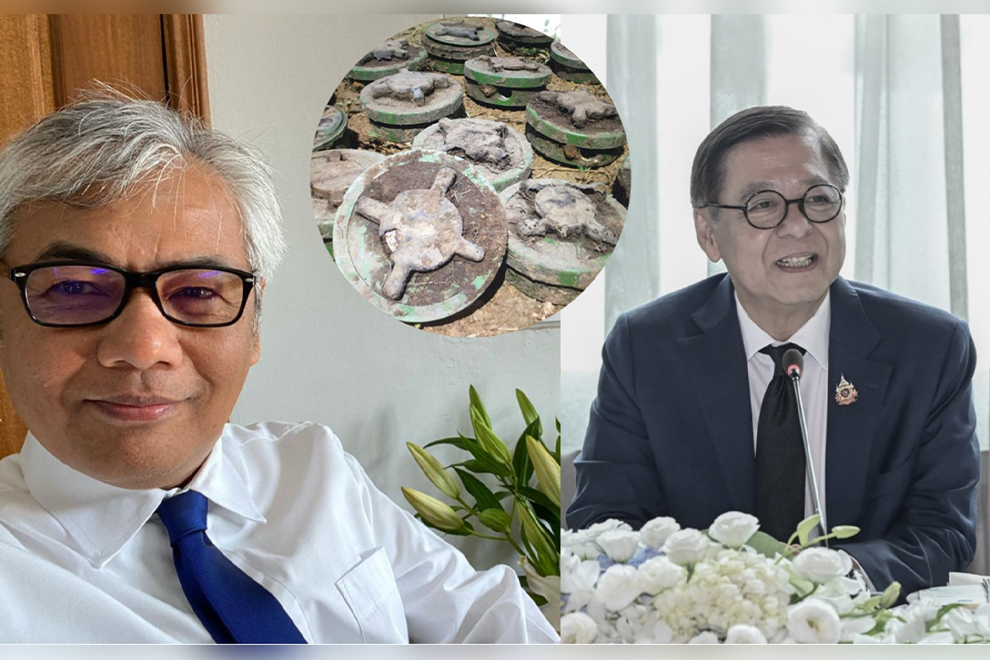
A fact-finding commission that investigates the use of munitions in the recent border clashes is a good step forward for bringing peace to the region and raising awareness of this important area of international law, but only if it is conducted with a true commitment to peace and an unrestricted study that includes cluster munitions, chemical weapons land mines and all other controlled ordinances in the area.
On December 1, Thai foreign minister Sihasak Phuangketkeow told regional media that he will request an international fact-finding mission on the use of munitions, including landmines.
Anything less than a body that meets these terms would only represent another attempt by Thailand to distort the truth or avoid evidence of its misunderstanding of the history of the region and its alleged violations of international law.
We must remember that whether there is a commission or not, Thailand is currently in violation of the agreement secured by the US to end hostilities. While this effort to advance a new commission is deserving of support, it does not absolve Thailand from its outstanding obligations to Cambodia, the US, Malaysia and the ASEAN region to continue the peace process.
One basic principle of the process is the return of the 18 Cambodian soldiers who were captured by Thailand on July 29, the day after a ceasefire came into effect. Thailand’s continued unjustified detention of the soldiers is clear evidence of Thailand’s prioritisation of politics over humanitarian principles.
Peace is perhaps much harder for Thailand than war, because it requires not only a commitment to peace but a stable, mature government that is capable of seeing it through to the end.
Youk Chhang is director of the Documentation Center of Cambodia (DC-Cam). The views and opinions expressed are his own.
