



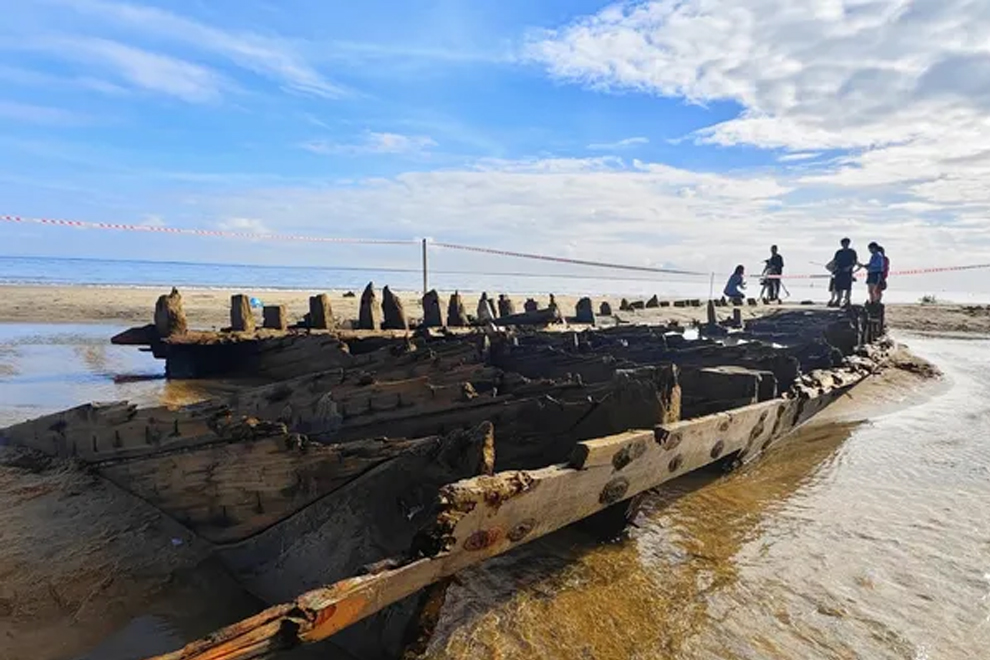
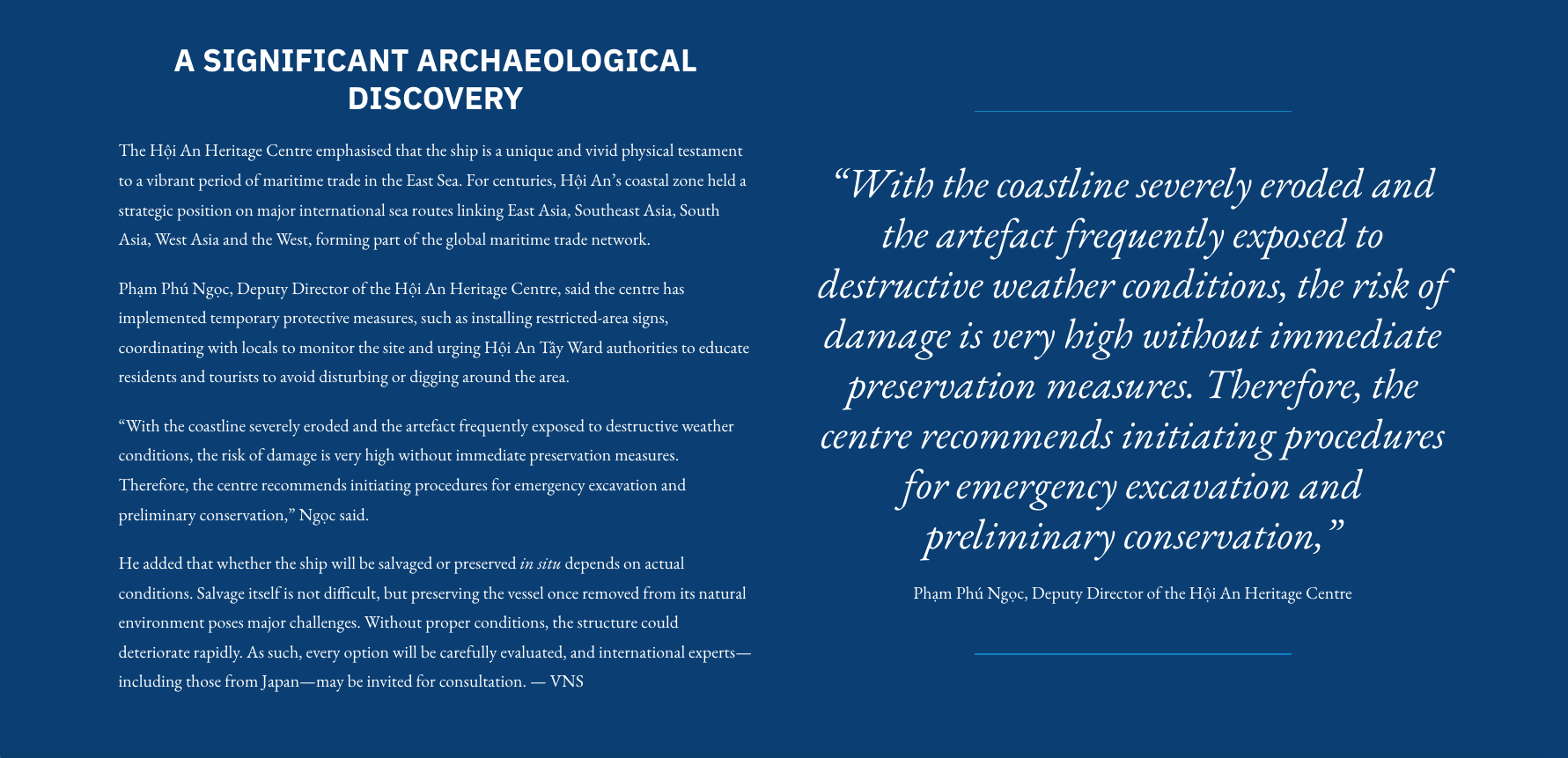
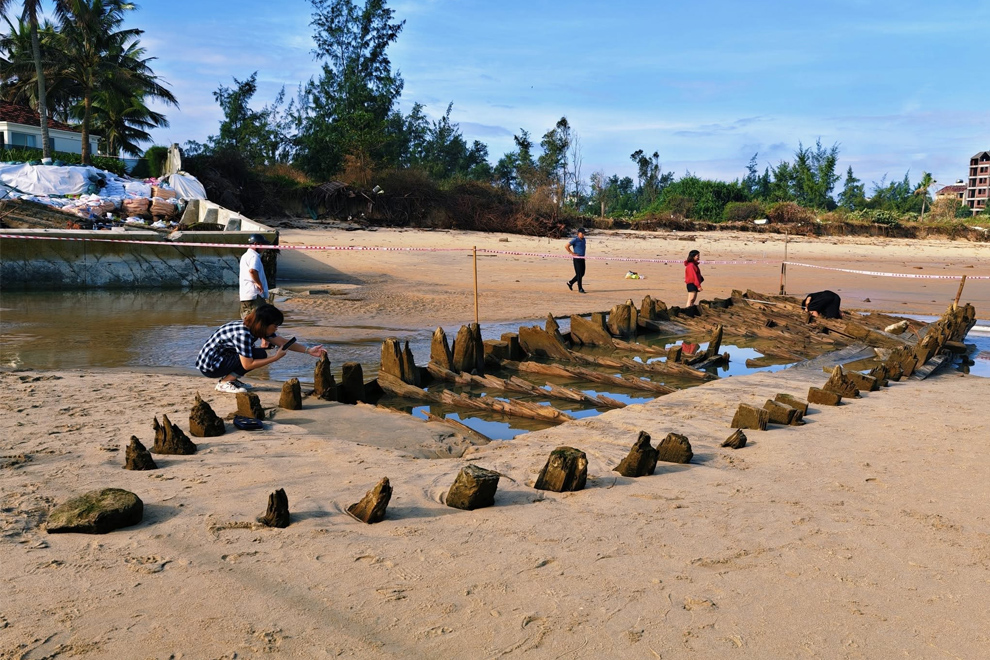
In recent days, the beach near the Thịnh Mỹ residential group (Hội An Tây Ward, Đà Nẵng City) has attracted crowds of residents and visitors keen to view the exposed remains.
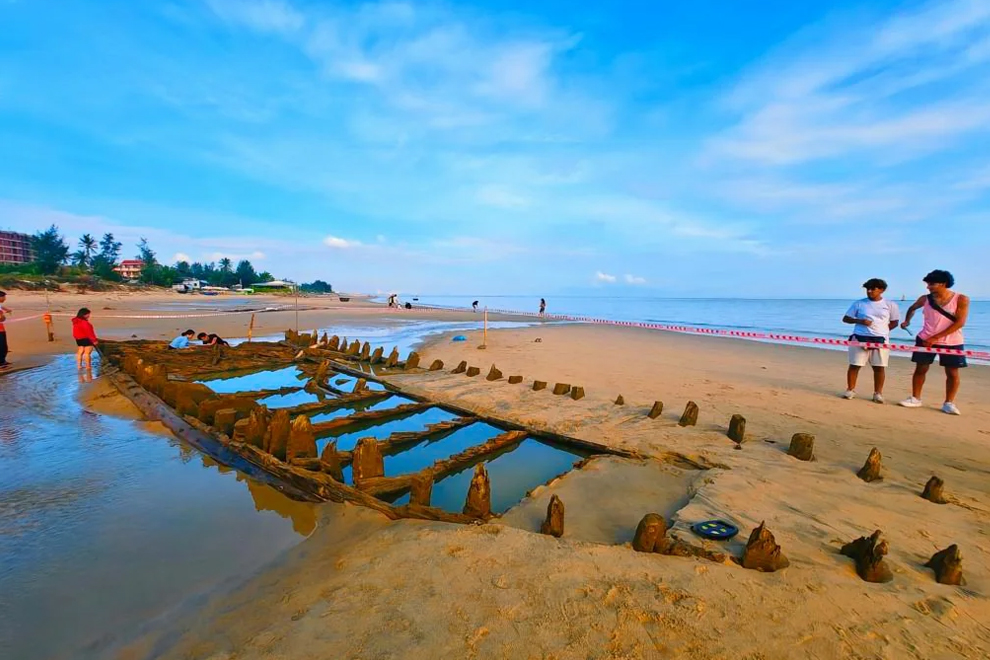
The hull first began surfacing in late December 2023 along the Cẩm An Ward coast (former Hội An City, Quảng Nam), about 400 metres from the ward People’s Committee office, when experts suggested the find could be an “ancient ship treasure” due to its then near-intact condition.
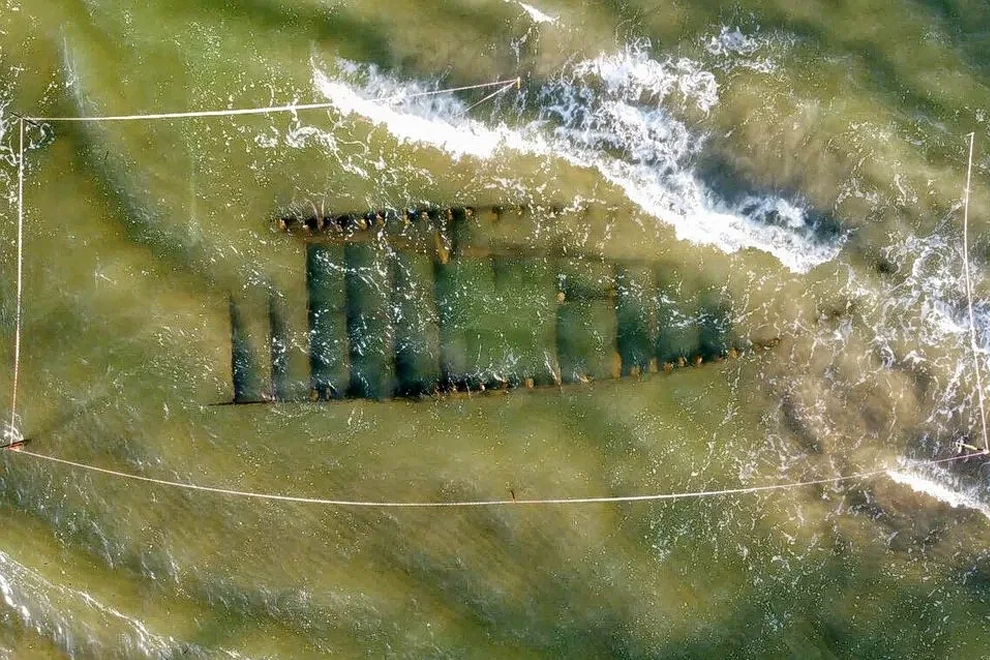
Local resident Nguyễn Văn Hoài, 62, from the Tân Thành residential group, said the ship lies beneath coastal dunes near an old French-built red-earth road. Years of shoreline erosion, storms, and wave action have steadily stripped away the sand, revealing the structure.
Preliminary surveys and material assessments by the Hội An Centre for Cultural Heritage Management and Preservation indicate that it is a large, sturdily built vessel constructed from durable timbers such as bằng lăng (săng lẻ), kiền kiền, and pine. Traces of a waterproofing compound suggest it was designed for long voyages, possibly for maritime trade or naval use.
Although radiocarbon dating has yet to be completed, the ship’s former inland position and its structural and material similarities with traditional wrecks elsewhere in Southeast Asia point to a date between the mid-14th and 16th centuries.
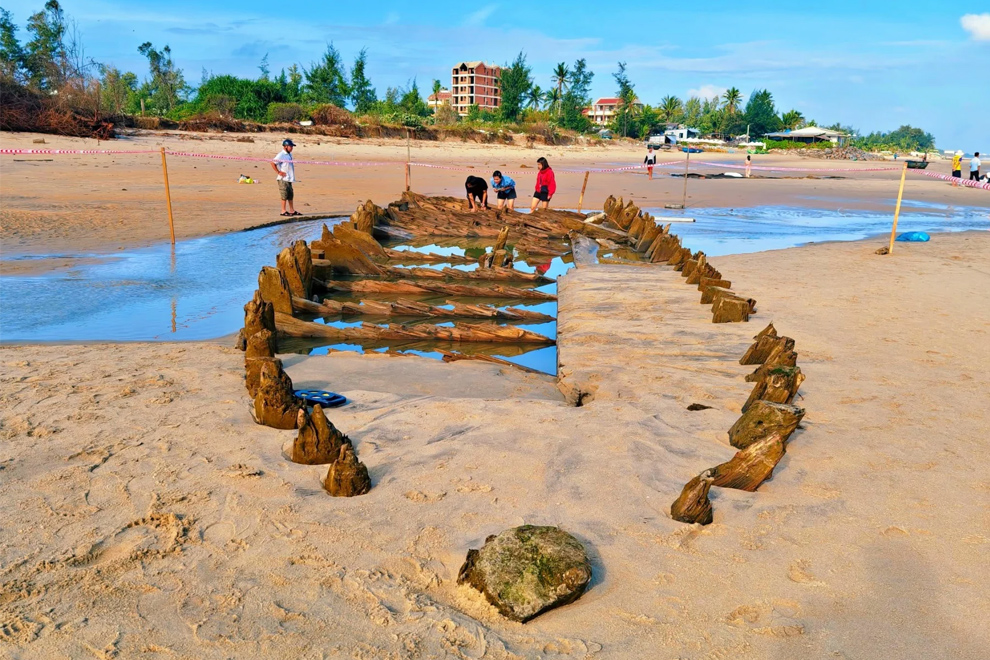
The discovery reflects a thriving maritime era that predated large-scale Western seafaring in the region and appears to be among the best-preserved ancient ship remains in both Southeast and East Asia.
Recent heavy rain and flooding linked to Typhoon Fengshen have further eroded the coast, exposing additional sections of the hull.
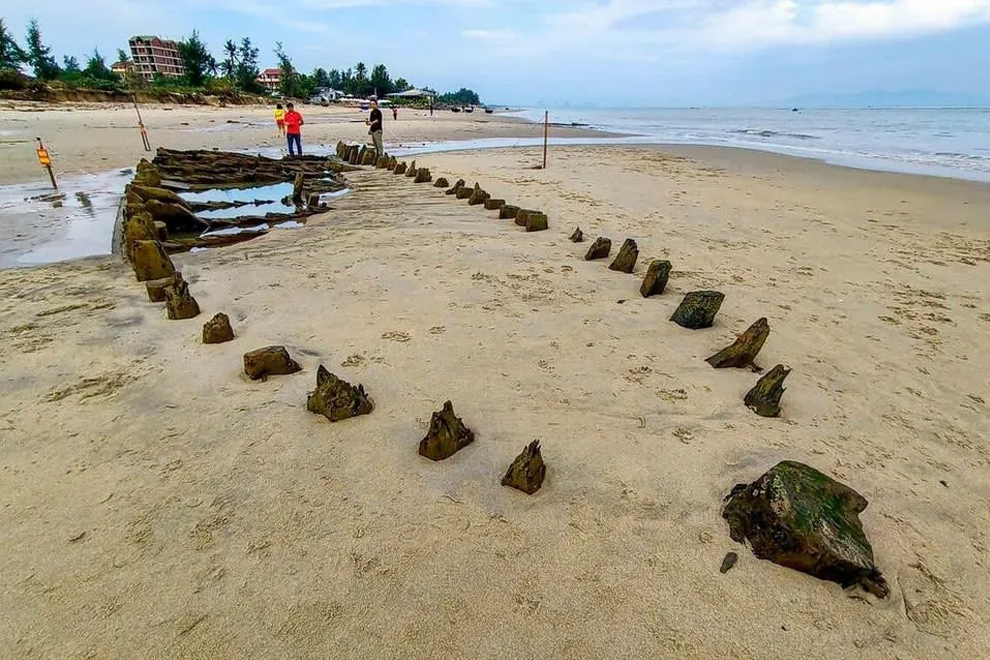
The Heritage Centre has recorded a beam of more than five metres and an exposed length of 17.4 metres, with frames, side planks, bulkheads and ribs clearly visible.
Tidal changes continue to alternately bury and reveal sections of the vessel.
ANN/Việt Nam News
