



Cambodia is positioning green industry, circular economy and innovation as the central pillars of its next phase of economic growth, as the country prepares to graduate from the UN Least Developed Country (LDC) category by 2029.
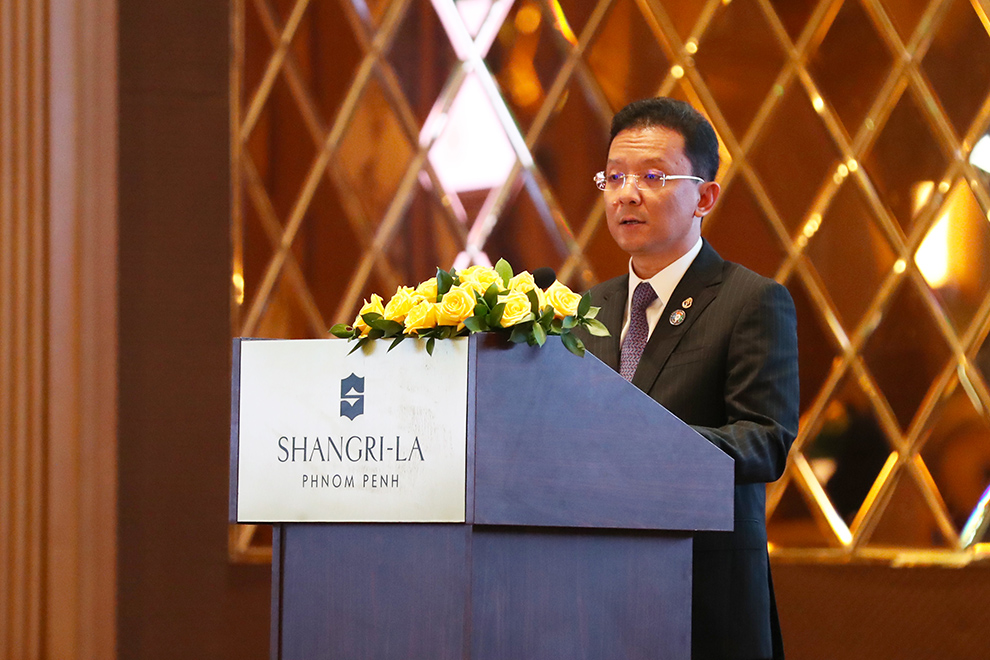
Minister of Industry, Science, Technology and Innovation Hem Vanndy told the 2025 World Green and Sustainability Summit, held in Phnom Penh, that sustainable industrialisation is now central to Cambodia’s competitiveness, calling it a “matter of strategic importance” for both the nation and the wider Asia-Pacific region.
“The challenge before us is not whether to industrialise, but how to industrialise sustainably — ensuring that innovation and environmental stewardship advance hand in hand,” he said.
He outlined a policy direction that places green competitiveness at the heart of industrial reform, through the advancement of smart factories, automation and emerging technologies such as artificial intelligence to boost productivity and energy efficiency.
Vanndy said the government’s National Energy Efficiency Policy 2022–2030, which targets a 19 per cent reduction in national energy consumption, and the Circular Strategy on Environment 2023–2028 provide the framework for a cleaner, more resource-efficient industrial base.
Both policies, he added, are aligned with the Pentagonal Strategy and Cambodia’s long-term vision for a clean, green economy.
“Cambodia’s direction is clear. We will build industrial competitiveness through sustainability and innovation,” he said.
“Energy efficiency lowers production costs and strengthens competitiveness; circularity turns waste into value; and cleaner production opens access to markets where responsible sourcing is the norm,” he added.
The minister also cited new developments in the country’s electric vehicle (EV) industry, including the recently inaugurated New Energy Vehicle and Industrial Technology Institute and a new passenger vehicle facility breaking ground in Sihanoukville Special Economic Zone.
He said such investments reflect growing investor confidence in Cambodia’s green industrial trajectory.
“These policy directions are translating into real investments,” he noted, adding that Cambodia is ready to collaborate on “technology transfer, standards and traceability, eco-industrial development, and skilled workforce coalitions”.
Vanndy emphasised that sustainability and inclusiveness must progress together.
He called for affordable green financing, blended capital and regulatory incentives to support small and medium enterprises (SMEs) in adopting cleaner, more efficient technologies.
“Industrial transformation affects real people — their jobs, livelihoods and communities. Skill upgrading, retraining and social protection are vital to ensure workers are not left behind,” he said.
Cambodia’s partnerships with UNIDO, the Switch Asia programme, and the Asian Productivity Organization (APO) have already produced tangible results, with local manufacturers cutting energy use, emissions and waste while improving compliance and market access, he noted.
“Technology is only as transformative as the people who use it,” Vanndy said, stressing that human capital development and technical training are key to ensuring Cambodia’s green transition benefits its workforce.
Looking ahead to Cambodia’s graduation from LDC status in 2029, Vanndy said the milestone represents not an endpoint but a new standard — one that demands higher-value, low-carbon participation in global value chains.
“Graduation is not an endpoint. It is a new standard,” he said.
“It requires that our factories, logistics, and industrial infrastructure meet evolving market requirements with confidence and transparency,” he added.
