



Recent global attention on online scam activities has challenged Cambodia’s reputation and image in the international community. While certain narratives have portrayed the Kingdom as a hub for criminal activity, these depictions fail to capture the complexity of a global transnational crime that transcends borders — and they overlook Cambodia’s firm commitment and concrete actions to address it.
The deeper truth is that Cambodia is both a victim of cross-border online crime and a resilient fighter working to reclaim its integrity and restore international trust.
Online scams are not a national phenomenon but a global issue arising from economic hardship, digital dependency and human vulnerability. Within the past decade, they have transformed from small phishing operations into a complex transnational industry. Criminal syndicates are borderless organisms and operate across jurisdictions, exploiting weaknesses in law enforcement and governance worldwide.
Cambodia’s challenge was not isolation. Like other nations, Cambodia has been affected by these cross-border crimes — yet it has taken strong, proactive and transparent measures with firm determination to dismantle them.
As these syndicates shifted around the region — from Myanmar to Thailand, Laos and the Philippines — Cambodia’s territory became their next temporary host. But Cambodia has decided to fight back, visibly and consistently.
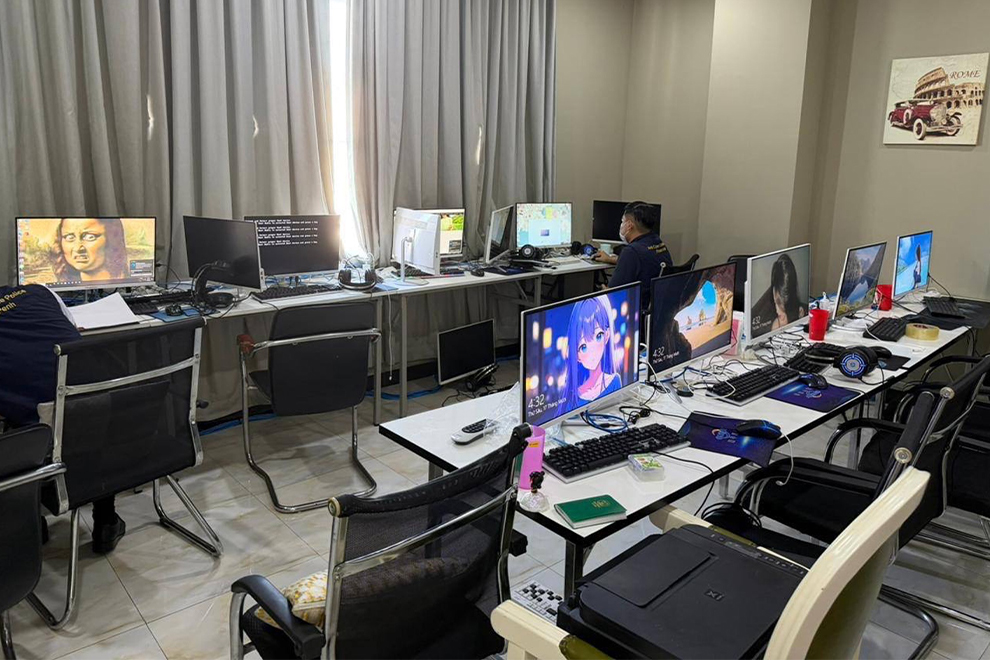
Cambodian authorities have arrested 3,455 suspects from 20 nationalities, in connection with online scam operations during the past four months of crackdowns across the Kingdom. According to a statement released by the government’s Secretariat of the Commission for Combating Online Scams (CCOS), the coordinated crackdown on online scams took place between June 27 and October 14, targeting 92 locations in Phnom Penh and 18 other provinces suspected of being involved in online scams.
Ten major cases are already before the courts, with 75 ringleaders and accomplices charged. Authorities have deported 2,825 foreign nationals and rescued victims of human trafficking, dismantling extensive scam and trafficking networks in the process.
These actions — acknowledged by CCOS, stakeholders and communities — show the Royal Government’s firm determination to protect its people, uphold the rule of law and defend Cambodia’s national reputation against misperceptions and misinformation.
Prime Minister Hun Manet made this a national mission by launching the National Campaign to Combat Online Scams on July 14, backed by nine key directives strengthening accountability, coordination and transparency among law enforcement bodies. Carrying the slogan — “Together, we will clean the garbage from our homes” — the campaign underscores Cambodia’s comprehensive vision — not only to protect national security but also reflects commitment to safeguarding the honour, dignity and credibility of the Kingdom.
Reputation is not built by denial; it is earned through action. Cambodia’s actions — the arrests, deportations, in-depth investigations and international cooperation — speak louder than labels. The confiscation and ongoing analysis of thousands of electronic devices and passports are revealing transnational criminal structures, exposing that the roots of this global fraud ecosystem lie far beyond Cambodian soil.
Cambodia’s consistent enforcement and open collaboration with partner nations demonstrate that it is a responsible and trustworthy member of the international community. Its transparency stands in contrast to the silence of others who face similar problems but avoid scrutiny.
The narrative that once spoiled Cambodia’s image is now transforming — from accusation to acknowledgment. The Kingdom’s message is clear: it is not the cause of this crisis but part of the global solution.
By standing firm, transparently and acting decisively, Cambodia is defending more than law and order — it is defending its name, its dignity and the trust of the international community. And that fight, unlike the criminals’, knows no borders.
Sok Sant is a Phnom Penh-based social-political analyst. The views and opinions expressed are his own.
