



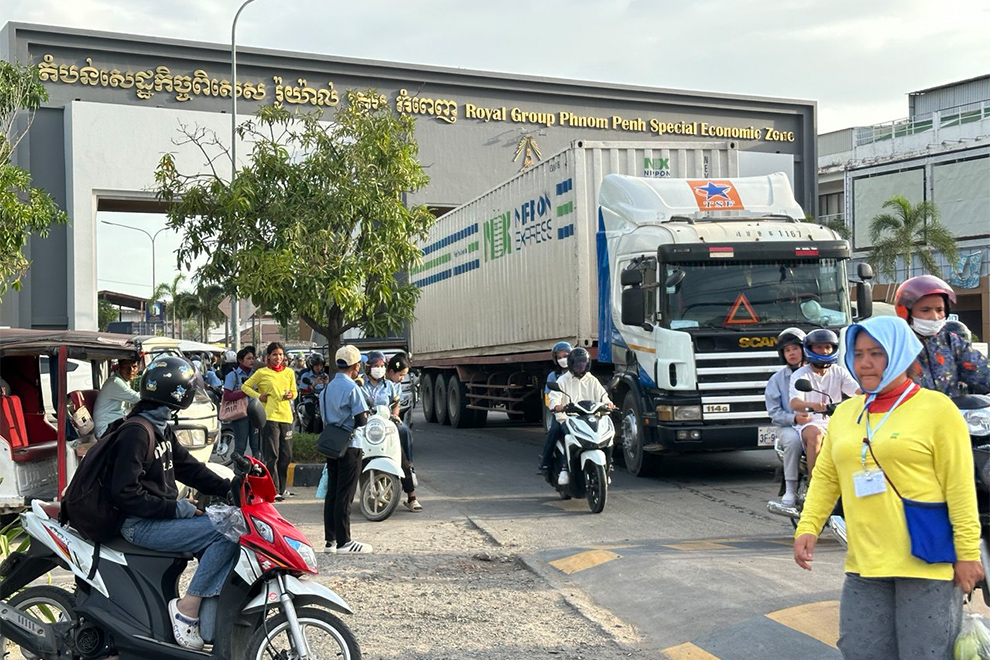
Nearly 70 investment projects with a total capital of almost $950 million were approved by the Royal Government through the Council for the Development of Cambodia (CDC) in July. This brings the total number of approved investment projects in the first seven months of 2025 to 440.
According to an August 11 CDC press release, the Cambodian Investment Board (CIB) under the CDC approved 67 projects in July, with a total investment value of around $944 million, potentially creating around 57,000 jobs.
Among the approved projects, 43 are located outside of Special Economic Zones (SEZs), including major projects such as the expansion of agro-industrial crop production and processing factories, mining and hotels. 24 are located within SEZs, including the establishment of assembly plants for machinery and robotics.
Overall, 23 more projects were approved compared to July 2024, and the investment capital increased by around $547 million, or about 138% growth year-on-year.
From January to July 2025: 440 projects were approved, an increase of 206 projects or 88% compared to the same period in 2024. The total investment capital reached $6.7 billion, up $3 billion, or 84% year-on-year.
“It is noteworthy that within just 7 months of 2025, the number of investment projects registered has already surpassed the total number registered for the entire year of 2024 by 26 projects,” noted the release.
Hong Vanak, an economist at the Royal Academy of Cambodia, told The Post on August 12 that although the global economy has faced ongoing challenges in recent years — such as Covid-19, geopolitical conflicts, wars between certain countries and climate change — Cambodia has continued to attract both domestic and international investors to establish factories.
He added that the decision by the US government to place tariffs of just 19% on Cambodian imports from Cambodia is helping to increase the Kingdom’s attractiveness to investors and drive international demand for Cambodian goods.
“The growth of foreign purchase orders, along with favourable investment laws, affordable labour and various logistics factors, will help attract more international companies to register and launch businesses in Cambodia. The presence of multiple international markets for Cambodian products will help factories diversify their production lines,” he continued.
He also pointed out that the growth of factories and enterprises coincides with the return of hundreds of thousands of skilled Cambodian workers from Thailand.
The government, through Heng Sour, Minister of Labor and Vocational Training, has repeatedly urged Cambodian workers in Thailand to return home, claiming that domestic jobs offer greater benefits than working abroad.
The minister noted that workers in Cambodian factories can earn around $300 per month, including minimum wage, benefits and overtime pay. In addition, employees receive social security cards under the National Social Security Fund (NSSF), which supports health care both during employment and after retirement. Through the NSSF, workers will also receive retirement pensions.
“This card has value both in the present and in the future. Especially while working — if any accidents occur — workers won’t have to pay out of pocket, as the expenses are covered by the company and the NSSF. Medical treatment is provided free of charge, and workers will also continue to receive wages during treatment. Moreover, if a family member falls ill, the NSSF will cover treatment costs, and the worker will still receive their salary,” he explained.
