



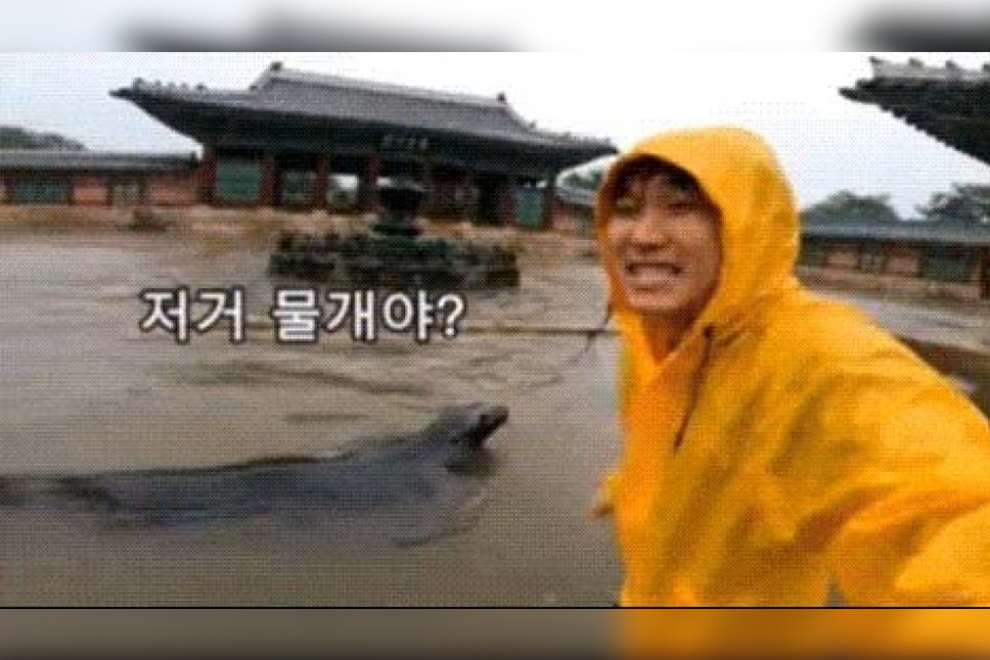
SEOUL – A video that appears to show Seoul’s historic main palace Gyeongbokgung submerged in floodwater has sparked confusion online, along with renewed concerns about the dangers of artificial intelligence’s role in the generation of misinformation.
In the clip, a man in a yellow raincoat wades in front of the palace, gesturing toward ankle-deep water.
“It’s unbelievable,” he said in the video. “Gyeongbokgung is completely underwater.”
The video gained traction as South Korea reels from days of record-breaking rain that triggered deadly floods and widespread damage, making the fabricated footage seem all the more believable.
The incident has also prompted calls for stronger regulation of AI-generated content.
“People who make fake videos just to confuse others should be held accountable,” one commenter wrote.
Others urged for legal safeguards to keep pace with the rapid development of AI, pointing out that this is not an isolated case.
As of Monday morning, a search on YouTube using Korean keywords such as “monsoon” or “flood,” along with the names of AI video tools like Google’s Veo 3, reveals a growing number of similar clips.
According to information technology industry insiders, since the release of Veo 3 in May, producing realistic-looking videos like these has become significantly easier. The Gyeongbokgung clip was created using this tool.
In response to rising concerns, a new law requiring watermarks on AI-generated videos is set to take effect in January next year.
Asia News Network/The Korea Herald
