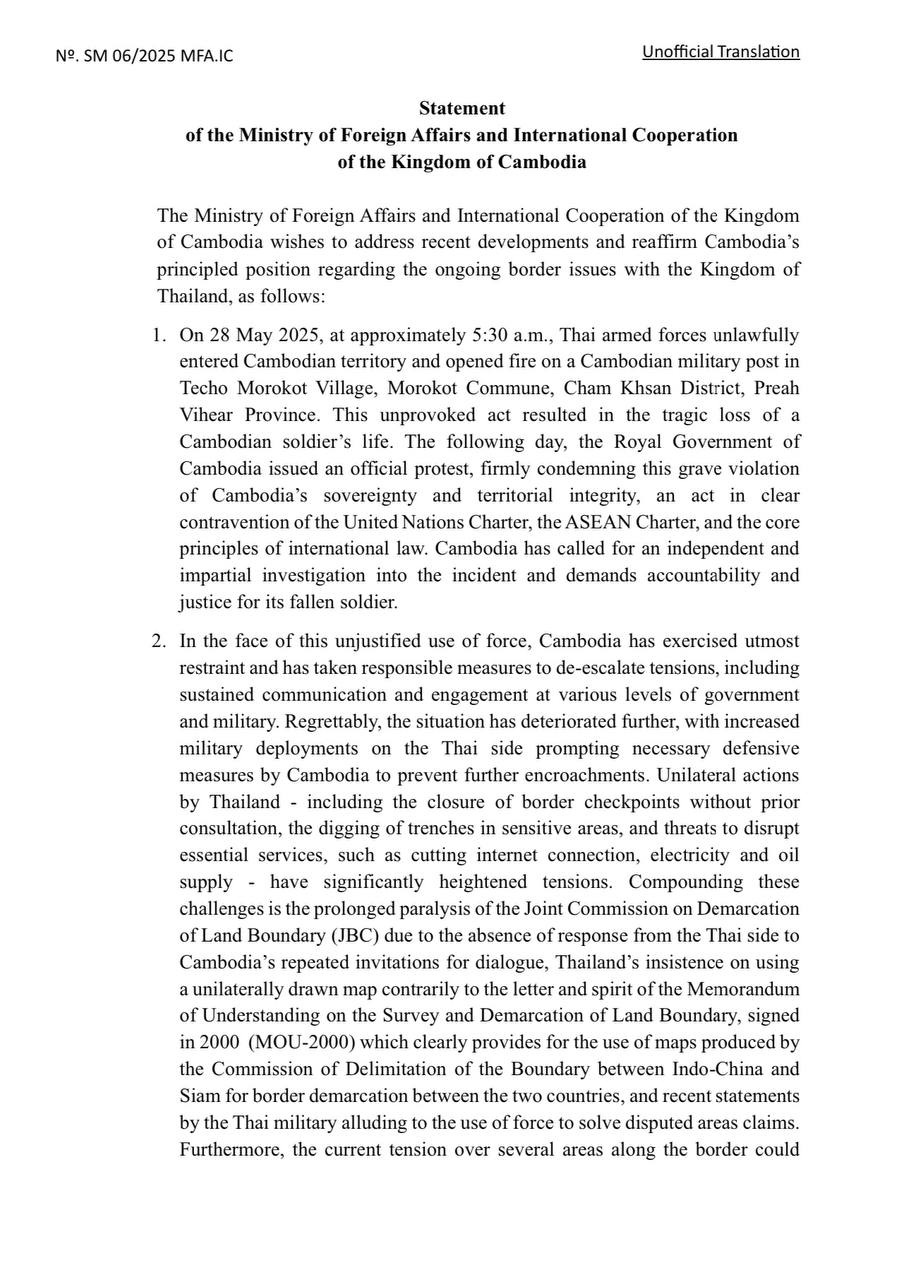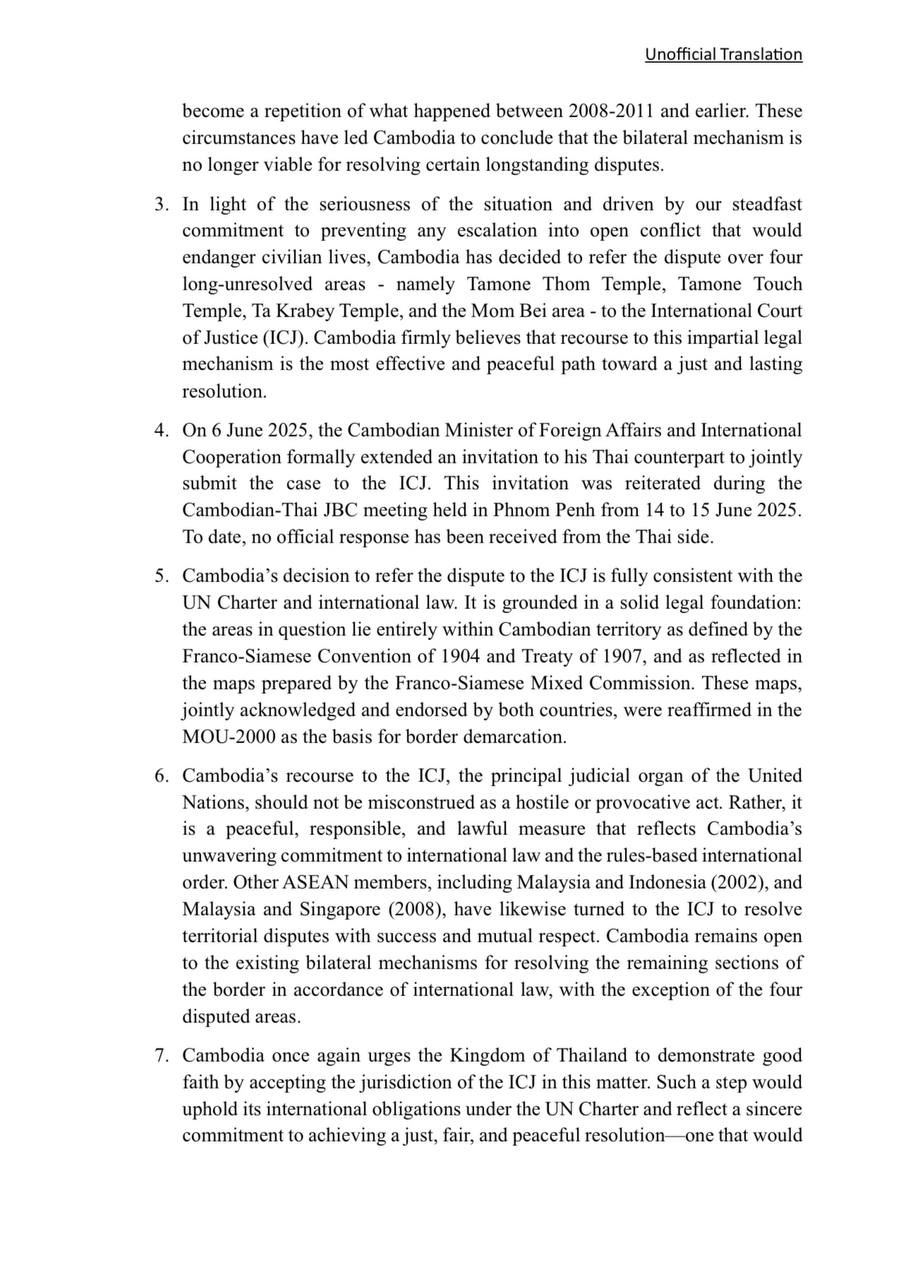
Cambodia’s recourse to the International Court of Justice (ICJ) should not be misconstrued as a hostile or provocative act, the Ministry of Foreign Affairs and International Cooperation clarified, in a July 4 statement. Rather, it is a peaceful, responsible and lawful measure that reflects Cambodia’s unwavering commitment to international law and the rules-based international order, it added.
The ministry noted that other ASEAN members, including Malaysia and Indonesia (2002), and Malaysia and Singapore (2008), have turned to the ICJ to resolve territorial disputes with success and mutual respect.
The statement came as border tensions escalated with a minor military confrontation at Phnom Khmoch, or Ghost Mountain, on July 4, as well as the latest claims of Thai sovereignty over Ta Moan temple by suspended Thai Prime Minister Paetongtarn Shinawatra, who is now serving as Minister of Culture.
The ministry said Cambodia remains open to the existing bilateral mechanisms for resolving the remaining sections of the border in accordance of international law, with the exception of four disputed areas: The Ta Moan Thom, Ta Moan Tauch and Ta Krabei temples, and the Mum Bei area.
“Cambodia once again urges the Kingdom of Thailand to demonstrate good faith by accepting the jurisdiction of the ICJ in this matter. Such a step would uphold its international obligations under the UN Charter and reflect a sincere commitment to achieving a just, fair and peaceful resolution — one that would contribute to long-term peace and stability for both nations and the region at large,” it said, in the three-page statement.