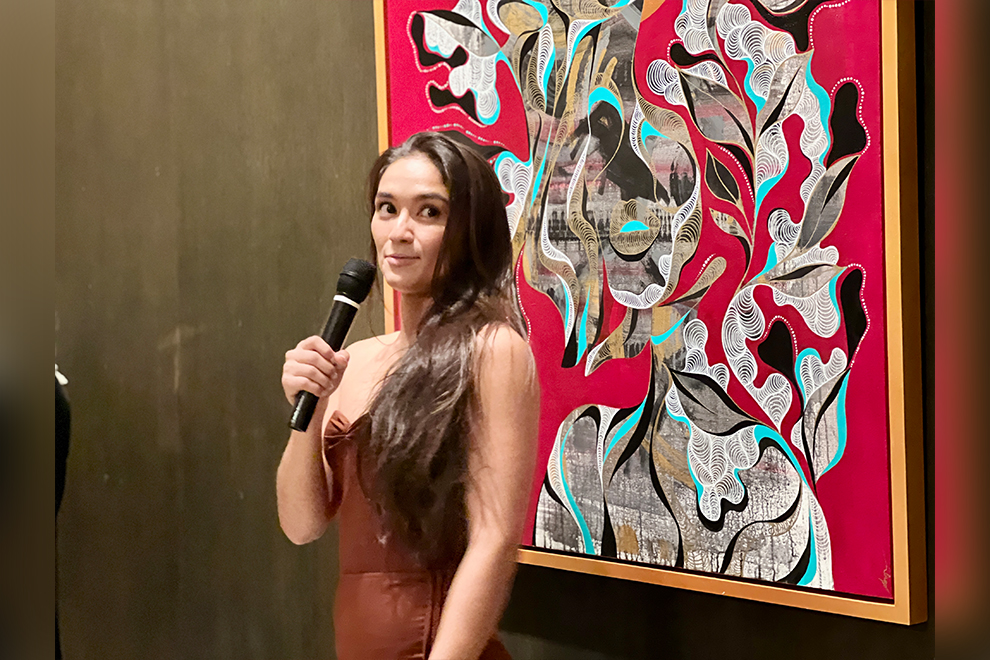
The profound beauty of Cambodia’s natural heritage takes centre stage this season as three distinct artistic voices — Hom Rith, Ouk Vichet and Anya Minko — unveil a collaborative exploration of the Kingdom’s evolving terrain.
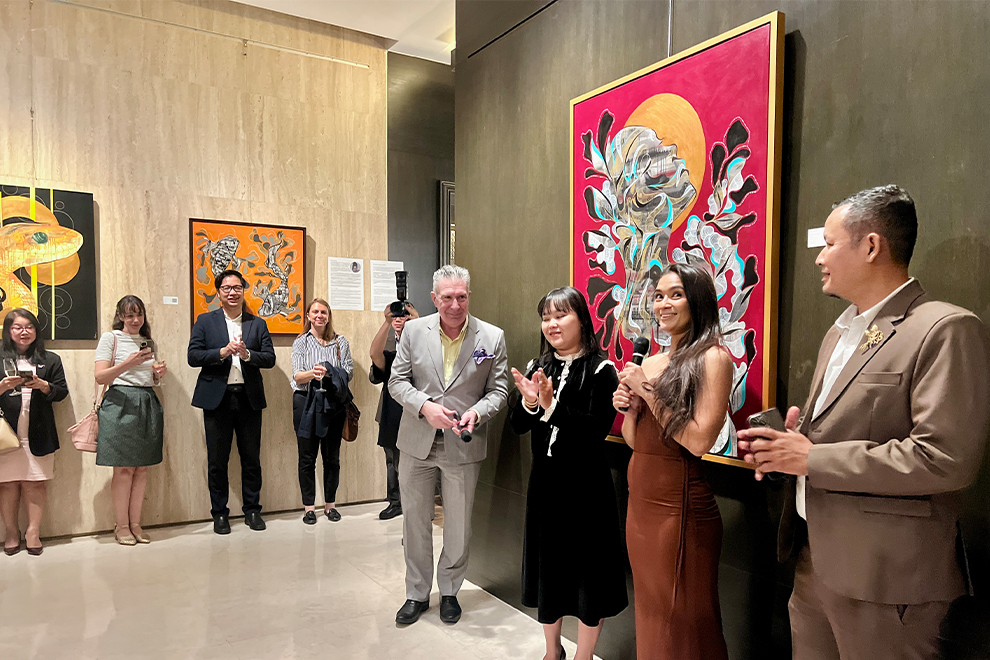
Hosted at the Rosewood Phnom Penh, the exhibition, titled Tonlé to Treeline, offers an inspiring look at the country’s ecological spirit through a storytelling lens that spans from the depths of the Great Lake to the heights of the forest canopy.
At the heart of the collection is the work of Hom Rith, a self-taught watercolourist from Kampot whose delicate compositions capture the quiet poetry of Cambodia’s rural habitats. Having begun his journey fascinated by pagoda murals, Rith has evolved from selling paintings at local temples to becoming a refined chronicler of the intimate bond between people and the land.
“Mostly my artworks circle around my life story, especially the cow, fish, and sun that I portray as a series of stories,” explains Rith. “The reason for this new concept derives from experience, new places and new friendships. It’s a reflection of where I am and how I can learn from other artists.”
In his latest series, Rith uses soft washes to portray the natural world as a fragile living system. His recurring motifs are deeply personal, rooted in the agrarian soul of the country.
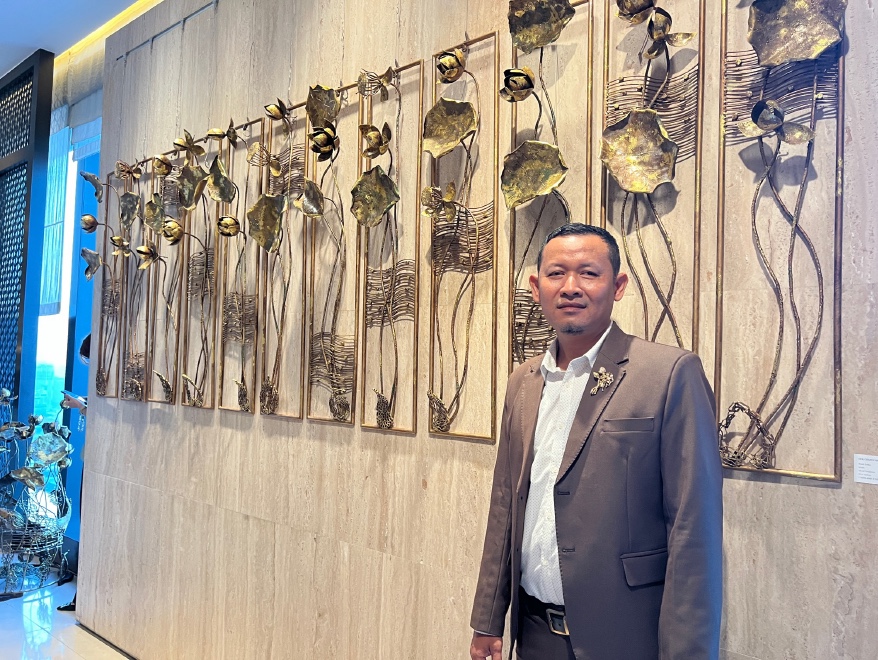

“The cow represents resilience and hard work, much like my own struggle to become an artist. It is an animal that helps the farmer,” Rith says. “The fish is part of our everyday protein; when portrayed in art, it embeds a sense of nostalgia.”
Contrasting Rith’s fluid watercolours are the powerful, tactile sculptures of Ouk Vichet. A graduate and professor at the Royal University of Fine Arts (RUFA), Vichet is regarded as one of Cambodia’s leading contemporary sculptors. His work is famously defined by his early involvement in the Peace Art Project, where he learned to weld decommissioned weapons into symbols of reconciliation.
“Most of my works are metal— bicycles and guns turned into a Sarus crane bird family,” Vichet explains. “The rare birds of Cambodia were made from guns and lotus. Even the elephant family here feels lively, though they are made from metal. I source materials from bicycle repair and junk shops, turning unused materials into artwork that everyone can appreciate.”
Vichet’s contribution to the exhibition bridges traditional symbolism with a modern, industrial edge. For him, the process of creation is a way to weave stories into raw, reclaimed materials, finding dignity in the discarded.
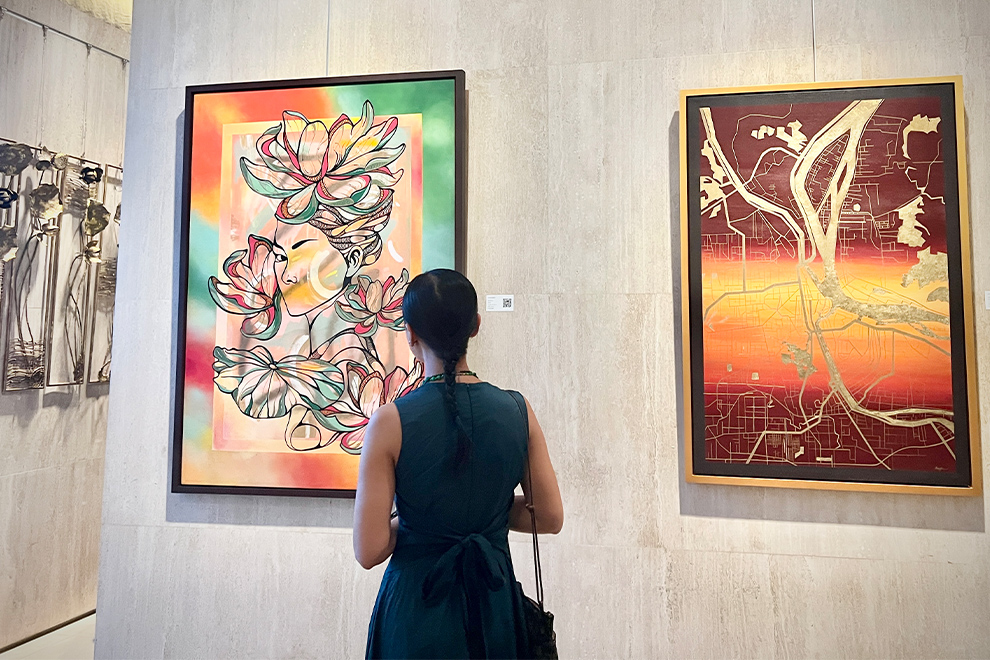

“The idea stage started with the imaginary to fit the title of the exhibition, so I thought of lotus leaves and different animals in nature,” says Vichet. “For lotus flowers and leaves, they are a good representation of dignity and happiness. It would be a great prize if art enthusiasts can support our artists in encouragement.”
Weaving these narratives together is the dual role of Anya Minko, an Australian-ASEAN artist and director of the NGO SEVA. Having lived in Cambodia since 1996, Minko serves as both a participating artist and the exhibition’s curator. Her vibrant acrylic paintings provide an abstracted, emotional response to the landscapes she has called home for nearly three decades.
“It’s actually quite a personal one for me because I grew up in Cambodia; I arrived here in 1996 and I’ve been very lucky to be raised here,” Minko shared during the exhibition’s opening. “I love Cambodia. That’s why we’re here.”
Minko’s curatorial vision guides the visitor through a geographical arc — an “exploration from river to forest” — ensuring a harmonious balance between her bold colour exploration and the intricate works of her Cambodian colleagues.
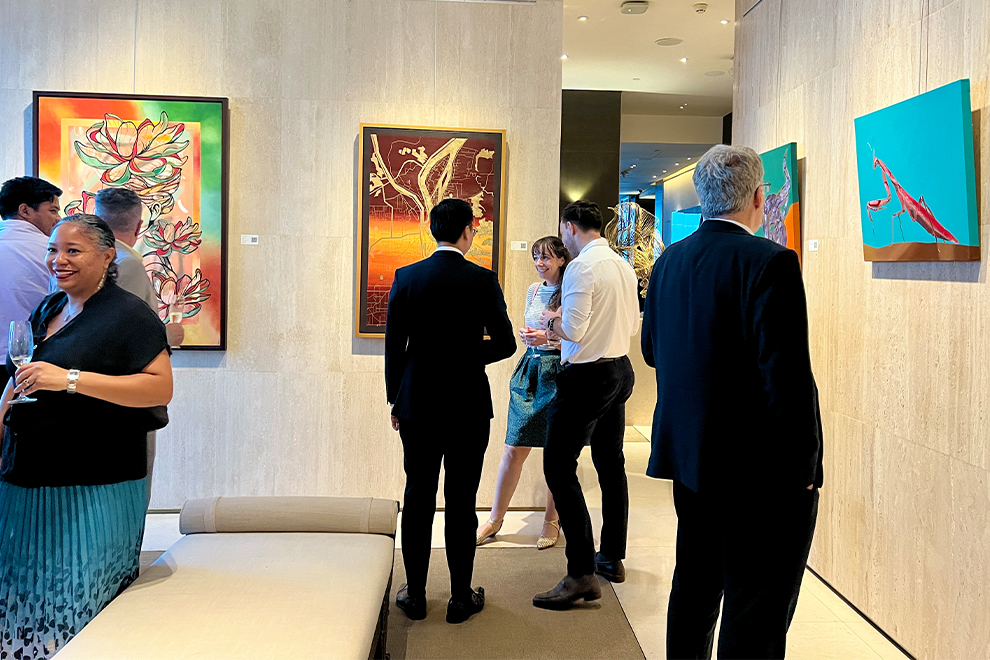
“I wanted to focus on the environment because Cambodia is a truly beautiful country,” Minko adds. “I hope that when everyone looks at these pieces, they are inspired to go out and explore more of Cambodia. The scenery here is beautiful.”
The exhibition serves as a heartwarming testament to the power of creative transformation, where guns become birds and memories of the soil become fine art. It is a shared reverence for a land that is constantly changing yet remains anchored by the resilience of its people.
“We are proud to showcase the remarkable talent of Cambodian artists in this exhibition,” says Daniel Simon, Managing Director of Rosewood Phnom Penh.
“‘Tonlé to Treeline’ demonstrates our commitment to celebrating local creativity by highlighting works that honour Cambodia’s landscapes, stories, and artistic spirit.”
The exhibition is on display until June 2026, at the Rosewood Phnom Penh Art Gallery on Level 35. The gallery is open 24 hours a day with complimentary admission, and all featured artworks are available for purchase, supporting the continued growth of the local arts community.