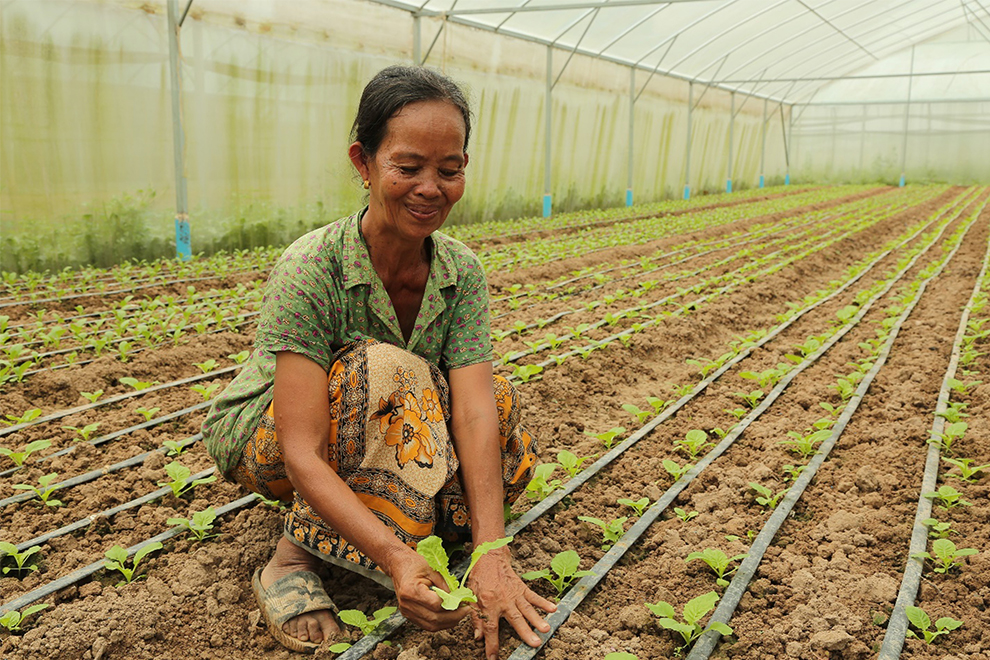
The Ministry of Commerce-implemented Accelerating Inclusive Markets for Smallholders (AIMS) Project has recorded strong quarterly progress in gender inclusion, investment mobilisation and market integration, reinforcing the role of rural women and rural smallholders as engines of inclusive growth.
AIMS, supported by the government and the International Fund for Agricultural Development (IFAD), has now reached 94,499 rural households across 18 provinces, exceeding its original outreach target ahead of schedule. More than 60 per cent of the beneficiaries are women, noted the ministry.
The number surpassed the project’s gender target and highlighting their growing role as producers, entrepreneurs and investors in priority agricultural value chains, according to a commerce ministry press release.
Eng Sothyvon, AIMS project director and director-general of the ministry’s General Department of Domestic Trade, said that AIMS is progressing well thanks to strong collaboration across provinces and with private-sector partners.
“With additional financing, we will further strengthen business clusters and market linkages to deliver greater benefits for smallholder farmers,” he added.
According to the release, AIMS’ results are driven by an integrated approach that combines targeted grants, commercial finance and institutional strengthening to link rural smallholders to higher-value markets.
The project has mobilised more than $15 million in combined grant and loan financing, through the Value Chain Innovation Fund (VCIF) and a Line of Credit implemented with the Agricultural and Rural Development Bank (ARDB).
Women have been central to this transformation, representing 55 per cent of VCIF grant recipients and 56 per cent of farm-level innovation beneficiaries, enabling them to scale production, improve quality and access more stable markets.
“Gender equality is not just about numbers, but about empowerment, opportunity and resilience,” said Frew Behabtu, IFAD country director and representative in Cambodia.
“When Cambodian women thrive, Cambodia’s rural economy prospers,” he added.
An IFAD annual supervision mission conducted in December 2025 noted the establishment of 350 business clusters, an 84 per cent adoption rate of improved production technologies and the facilitation of 1,491 buy-and-sell contracts with a cumulative trade value of $245 million.
Alongside market growth, AIMS has strengthened sustainability and accountability through enhanced Social, Environmental and Climate Assessment Procedures (SECAP) and the rollout of an accessible Grievance Redress Mechanism (GRM) across all project areas, noted the release.
Chea Laichea, AIMS project operations manager and director of the ministry’s Department of International Cooperation, described SECAP as “not only a safeguard requirement, but also a practical tool that helps us identify risks early. It also protects communities, and ensure long-term benefits”.