Cambodia has taken a step toward translating its commitment to a “just transition” in the construction sector into concrete action, with senior government officials, employers and workers endorsing a draft roadmap focused on worker safety, green standards and long-term sector reform.
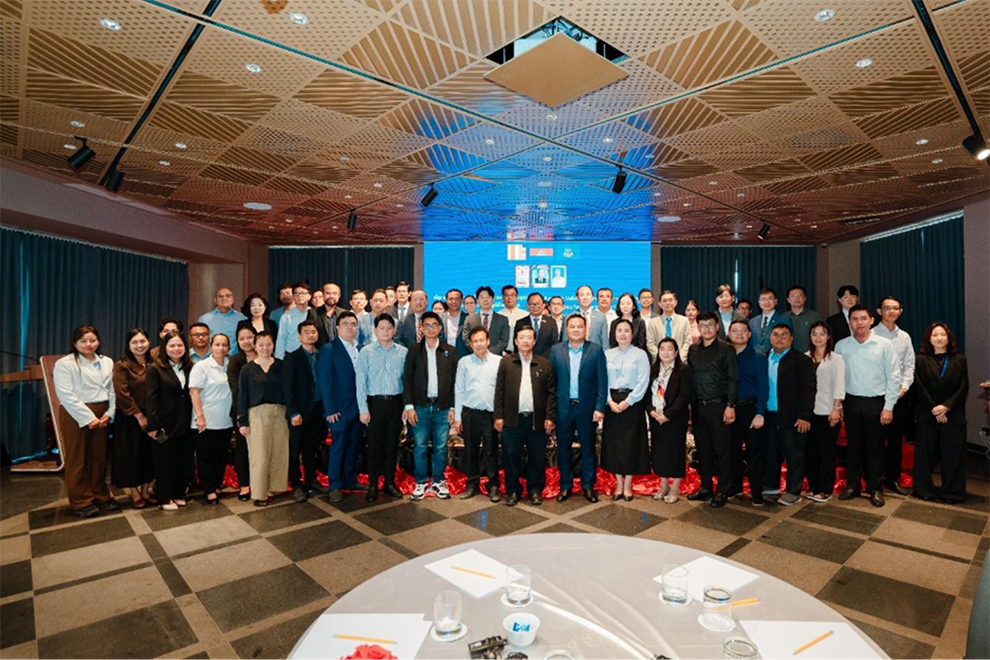
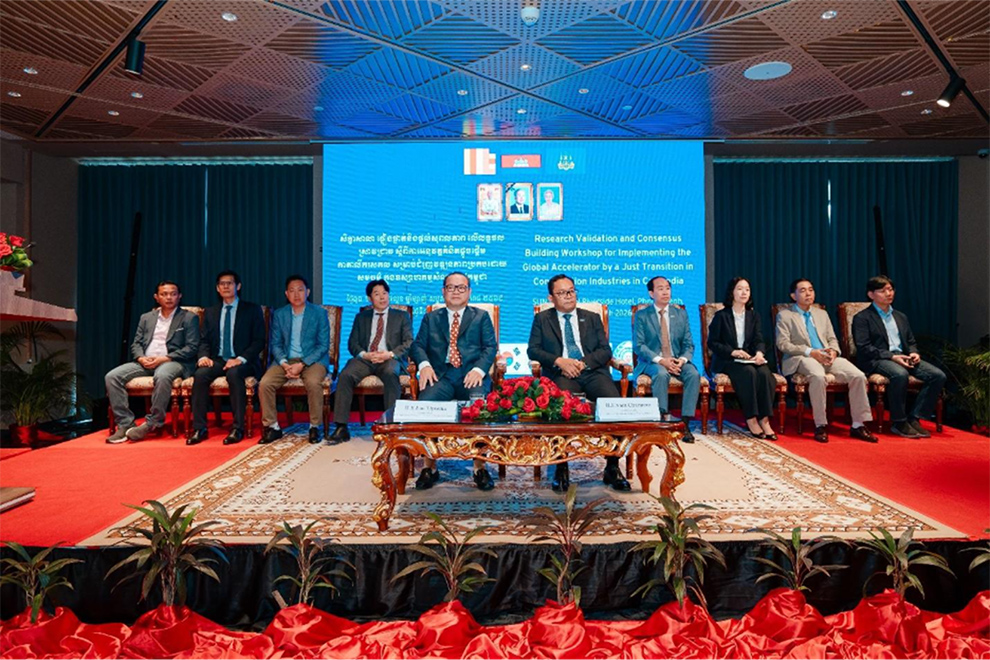
The “Research Validation and Consensus-Building Workshop on the Global Accelerator for a Just Transition in Cambodia’s Construction Industry”, held on March 4 at the Sun & Moon Riverside Hotel in Phnom Penh, brought together representatives from the Ministry of Labour and Vocational Training and the Ministry of Land Management, Urban Planning and Construction, International Labour Organization (ILO) and Korea Partnership Programme, alongside employer groups, worker organisations and international partners.
Officials framed the meeting not as a routine technical consultation, but as a strategic move to align national development priorities with on-the-ground implementation in one of Cambodia’s most important economic sectors.
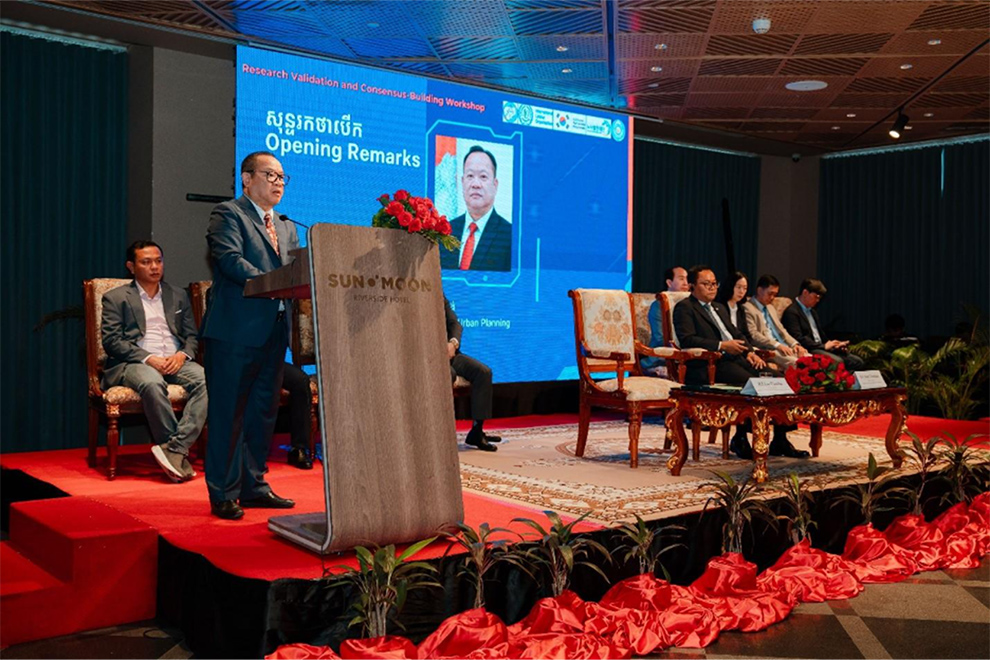
His Excellency Lao Tip Seyha, Secretary of State at the Ministry of Land Management, Urban Planning and Construction, explained that the workshop served as a bridge between the Royal Government’s long-term vision and practical enforcement at construction sites.
“Today’s workshop is not an ordinary technical consultation, but rather a sharp strategic promotion that can connect the vision of the Royal Government’s strategy with the implementation of actual work on construction sites,” he said.
He emphasised that as Cambodia seeks to improve the quality and resilience of its infrastructure, the construction sector must be anchored in clear legal standards and strict compliance.
Effective implementation of construction law, he added, is critical to protecting lives, strengthening investor confidence and ensuring a stable environment for engineering and development projects.
The construction sector has been one of Cambodia’s key growth engines over the past decade, generating employment for hundreds of thousands of workers.

However, it also faces structural challenges, including occupational hazards, limited social protection coverage and a heavy reliance on low-skilled and informal labour.
His Excellency Som Chamnan, Secretary of State at the Ministry of Labour and Vocational Training, said that while the sector continues to contribute to national development, it must adapt to changing economic and environmental realities.
He noted that many construction workers are internal migrants or in vulnerable forms of employment, and called for stronger support to help them adapt to new technologies, improved standards and safer working environments.
“A just transition in the next few years is not only about the environmental agenda,” he said, stressing that worker safety, skills upgrading and social protection must form part of the reform process.
The workshop validated findings from diagnostic research conducted by the Korea Labour and Employment Service under the ILO-Korea Partnership Programme.
The research identified policy gaps, skills mismatches and environmental pressures linked to Cambodia’s construction boom, and proposed an action plan aimed at aligning productivity, worker protection and sustainability.
Mr Shin Hochul, Chief Technical Advisor of the ILO-Korea Partnership Programme, underscored that the proposed action plan is intended as a starting point rather than a final blueprint.
“This action plan belongs to Cambodia. Not to the ILO, not to KLES, not to the Korean government,” he said.
“The decisions about what is needed and how to proceed are Cambodia’s to make – led by government, in partnership with employers and workers,” he added.

He acknowledged that translating commitment into sustained action has proven challenging across the Asia-Pacific region, even in countries with stronger institutional capacity.
The validation of the roadmap, he said, marks the beginning of a longer reform journey.
As a concrete entry point, the programme proposed prioritising occupational safety and health, an area consistently identified by both ministries as urgent and achievable.
During the session, Ms. Chang Eunhye, Programme Officer and Occupational Safety and Health (OSH) Expert, presented the progress and key achievements of the ILO-Korea Partnership Programme, outlining the its ongoing initiatives and milestones in advancing just transition in Cambodia’s construction sector.presented the Asia-Pacific regional case for implementing the Global Accelerator through a just transition in the paper and construction industries, highlighting the need to align productivity, worker protection and environmental sustainability.
This was followed by a presentation by Heungiun Jung, who shared findings from a study on facilitating a just transition in Cambodia’s construction sector, outlining policy gaps, skills mismatches and the importance of social dialogue in managing structural shifts.
Meanwhile, Jung Pil Lee of the Energy & Climate Policy Institute addressed environmental challenges linked to Cambodia’s construction boom and stressed the urgency of shifting toward green jobs, emphasising regulatory reform, investment in low-carbon technologies and workforce reskilling as key pillars of the transition.
Improvements in safety standards, officials said, would have immediate impact on workers’ lives and could build momentum for broader reforms in social protection, skills development and social dialogue.
From April onward, implementation will focus on elements of the action plan that align most closely with Cambodia’s national priorities and institutional capacity.
Further consultations between the government and partners are scheduled to confirm next steps and coordination mechanisms.
Cambodia is designated as a Pathfinder country under the Global Accelerator on Jobs and Social Protection for Just Transitions, reflecting its stated commitment to pursuing environmentally sustainable growth while protecting workers.
Officials expressed hope that, over time, Cambodia’s experience could serve as a model for the region.
For now, the emphasis remains on practical progress. As participants concluded the workshop, the message was clear: the transition of Cambodia’s construction industry must be driven nationally, grounded in law and worker protection, and implemented step by step — starting with safer worksites and stronger standards.