Senator and agribusiness tycoon Mong Reththy is pressing ahead with what he calls a comprehensive, “one for all” strategy in Cambodia’s agricultural sector – linking animal feed production, livestock raising, egg supply and large-scale oil palm cultivation, while preparing for a future domestic cooking oil refinery.
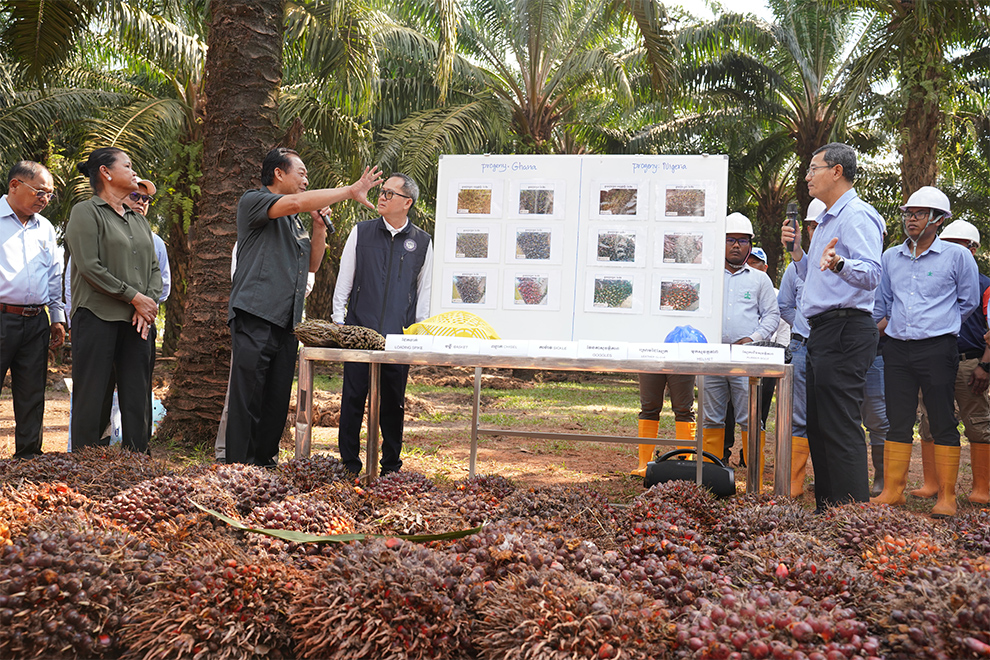
During a recent field visit to his agro-industrial zone in Prey Nob district, Preah Sihanouk province, Reththy laid out an integrated model designed to reduce imports, strengthen local supply chains and create rural employment.
“Animal feed production helps a lot in the agricultural sector,” he said.
“When we process cassava and corn here, we reduce exports of raw materials at low prices and stop importing finished feed at two or three times the cost. That keeps money circulating inside Cambodia,” he explained.
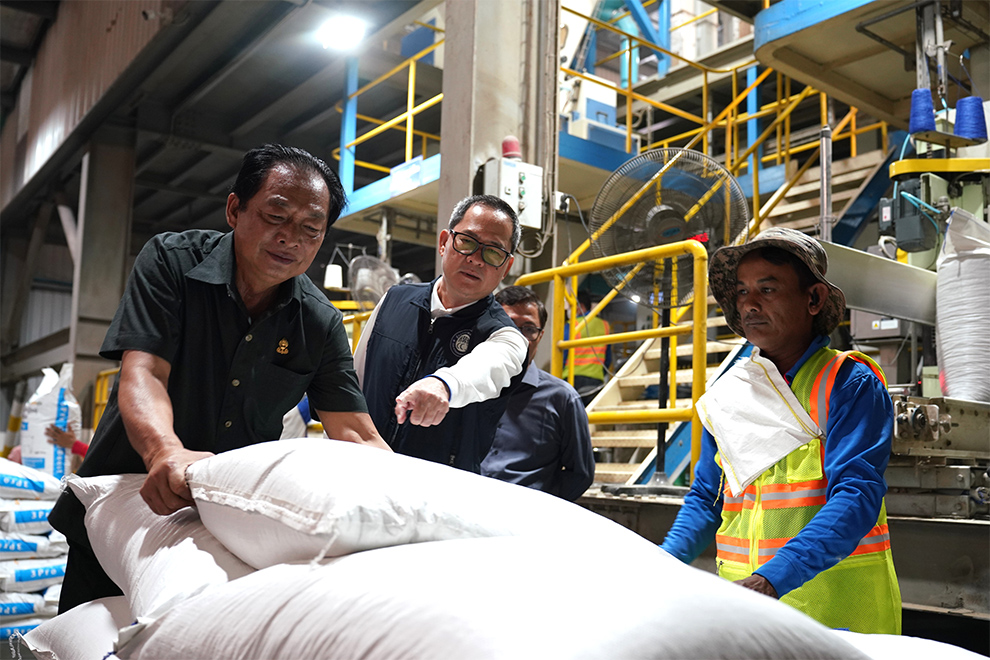
His group’s feed factory currently has an annual production capacity of 220,000 tonnes, with plans to increase that to 350,000 tonnes.
The company spends approximately $40 million each year purchasing cassava and maize directly from Cambodian farmers. By cutting out intermediaries, Reththy argues, growers secure more stable prices and better incomes.
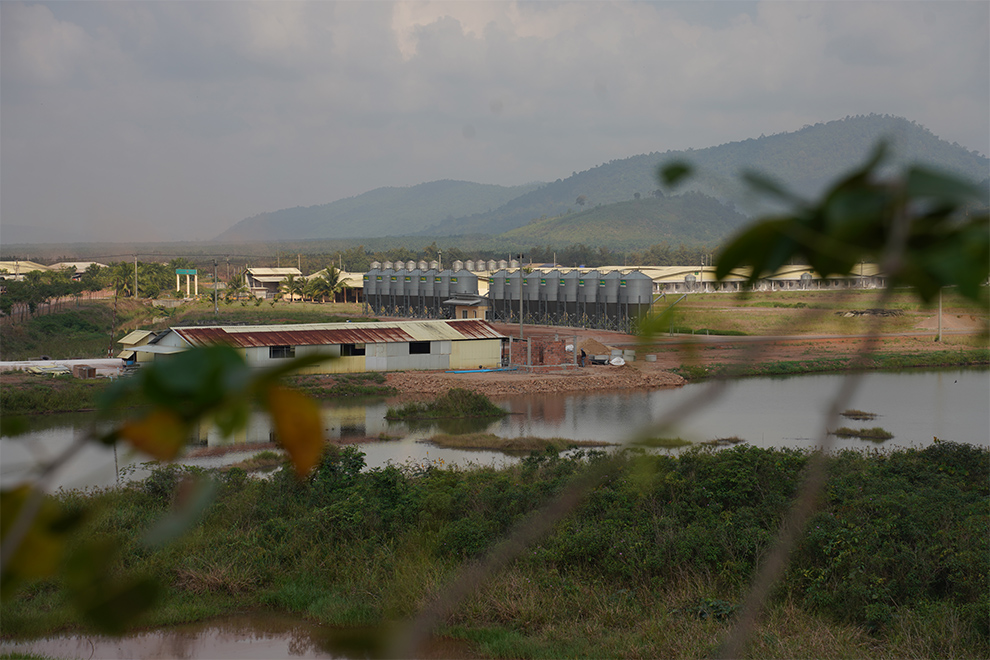

The feed mill underpins a broader livestock network, particularly in pig farming. According to Reththy, Cambodia has undergone a dramatic turnaround in pork production over the past decade.
“Fifteen to twenty years ago, Cambodia imported 3,000 to 5,000 pigs per day from neighbouring countries,” he noted.
“Today we no longer import pigs. We have to produce at least 2,000 offsprings a day to supply local farms. In the last three years, Cambodia has even been able to export pigs,” he added.
He attributed the shift to reduced production costs, improved farm management and the availability of locally produced feed.
Cambodia’s pig sector, once heavily dependent on cross-border supply, now has the capacity to meet domestic demand and generate surplus for export.
The country’s poultry and egg industries have also expanded. Reththy said Cambodia is importing roughly one million eggs to the market for food security.
Beyond pigs and poultry, the group is moving to diversify into fish and duck farming to maximise feed production capacity and further integrate its operations.
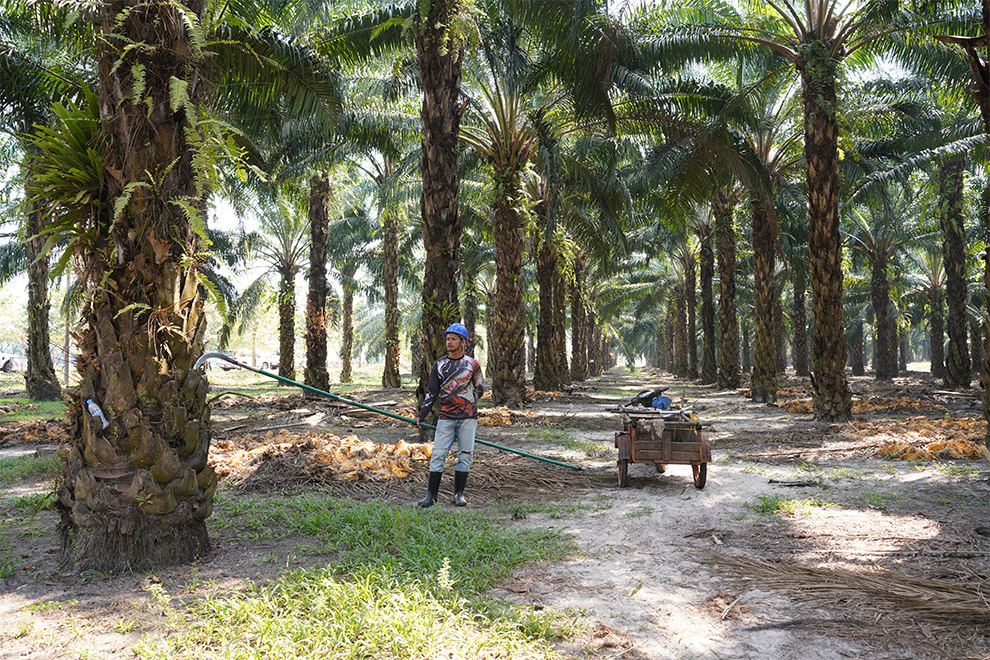
At the plantation level, oil palm remains central to Reththy’s long-term vision.
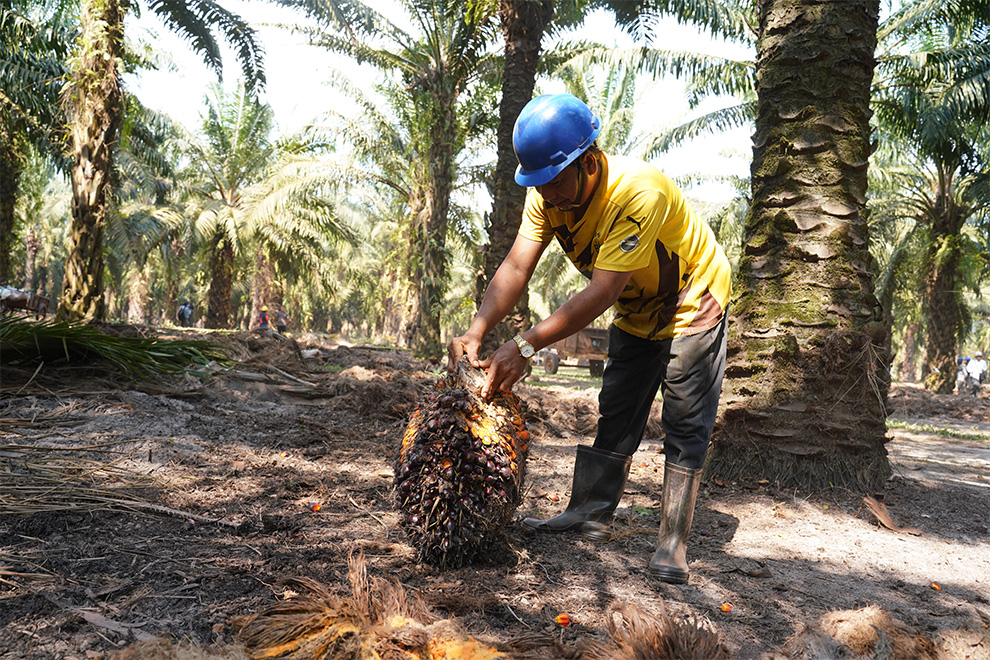
Since planting began in 1995, the group has expanded from 477 hectares to roughly 16,000–17,000 hectares in Prey Nob district, making it one of Cambodia’s largest oil palm operators and among the largest in Southeast Asia.
The project has absorbed more than $120 million in capital investment over nearly three decades. Yet Reththy acknowledged the financial challenges.
“Agriculture requires patience and strong capital. Many investors avoid it because the returns are slow and the risks are high,” he said.
“But I will not give up on agriculture. This is my life’s work,” he stated.
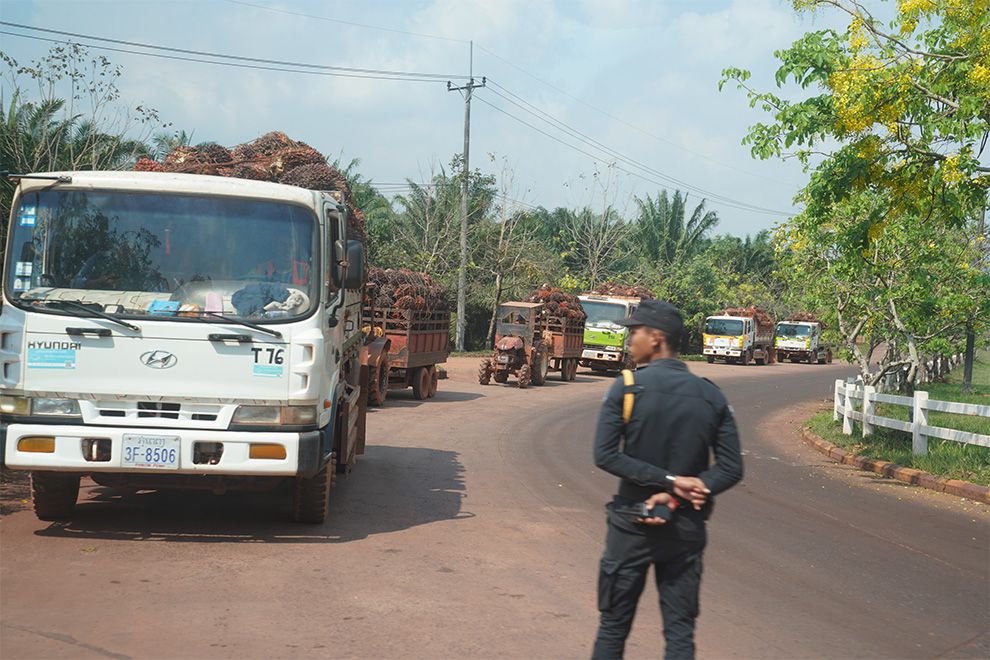
Currently, about 97 per cent of the company’s crude palm oil is exported to India, with annual refined output reaching around 46,000 tonnes and generating tens of millions of dollars in revenue. However, most value-added refining still takes place abroad.
Reththy wants to change that by building a domestic cooking oil refinery.
“I want to establish a cooking oil factory in Cambodia,” he said.
“But 16,000 hectares are not enough. We need at least 30,000 hectares to make a refinery viable. Without sufficient supply, it will not be sustainable,” he explained.
Land availability remains a constraint, as suitable oil palm soil is largely concentrated in Preah Sihanouk, Kampot and Koh Kong provinces. Plantation manager Ith Nop said the company has begun replanting aging trees, some now nearly 30 years old, to maintain yields.
Despite limited profitability to date, the oil palm operations have generated substantial employment.
Tens of thousands of jobs have been created directly and indirectly, with approximately 5,000 families currently tied to its agro-industrial ecosystem.
Workers are provided housing, and Reththy noted that during the Covid-19 pandemic there were no layoffs or wage cuts on the plantations.
His companies have also constructed more than 1,600 kilometres of roads over the past three decades to improve access for rural communities and agricultural logistics.
The push to strengthen domestic agriculture comes as Cambodia seeks to absorb returning migrant workers amid regional labour uncertainties.
Reththy pledged to welcome around 300 Cambodian workers returning from Thailand, offering them employment within his operations.
At the national level, the Ministry of Labour and Vocational Training has reported more than 80,000 job vacancies across the industrial, service and agricultural sectors, as part of efforts to reintegrate returnees and expand domestic employment.
Data from the National Institute of Statistics indicate that livestock production, including pig farming, remains a critical component of rural livelihoods, with hundreds of thousands of animals raised nationwide.
Reththy encouraged investors with capital to establish additional feed mills to expand market access for farmers and enhance competitiveness with neighbouring countries.
The overarching message, he stressed, is one of self-reliance.
“If we strengthen local production, Cambodians do not need to depend on others. We can produce our own feed, raise our own animals, refine our own oil and support our own people,” he said.
“Agriculture is not just business. It is national resilience,” he added.
Club of Cambodian Journalists president Puy Kea drew attention to the broader debate over reliance on imported goods, particularly from Thailand.
Addressing reporters, Puy Kea noted that Thai products — including agricultural goods — are widely consumed across Cambodia. He raised the question of whether the Kingdom could realistically reduce dependence on Thai imports and instead source alternatives from Vietnam, China or boost domestic production.
“Cambodians across the country rely heavily on Thai goods, including agricultural products. If we talk about reducing that reliance, the key question is whether we can produce enough ourselves or find viable alternatives,” he said.
His comments came amid heightened public discussion on cross-border trade and calls on social media to boycott Thai products following periodic tensions along the Cambodia–Thailand border.
While he did not formally announce any organised boycott campaign, Kea urged reporters to examine the practical implications of such sentiments.
He pointed to Mong Reththy Group’s vertically integrated operations — spanning animal feed, pig and poultry farming, aquaculture and oil palm — as an example of how Cambodia could strengthen domestic supply chains.
“Don’t worry. We can produce it ourselves,” he said, referring to agricultural commodities currently imported in large volumes.
“But it requires investment, scale and long-term commitment,” he warned.
“We have worked hard to encourage farmers to plant and raise more, not less,” noted Reththy, adding “Agricultural products should not be used as political tools to undermine production or divide our farmers.”
He stressed that market dynamics — not political slogans — should guide agricultural expansion, arguing that Cambodia’s improved pig production over the past decade demonstrates the benefits of reducing costs and building local processing capacity.