The factories and enterprises within the Royal Group Phnom Penh Special Economic Zone (RGPPSEZ) helped the company earn a net profit of over $8 million in 2025.
According to a press release, RGPPSEZ “continues to demonstrate strong performance and steady growth, reinforcing its position as one of Cambodia’s leading industrial zones”. RGPPSEZ is a subsidiary of Royal Group Phnom Penh SEZ Plc.
In 2025, the company recorded total sales of $41.2 million with a net profit of $8.1 million, representing a healthy net profit rate of 19.7%. These solid financial results were described as “reflecting its operational efficiency and resilience in a dynamic economic environment”.
The press release noted that trade activity within the zone has shown significant growth, highlighting increasing investor confidence and expanding industrial operations.
Export value rose noticeably from $285.87 million in January–February 2025 to $325.36 million during the same period in 2026, an increase of 13.8%. This upward trend reflected the continued expansion of production capacity and the strengthening of supply chain activities within the zone.
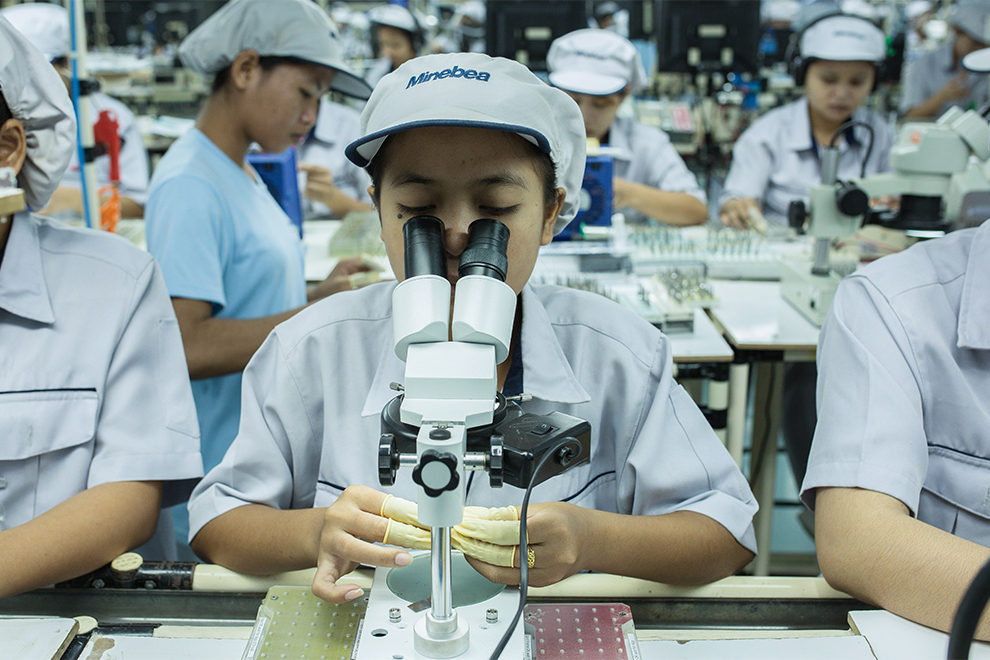
As of February 2026, the zone provides jobs to 55,935 workers, supporting livelihoods and contributing to the development of a skilled workforce.
Kith Meng, chairman of Royal Group Phnom Penh SEZ Plc, noted that RGPPSEZ’s continued growth and progressive operations reflect investor confidence and the collective efforts of all stakeholders.
“We are proud to contribute to Cambodia’s economic development by supporting industrial expansion, trade growth and job creation. This strong partnership (Public-private partnerships) has been instrumental in attracting investment and driving sustainable economic progress for the country,” he said.
“Looking ahead, RGPPSEZ is committed to further enhancing its infrastructure, improving service quality and attracting high-value investments. The zone will continue to play an important role in supporting Cambodia’s industrial growth and its deeper integration into regional and global supply chains,” he added.