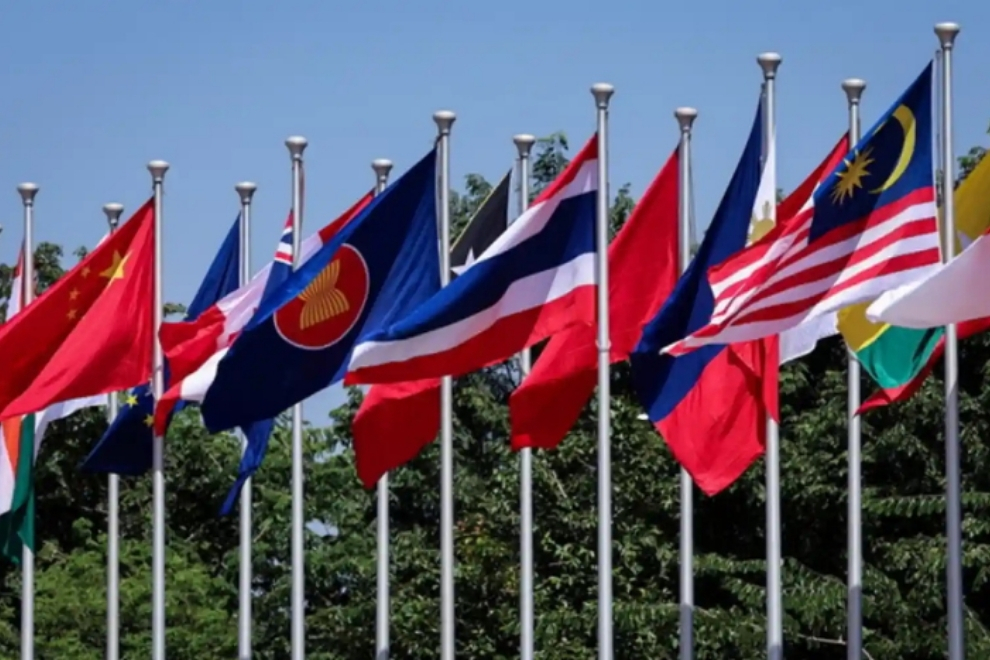
Malaysia’s 2025 Asean chairmanship marked significant achievements and renewed drive for the bloc, but major turning points and unresolved issues still lie ahead.
Following a year defined by intense diplomacy and regional adjustment, Malaysia’s stewardship of Asean in 2025 injected new energy into economic integration and external partnerships — helping reinforce the bloc’s role as a stabilising force in an increasingly competitive Indo-Pacific.
With leadership shifting and geopolitical pressures mounting, the question once again arises: what direction will Asean take next?
Strategic fine-tuning
Malaysia’s tenure saw several notable diplomatic and economic advances. Vietnamese deputy foreign minister Dong Hoang Giang recently told FMT that 2025 delivered “strong breakthroughs in economic growth and innovation” throughout Asean.
Over the past year, progress was recorded in negotiations on the Asean Digital Economy Framework Agreement (DEFA), the launch of the Asean Geo-Economics Task Force, the unveiling of Asean Community Vision 2045 and the start of efforts to establish a more unified long-term strategy.
Dong highlighted that “New frameworks are gradually taking shape,” citing DEFA, the Asean Power Grid and the Asean Digital Master Plan.
“These lay the foundation for a digital community driven by science, technology, and innovation,” he said.
One signature moment of 2025 was the first-ever Asean–Gulf Cooperation Council (GCC)–China Summit.
Speaking at the Asean Outlook on the Indo-Pacific (AOIP) Forum, Institute of Strategic and International Studies chairman Faiz Abdullah noted that bringing China into the Asean-GCC framework gives the partnership “even more depth”.
“China’s technological advancement and financial infrastructure complement the GCC’s substantial resources,” he explained, adding that Asean’s capacity to gather such diverse players underscores its centrality amid rising tensions.
US ambassador to Malaysia Edward Kagan, in a recent FMT interview, similarly highlighted the region’s strategic weight, saying Washington recognises that the “most important chapters” of this century will unfold in the Indo-Pacific.
Amid intensifying competition among global powers, Asean has sought to maintain control over its regional agenda by convening partners and promoting common interests.
At the AOIP Forum, Asean-Malaysia National Secretariat director general Zanariah Zainal Abidin stressed that the Indo-Pacific should not be viewed as a theatre of rivalry.
“It is a region where inclusivity is power, sustainability is strategy and centrality is responsibility,” she said.
“Asean’s strength lies in dialogue, in our ability to bridge divides and in our commitment to ensuring that the Indo-Pacific remains open, inclusive, and cooperative,” she noted.
Work still to be done
Despite the upbeat progress, Asean’s real challenge is implementation. Several initiatives — including the Geo-Economic Task Force and Asean Industrial Strategy — remain in the preliminary stages.
ISEAS–Yusof Ishak Institute senior fellow Joanne Lin recently cautioned that Asean must improve its follow-through by developing sector-specific action plans, financing options and greater collaboration with industry.
This urgency is heightened by the region’s position between competing technology ecosystems and the resurgence of economic nationalism worldwide.
At the 9th Asean Media Forum (Nov 6), Malaysia’s deputy investment, trade, and industry minister Liew Chin Tong suggested that Asean could become the “champion of middle technology”, functioning as a dependable, neutral technology hub.
“As long as Asean – particularly Malaysia, Singapore, and Vietnam – build a reputation as a reliable semiconductor source, we can weather geopolitical tensions,” he said.
Internal disparities remain a key concern, especially after Timor-Leste was admitted as the 11th member.
“If we don’t act, Asean could split into three tiers of wealth,” veteran diplomat Ilango Karuppannan warned in a recent interview, adding, “We don’t want this kind of division to threaten Asean’s cohesion”.
At the same time, the tentative rapprochement between Thailand and Cambodia requires cautious handling, and the bloc still lacks a comprehensive peacekeeping mechanism.
In an FMT column, International Islamic University professor Phar Kim Beng emphasised that consultation and consensus continue to be vital.
“What is needed is the political will to activate existing mechanisms and coordinate them effectively in the field,” he said.
The Philippines takes the lead
The Philippines will chair Asean in 2026 under the theme “Navigating Our Future, Together”. With a slowing global economy and continued geopolitical uncertainty, the coming year is expected to be even more demanding than 2025.
At the AOIP Forum, Faiz highlighted how Southeast Asia’s interests are increasingly tied to a complicated and unpredictable external landscape.
“The lines between geopolitics and geoeconomics have blurred and now move almost in lockstep,” he said, stressing the need for strong international cooperation.
Philippine foreign affairs secretary Maria-Theresa Lazaro told FMT that Manila intends to pursue innovation without losing continuity.
She said the country’s priorities align with the Asean Community’s three pillars and added that the Philippines aims to “build on what has already been done and achieved”.
Manila’s agenda includes advancing the South China Sea Code of Conduct, expanding climate action and pushing for further progress on Myanmar — an issue that continues to test Asean unity.
Toward a new phase
Asean’s current momentum is the result of sustained effort over many years, with Malaysia’s 2025 leadership sharpening the bloc’s focus amid rising geopolitical pressure and a slowing world economy.
The year 2026 will test Asean’s ability to respond decisively.
The central question is no longer whether Asean matters — its relevance is well-established — but whether it can deliver on the promises embedded in its frameworks, partnerships and people-centred aspirations.
Malaysia and its partners have strengthened the foundational structure. It is now up to the region to determine what it will build upon it.
Alina Khai is a Malaysian journalist. The views and opinions expressed are her own.