SEOUL – Tensions between China and Japan also appear to be affecting Korea’s K-pop industry, as events featuring groups with Japanese members are either canceled or revised.
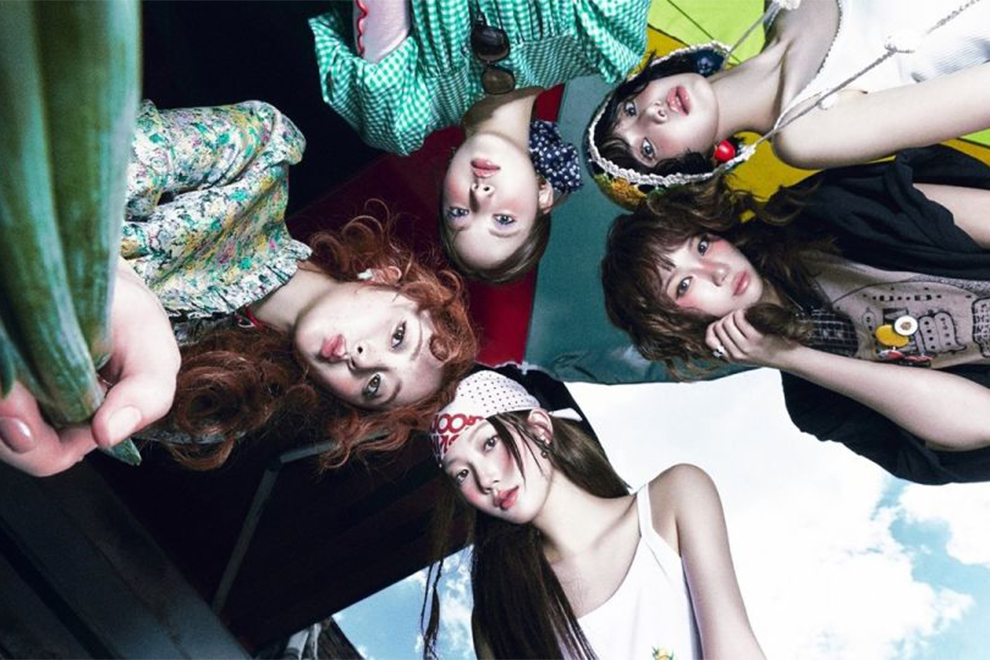
One such event was Le Sserafim’s meet-and-greet event for its single “Spaghetti,” scheduled for Sunday in Shanghai. The event was canceled due to an “uncontrollable factor” with no further details given.
Two of the girl group’s five members — Sakura and Kazuha — are Japanese, and strained bilateral relations between the two countries are seen to have likely played a role.
In recent weeks, multiple concerts and fan events featuring Japanese artists or multinational K-pop groups with Japanese members have been canceled in China.
On Dec. 6, boy group Close Your Eyes held a fan meeting in Hangzhou, China, without Japanese member Kenshin. No clear reason for his absence was stated.
That same day, a fan meeting event featuring trainees from Incode Entertainment who starred in Mnet’s K-pop competition program, “Boys II Planet,” was abruptly canceled hours before starting. The lineup included two Japanese members, Masato and Sen.
Incode cited “a significant and unexpected force majeure situation” that made the event impossible to proceed with, despite efforts to explore alternatives.
Since Seoul’s 2016 decision to install the US’ THAAD missile defense system in Korea, China essentially banned South Korean entertainment, largely restricting K-pop concerts and related promotional activities. Smaller fan meetings and signing events without on-stage performances, however, had remained possible.
The friendly and cooperative atmosphere established during the Nov. 1 Korea-China summit had raised hopes of a lift on the unofficial “Hallyu ban.” But the series of disruptions targeting teams with Japanese members has sparked fresh concerns in the industry.
K-pop’s global orientation means international members have long been a common feature of idol groups. Lineups evolved from an early focus on Chinese members to feature artists from a wider range of regions. With China’s ban on Korean entertainment lasting almost a decade, the industry has seen a particular increase in groups featuring Japanese members as agencies seek to target both Korean and Japanese listeners. Representative examples include Hybe’s Enhypen, JYP Entertainment’s Nexz and SM Entertainment’s NCT Wish.
“It is too early to determine whether the conflict between China and Japan will be short-term or evolve into a structural constraint that further restricts K-pop activities in China. Until then, the K-pop industry finds itself walking a precarious tightrope, as it watches how the situation unfolds,” culture critic Kim Heon-sik told The Korea Herald on Sunday.
“However, as cultural exchanges between China and Japan stall, a well-calibrated response from the K-pop industry could turn this situation into an opportunity, not just to navigate the existing Hallyu ban, but also further expand its presence in the Chinese market.”
ANN/The Korea Herald