JAKARTA – The government is preparing new rules aimed at tackling disinformation and foreign propaganda, raising concerns among rights groups that such a move will narrow the space for public criticism and online freedom of expression.
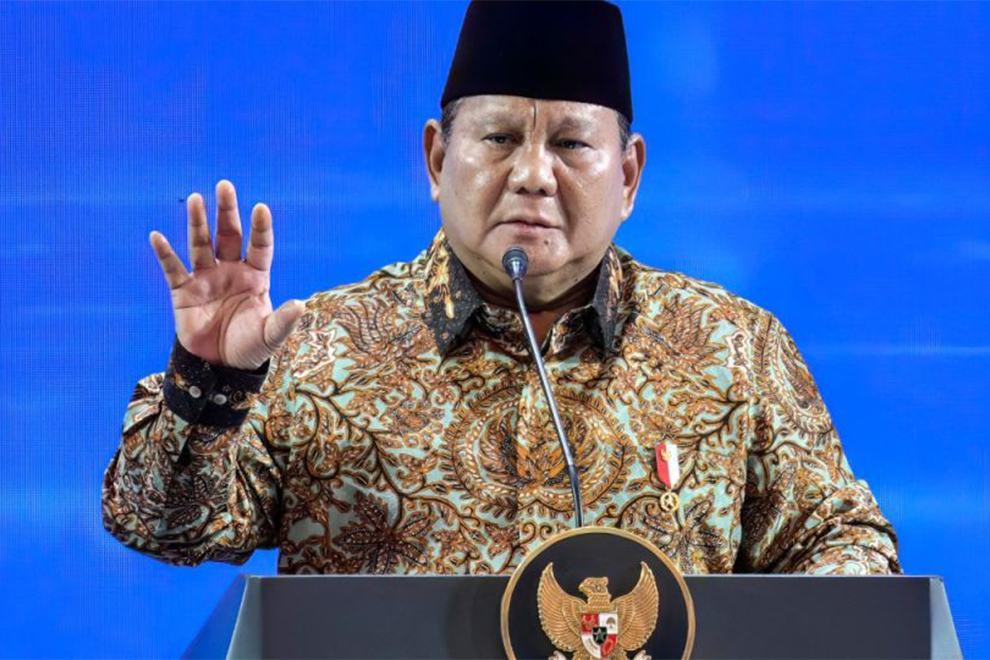
The regulation is currently being studied by the Law Ministry following instructions from President Prabowo Subianto to start drafting the bill, said Coordinating Law, Human Rights, Immigration and Correctional Services Minister Yusril Ihza Mahendra last Thursday.
The senior minister did not reveal details of the planned regulation, but highlighted the need for strategies to combat disinformation and foreign propaganda by pointing out many countries already have similar legislation to protect their national interests.
“We have experienced this ourselves. There is a lot of disinformation and misunderstandings surrounding our national developments and interests that later become propaganda aimed at discrediting us,” Yusril said as quoted by Antara, adding false information tailored against the country not only affected the politics, but also the economy.
An academic manuscript serving as the basis for the draft bill, which has been circulating among journalists, explained the government’s rationale for an anti-disinformation and foreign propaganda law. It cited that existing regulations dealing with the matter fragmented and inadequate to address the issue systematically.
The manuscript warned disinformation poses a threat to democracy, public order and national security, arguing that it is an “organized and systemic phenomenon” involving “networks of fake accounts, bots, monetized misleading content and cross-border information operations”.
Rather than targeting individuals, the draft bill proposes focusing on governing the broader information ecosystem. It is expected to apply for digital and non-digital platforms, social media platforms, broadcasting institutions and organized actors such as paid “buzzers” or influencers, as well as systemic disinformation and cross-border operations.
Sanctions proposed in the manuscript include administrative penalties for “negligent platforms” as well as criminal punishment aligned with the new Criminal Code (KUHP) for “perpetrators of disinformation that leads to public unrest”.
The manuscript stresses that criminal sanctions should be treated as a last resort, targeting only “organized actors who deliberately trigger systemic disruption”, while placing greater emphasis on “public corrections, official clarifications, digital literacy initiatives, platform transparency obligations and proportional administrative penalties”.
Threatening civil liberties
The planned regulation was met with opposition from rights groups, which called the initiative is procedurally flawed, substantively outdated and potentially harmful to civil liberties.
In a statement published last Thursday, the Indonesian Legal Aid Foundation (YLBHI) warned the proposed bill could curb freedom of expression by giving officials broader power to control information or suppress dissent, which reflects a broader pattern of authorities targeting critics.
The group cited repeated claims made by Prabowo and other officials accusing criticism from civil society groups of being foreign propaganda or serving foreign interests.
The latest statement was made on Dec. 24, when the President said in a speech at the Attorney General’s Office (AGO) headquarters in Jakarta that he was often “laughed at” when talking about “foreign powers” wanting Indonesia to be “dismissed”.
YLBHI urged the government to halt the plan for the regulation, asserting it risks limiting freedom of expression guaranteed in the 1945 Constitution and the International Covenant on Civil and Political Rights.
The group also criticized the drafting process for lacking transparency and being rushed, with the initiative began abruptly despite such a policy not being included in the National Legislation Program (Prolegnas) agreed by the House of Representatives and the government.
Digital rights advocate Wahyudi Djafar of the Raksha Initiative said the proposal risks overlapping existing regulations already in place to address disinformation, such as the KUHP and revised Information and Electronic Transactions (ITE) Law.
“Introducing another law with similar provisions could expand government control over online content, increasing the risk of censorship and restrictions on public criticism,” Wahyudi said on Saturday.
He also slammed the manuscript’s reliance on legal models deemed no longer reflecting current policy debates, such as Singapore’s Protection from Online Falsehoods and Manipulation Act passed in 2019, Malaysia’s now-repealed Anti-Fake News Act and Germany’s Network Enforcement Act passed in 2017.
“Indonesia already has the legal tools,” Wahyudi noted. “What is needed is a coordinated, balanced approach across ministries that safeguards information integrity without undermining freedom of expression.”
State Secretary Prasetyo Hadi said the bill was still in the planning stage and has not been formally drafted.
He also asserted the policy’s aim to ensure platform accountability for content rather than to restrict public access to information, and an obligation for technological advancements, including artificial intelligence, to be accompanied by responsibility to prevent misuse for harmful purposes.
“Every platform and source of information must be accountable,” Prasetyo said last Thursday, “and we need to consider the impact of these platforms, especially when used by irresponsible parties.”
ANN/The Jakarta Post