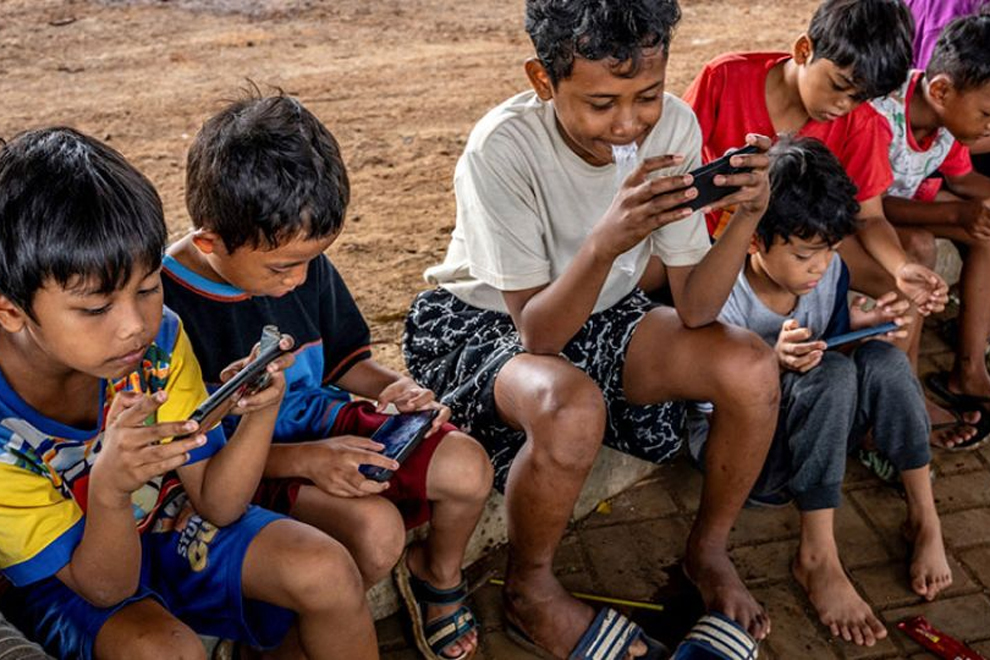
JAKARTA – The threat of online child exploitation continues to loom despite the government’s plan to restrict children’s access to certain digital platforms, as experts warn that predators can easily move across multiple online spaces where young users interact.
Indonesia will soon begin limiting accounts belonging to users under 16 on several “high-risk platforms” under the Child Protection in Digital Space Regulation (PP Tunas), which aims to protect children from online dangers ranging from pornography and cyberbullying to exploitation.
However, parents and experts say the policy alone may not fully shield children from online predators.
Sali, a 29-year-old mother of a five-year-old in Jakarta, said she had long been concerned about the risks children face in the digital environment. Although she strictly limits her daughter’s access to gadgets, she believes the dangers remain unavoidable for a generation growing up online.
“Among digital natives, parental monitoring is increasingly limited. Cyberbullying and child exploitation are very likely to occur,” Sali told The Jakarta Post.
One common form of online exploitation is child grooming, a process in which perpetrators build trust with minors before manipulating them emotionally or sexually, according to family and child psychologist Anna Surti Ariani.
In digital spaces, predators can easily conceal their identities by using fake names or ages to interact with children. They may lure victims with virtual gifts such as stickers, in-game rewards or exclusive access to certain features before gradually pressuring them to share personal information or intimate images.
Beyond immediate harm, such exploitation can also have lasting psychological consequences, including depression, anxiety, emotional regulation problems and disrupted child development, Anna said.
Cybersecurity expert Alfons Tanujaya warned that the risk extends beyond major social media platforms. Under the new policy, users under 16 will be prevented from gradually creating accounts on eight platforms considered high risk by the Communications and Digital Ministry.
These include the United States-owned services such as video-sharing giant YouTube, tech giant Meta’s Facebook, Instagram and Threads, gaming platform Roblox and social network X, as well as Chinese-owned services like video sharing app TikTok and livestreaming app Bigo Live.
Alfons, however, said that any platform that allows interaction between users, including messaging services such as WhatsApp and Telegram, community platforms like Discord and online games including Minecraft and PUBG, can potentially be used by predators to approach children.
He emphasized that stronger mitigation measures are needed from multiple parties, including the government, platform operators, parents and educators.
“External pressure is needed to ensure platforms implement child protections […] The government’s role is to set clear, enforceable regulations so that companies comply with the rules,” he said.
Officials from the communications ministry did not respond to requests for comment from the Post.
Meanwhile, Health Ministry senior official Imran Pambudi said separately that younger children are particularly vulnerable to online manipulation because their cognitive development is still incomplete.
“The frontal lobe of the brain, which helps distinguish right from wrong, is more developed around the age of 16,” he said, adding that younger children may struggle to recognize predatory behavior online.
Still, experts stress that restricting access to digital platforms cannot fully eliminate the risk.
Anna said protecting children from grooming requires broader efforts, including digital literacy education in schools and stronger parental involvement at home.
“Children who grow up in supportive environments are less likely to seek validation or attention from strangers online,” she said. “That reduces the risk of grooming.”
ANN/The Jakarta Post