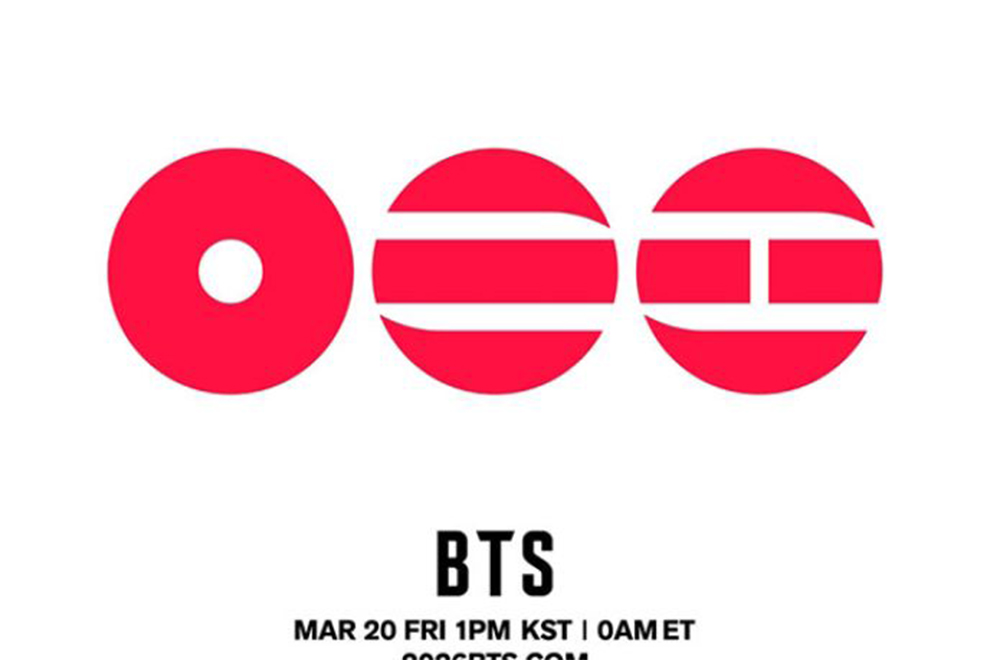
SEOUL – BTS officially revealed on Friday that their long-awaited fifth full-length album is titled “Arirang” and will be released in multiple physical versions on March 20.
The upcoming album was announced on Jan. 5 through the fan platform Weverse. It promises to “delve into the emotional journey and introspection experienced by the seven members over the years,” according to the group’s agency, Big Hit Entertainment.
With this in mind, “Arirang” is expected to carry deep meaning in accordance with the level of significance “Arirang” holds in Korean cultural history.
What is ‘Arirang?’
Arirang is a Korean folk song with approximately 3,600 variations of 60 different versions, consisting of the refrain “arirang, arirang, arariyo” as well as two simple lines that differ from region to region.
The song is estimated to be at least 600 years old and does not have a named original singer, as it is a traditional song that was passed down for centuries. “Arirang” appears twice on the UNESCO Intangible Cultural Heritage list, submitted by South Korea in 2012 and North Korea in 2014.
The folk song is often linked to what Koreans call “han,” or a word referring to the complex emotion of deep sorrow, longing and grief mixed with resilience and hope. “Arirang” is known to address themes of separation, lost love, tragedy and pain, but also perseverance and love for one’s country based on its regional variations as well as how the song is sung.
Another major theme associated with “Arirang” is reunion, which fans believe makes the title a reference to the hiatus the members took throughout their period of military enlistment.
The term “Arirang” itself carries multiple interpretations.
Some linguists suggest that in ancient Korean, “ari” meant beautiful and “rang” meant “the one,” together forming the meaning “beautiful one.” Other researchers also say “ari” conveyed a sense of deep longing, rendering “arirang” as a phrase expressing yearning for a beloved — something both beautiful and painfully missed.
“Arirang” has held a key, symbolic position in Korea’s modern history — including during the Japanese colonial rule, the 1950-53 Korean War and the division of the peninsula — where the folk song has served as a symbol of national identity and resistance. Historic records suggest that the song was a rallying cry during Korea’s struggle for independence under Japanese occupation, when efforts to eradicate Korean culture were at their peak.
What ‘Arirang’ could mean for BTS
For BTS, choosing “Arirang” as its next album title appears to be both a symbolic and strategic decision, signaling a recalibration of the group’s identity following years of global expansion and an extended period of separation.
The themes traditionally associated with “Arirang” — separation, endurance and reunion — closely mirror BTS’ recent trajectory.
“Since announcing their group hiatus in 2022, the members have each fulfilled mandatory military service and pursued individual artistic paths, temporarily suspending full-group activities,” music critic Lim Hee-yun explained to The Korea Herald.
“Throughout this time, BTS waited for one another to fulfill their duties before reuniting together, but also to reunite with their fans, Army. Keeping that in mind, ‘Arirang’ reads as a metaphor for both BTS and Army, for crossing a long and arduous path before eventually coming together.”
Beyond personal narrative, the album title also reflects a conscious return to cultural roots.
After years of record-breaking global success driven largely by incorporating Western pop frameworks into their tracks and English-language releases, BTS’ decision to foreground one of Korea’s most significant cultural symbols “suggests a renewed emphasis on reconnecting with their identities,” according to Lim.
Big Hit Music has previously said the upcoming album will feature “music that best embodies BTS’ musical identity.”
The album was announced earlier by Big Hit Music to be BTS’ fifth full album, consisting of 14 tracks. Its release will mark BTS’ first full-group comeback in nearly four years, since their anthology album “Proof” in June 2022. It will also be the group’s first full-length release since “Map of the Soul: 7” in February 2020.
Details behind the physical “Arirang” album were also revealed. The album will be released in multiple versions, including a “Rooted in Korea” edition, a “Rooted in Music” edition and the “Living Legend” edition.
There will also be Weverse exclusive albums, as well as a “Travel Tag CD Box Set.” A limited edition red vinyl and member-specific vinyls differing in color and design will also be released.
ANN/The Korea Herald