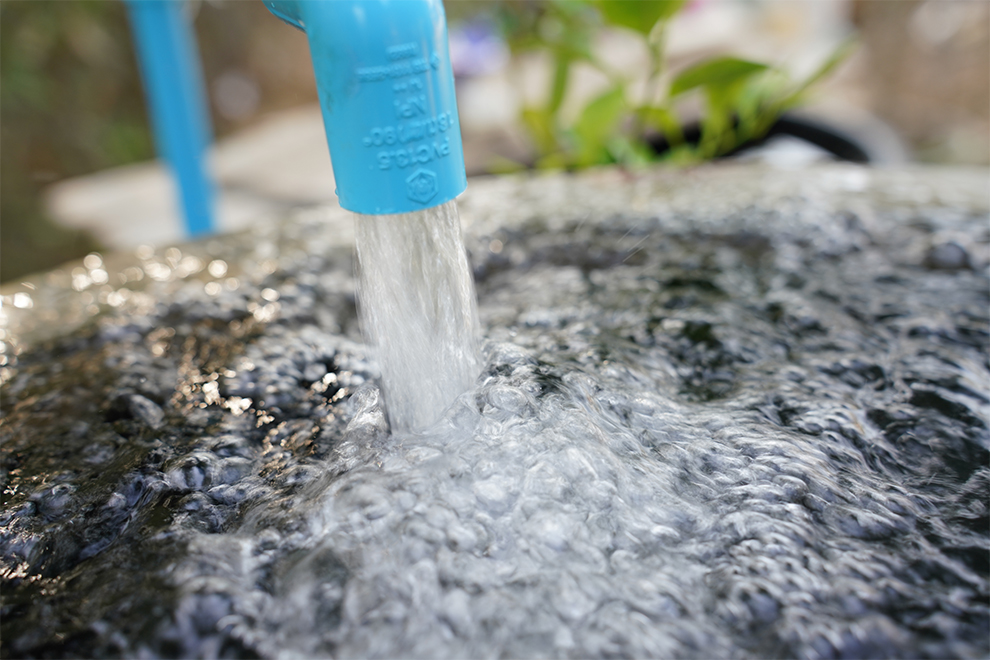
For nearly two decades, Siek Im carried the cost of water in ways most urban households no longer think about.
Living in Chrab Krasang village, Wat Kor commune, she and her neighbours relied on water delivered by truck, paying 10,000 riel ($2.50) per load.
Each month, her family used around four truckloads for cooking, bathing and washing clothes — a total of 40,000 riel ($10) — not including additional bottled water for drinking.
Now, after almost 20 years without piped supply, clean water flows directly into her home.
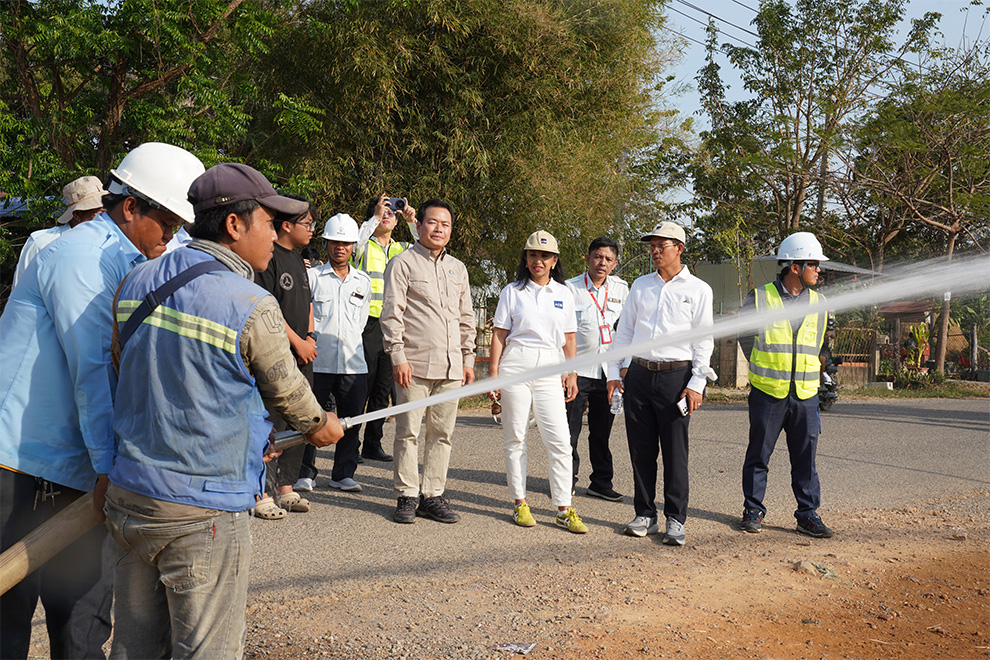
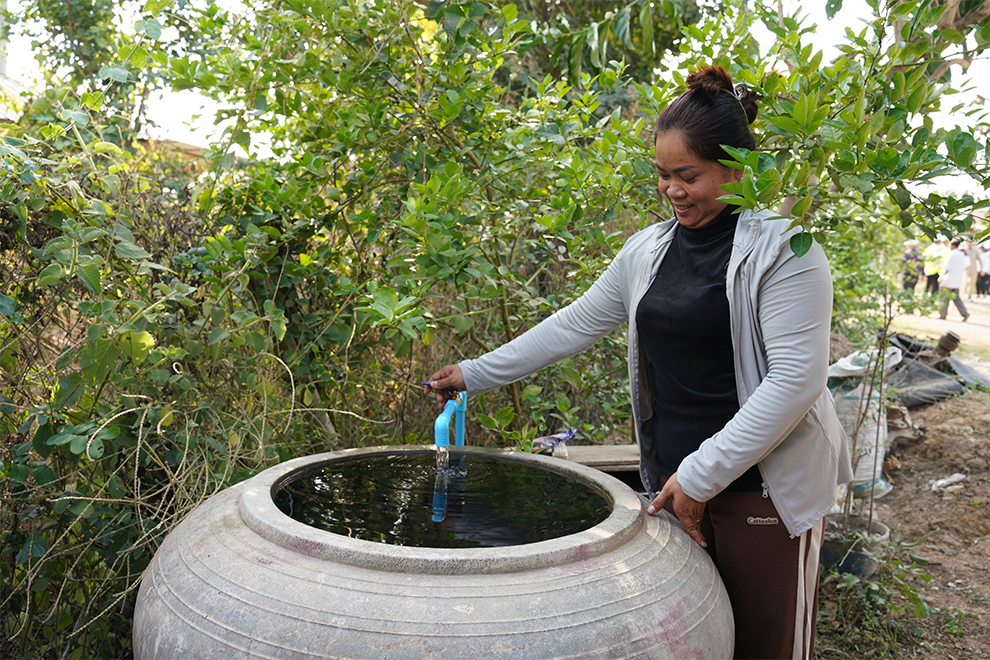
“I am very happy that we now get clean water at a low price,” the 48-year-old said, smiling during a visit to her village by Asian Development Bank (ADB) country director for Cambodia Yasmin Siddiqi.
For families like hers, the change is more than convenience. It is a financial relief and a public health safeguard.
Thuk Mala, 33, a mother of two from the same village, explained that her household has been using the new supply for a few days.
“It is very clear, unlike bottled water, which is cloudy, not very convenient to use, and more expensive. We still buy 20 litres of pure water for drinking, but this makes daily life much easier,” she said.
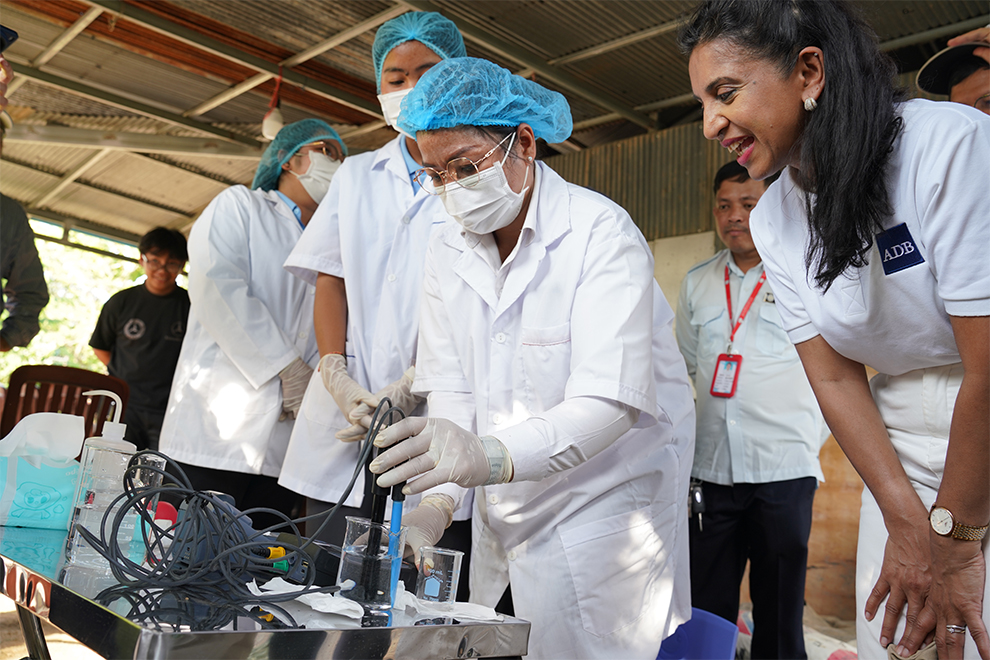

Their village is among the first beneficiaries of the newly constructed Kampong Seima Water Treatment Plant, part of a major infrastructure initiative backed by more than $100 million in combined financing from ADB, the French Development Agency (AFD) and the Cambodian government.
The treatment plant in Battambang is one component of the broader Provincial Water Supply and Sanitation Project (PWSSP), a $104.08 million initiative aimed at strengthening sustainable water and sanitation infrastructure across Battambang, Siem Reap and Kampong Cham provinces.
Approved on December 7, 2017, the project is financed through a $50 million loan from the Asian Development Bank (ADB), $43.54 million in cofinancing from the French Development Agency (AFD) under partial administration, and $10.54 million from the Cambodian government.
Executed by the Ministry of Industry, Science, Technology and Innovation, in partnership with the Ministry of Public Works and Transport, the programme was scheduled to close on December 31, 2025 for ADB financing and June 30, 2026 for AFD support, marking a long-term investment in expanding safe water access, improving sanitation services, and enhancing climate resilience in Cambodia’s fast-growing urban centres.
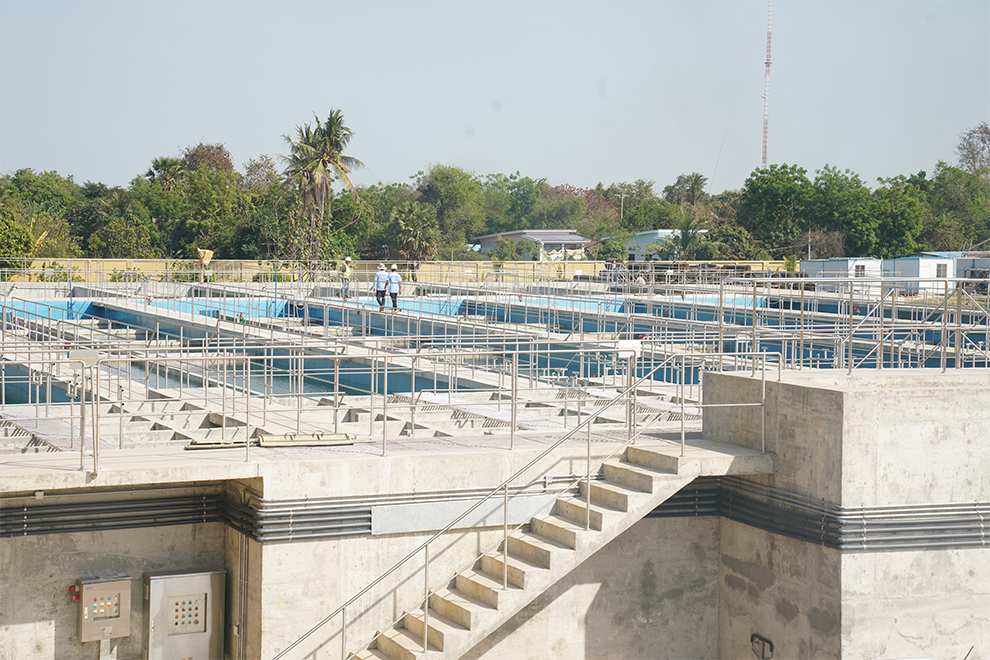
Signed on July 18, 2022, with a total value of approximately $31.7 million for the Battambang component, construction began in October 2022 and was completed on December 30 last year.
The project includes a pumping station with a capacity of 55,000 cubic metres per day, a 50,000 m³/day treatment plant, and more than 95 kilometres of transmission and distribution pipelines.
With the new plant, the Battambang Water Supply Authority’s total production capacity has increased dramatically — from 33,520 cubic metres per day in 2025 to 83,520 per day after project completion.
Coverage in the licensed service area is expected to rise from 88 to 94 per cent, while the proportion of residents receiving piped water will increase from 83 to 89 per cent.
Around 7,000 additional households are expected to gain access to quality drinking water, pushing the number of people served to more than 219,000.
Houl Bonnarith, undersecretary of state at the industry ministry, said the expanded clean water network will strengthen household economies, support communities and help unlock industrial potential in Battambang province, particularly in the agro-industry sector.
He said current projections indicate that the new water supply capacity can meet the province’s target population demand through 2040.
“However, we will closely monitor operations once we reach full production capacity, because improved clean water access can also drive rapid growth in demand, including from expanding industrial activities. We will review the situation after six months to one year,” he stated.
He added that if demand continues to rise, the production facility has the potential to further expand capacity by an additional 20,000 to 30,000 cubic metres per day.
Siddiqi said the project is designed not only to expand connections but also to improve supply reliability for existing customers.
“The purpose of this fund is really to upgrade on two fronts,” she said.
“One, to increase the number of households so that 7,000 more households will receive quality drinking water. And two, to improve the supply into the existing distribution system,” she added.
She noted that about 40,000 households are already interconnected in Battambang, and the project aims to strengthen pressure and ensure more consistent, 24-hour supply.
Beyond infrastructure, Siddiqi stressed the importance of capacity building. Modern systems installed at the plant allow operators to monitor and control operations remotely through a state-of-the-art control room.
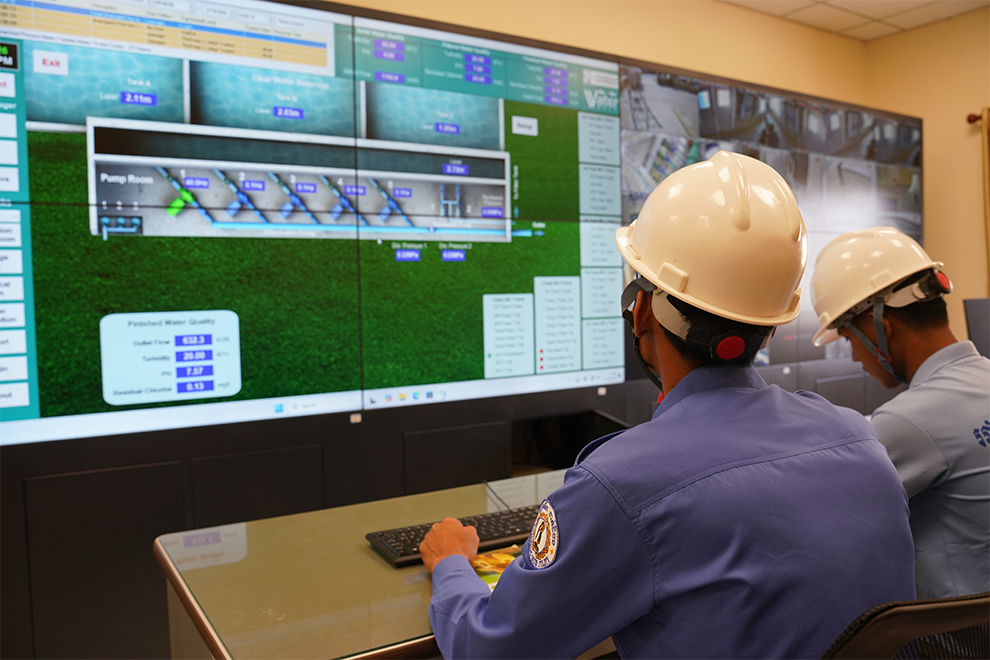
“Capacity building is really important,” she said, adding “We ensure that training of our staff and government personnel is in place, so they know how to maintain and operate these systems well.”
The broader project also supports wastewater management, including a 12,000 cubic metre per day treatment facility in Battambang using trickling filter technology and a new trunk sewer in Siem Reap.
The objective is to address rapid urbanisation, reduce pollution in the Sangkae River, and strengthen climate resilience.
Access to clean water, Siddiqi emphasised, is fundamental to health, hygiene and economic growth.
“Safe, clean drinking water provides us with a healthy life. There are many waterborne diseases if you don’t have access to clean water. For young children, diarrhea can have very harmful consequences,” she said.
She added that reliable water supply is also critical for businesses, agro-processing industries and tourism — a key sector for Battambang.
“When we introduce tourism to Battambang, having clean, safe drinking water could be a great selling point,” she said.
For Siek Im, however, the impact is immediate and personal. Turning on the tap no longer means worrying about delivery schedules or counting truckloads.
After 20 years of waiting, clean water now runs at the push of a button — a simple act that signals a deeper transformation for thousands of families across Battambang province.