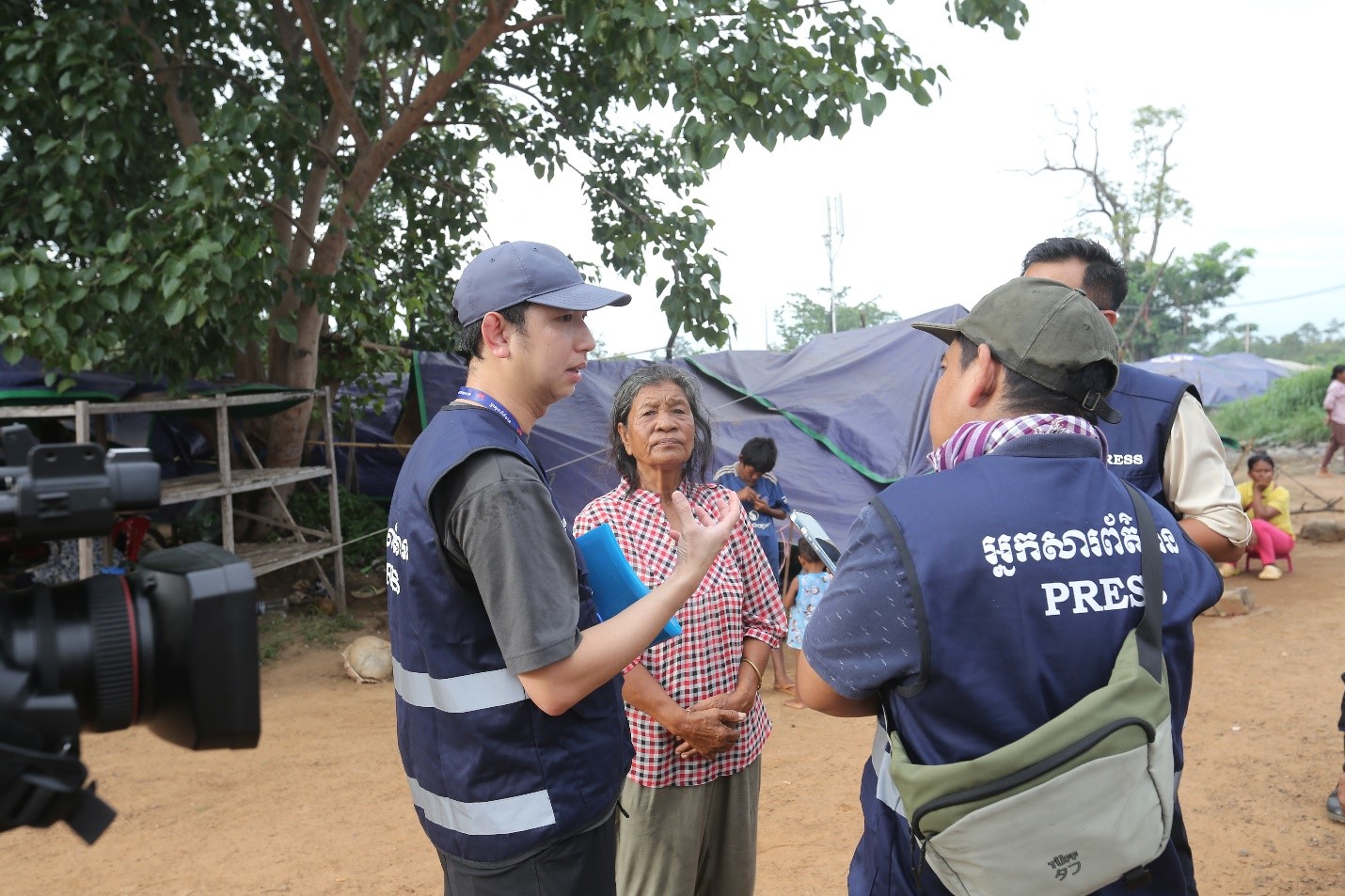
A group of journalists from China, Singapore, Indonesia, Malaysia, Vietnam and Cambodia visited an evacuation camp in Preah Vihear province on August 28. There, they witnessed first-hand the plight of families displaced by the ongoing Cambodian–Thai border tensions.
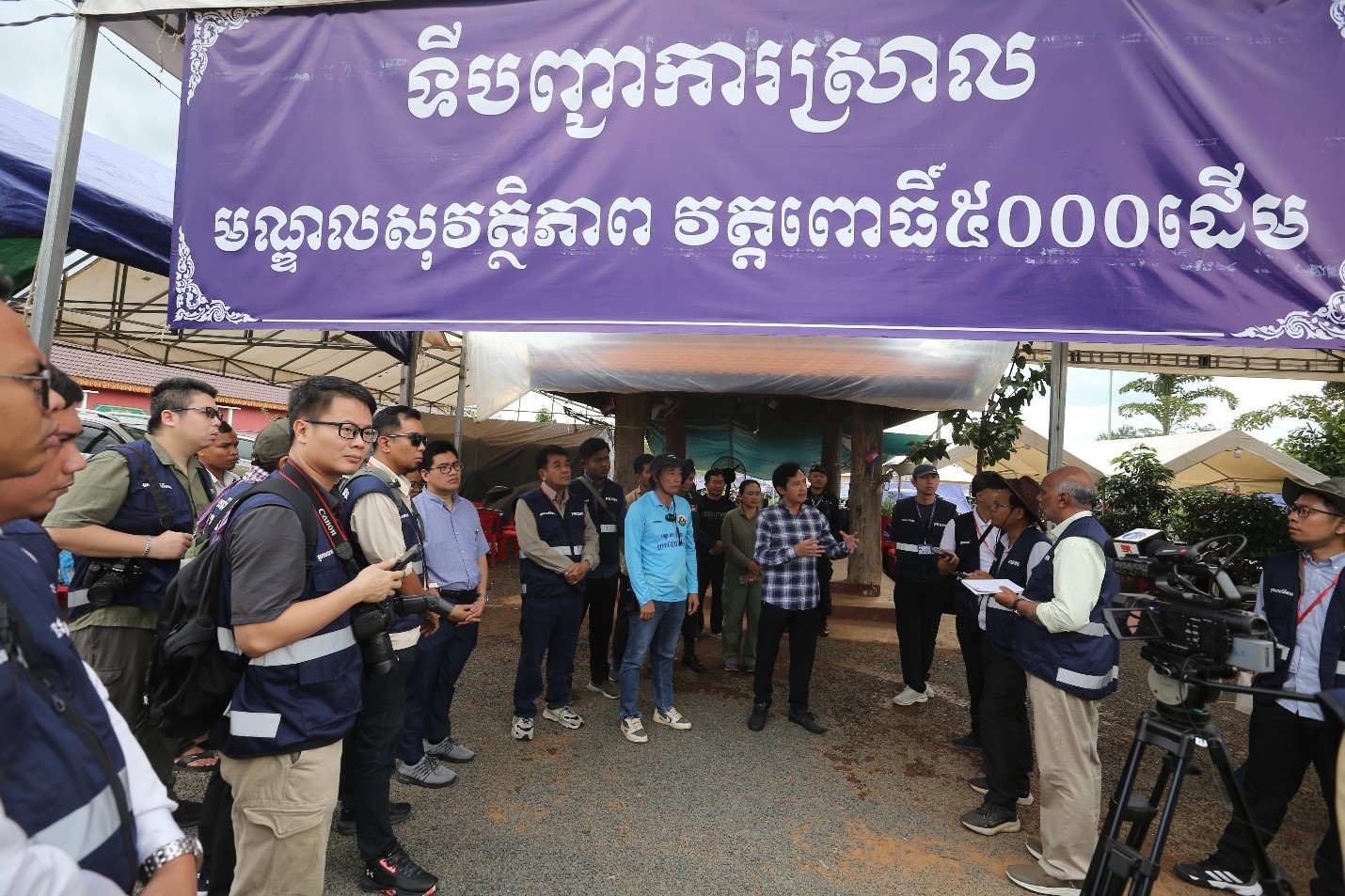
The field trip, staged by Cambodia’s Ministry of Information as part of an August 8 to 31 regional workshop on “Safety and Risk Management in Conflict Reporting”, , brought the reporters to the Wat Por 5,000 pagoda, where thousands of displaced people are sheltering.
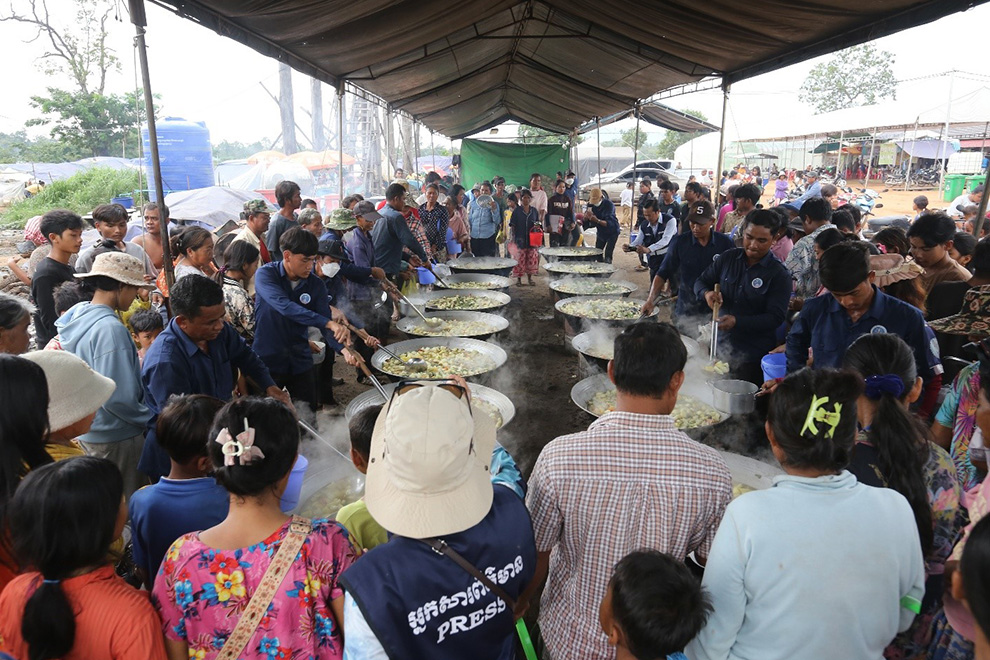
The journalists filmed volunteers preparing massive communal meals for displaced families.
Under a large canopy, rows of steaming woks fed thousands of evacuees as reporters documented the humanitarian response, highlighting both the solidarity of local communities and the dire conditions that persist in the camp.
Mohd Khairul Firdaus Bin, a journalist with Radio Television Malaysia (RTM), described the situation as devastating.
“This is a disaster. I don’t know how these people are going to live after this attack. I think the ceasefire is very important. We have to make sure that neither side — Cambodia or Thailand — breach the agreement,” he said.

He also noted that Malaysian Prime Minister Anwar Ibrahim, as ASEAN chair, has pushed both countries to uphold the ceasefire.
“Cambodian people respect and expect our Prime Minister to push for the ceasefire agreement,” he told The Post.
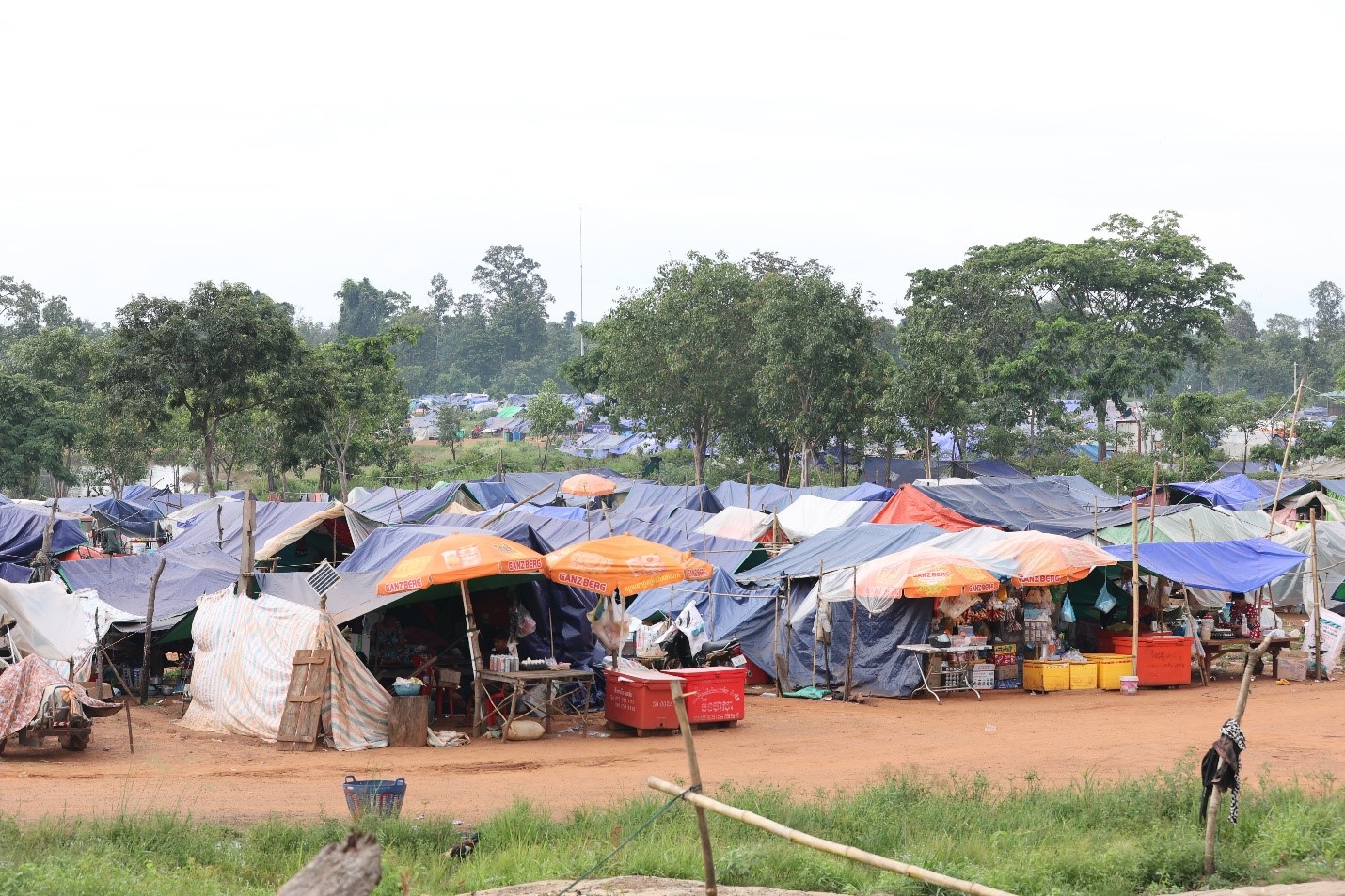
According to Preah Vihear deputy governor Nop Vutthy, more than 20,000 residents — or about 6,000 families — from seven of the province’s eight communes have fled their homes since June.
About half of them remain in the camps, concerned about safety due to the fragile ceasefire, especially in areas most affected by unexploded ordnance and rumours of toxic fumes.
Many are still unable to return due to ongoing Thai military deployments near six border zones: An Se, Tathav, Phnom Khmaoch, Bosbov, Nong Tim and Mom Bei.
“Some families returned briefly when the situation calmed down, but six villages remain unsafe because of remnant of war,” Vutthy explained.
“The Ministry of Environment just collected water samples again yesterday to test for poison, and CMAC is clearing mines and unexploded ordinances from farmland. Until the results are safe, we cannot allow people to return,” he said.
Conditions inside the camps remain harsh, with scorching heat, heavy rain and outbreaks of disease.
Vutthy reported that dengue fever cases among children are alarmingly frequent, with “20 to 30 cases a day”. Still, he emphasised that food shortages have been averted thanks to widespread solidarity.
“Some people can only donate a bag of rice, but they still share it. Even one family helping another is enough to bring joy,” he said.
For evacuees, however, life remains filled with uncertainty. Van Kimyan, 63, a sanitation worker, pleaded for international intervention.
“I ask the international community to help the Khmer people because we have suffered through so many wars. The children are not safe and are missing out on their education. We really want peace,” she said.
Others expressed a longing for stability and self-reliance. Phi Lot, 49, who lost her home and grocery stall in An Se, now survives with assistance at the camp but dreams of rebuilding her life.
“Living here is not like my hometown. I want to do farming, and I will stop doing business with Thailand,” she said.
For now, Preah Vihear’s displaced community endures the hardship of waiting — between fragile ceasefires, damaged farmland and an uncertain peace.