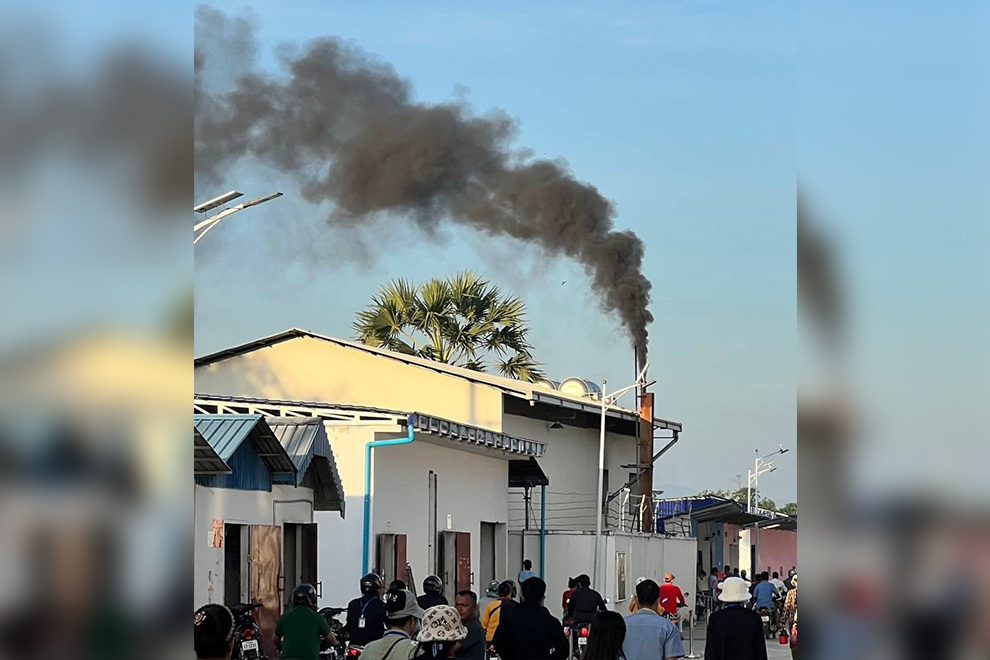
The Ministry of Environment has announced that it will work with the Ministry of Commerce to take legal action against large companies and factories that fail to install automatic air quality monitoring equipment, starting in 2026.
Speaking at the October 16 Blue Skies & Net Zero 2050 Campaign event at the Cambodia Institute of Technology, environment minister Eang Sophalleth reiterated that by 2026, all factories must be equipped with automatic devices to monitor air quality. Those that do not will face stringent legal consequences, he warned.
“The Ministry of Environment will cooperate with the Ministry of Commerce to take legal measures if any company violates air quality standards or makes our air dirty,” added Sophalleth.
He noted that the UN has identified six main sectors that contribute to climate change and global warming. They are energy, industry, agriculture, forestry, chemicals and waste.
Cambodia is actively participated in addressing climate change issues, with Prime Minister Hun Manet instructing the environment ministry to implement the 2023–2028 Environmental Sector Strategy. The circular strategy is based on three pillars: cleanliness, greenness and sustainability.
The “clean” component of this environmental strategy covers the sectors above that produce greenhouse gases, with the exception of forestry.
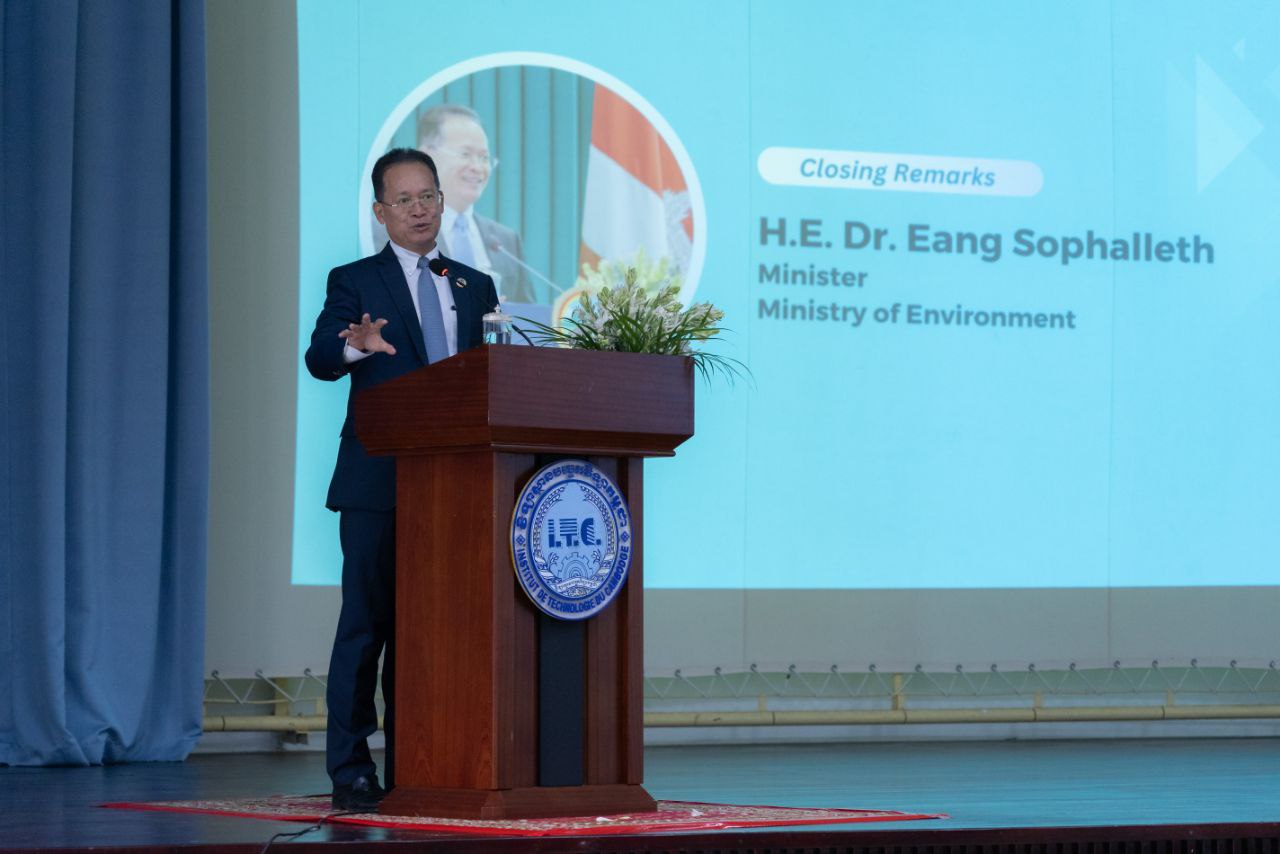

Sophalleth emphasised that the ministry is committed to resolving climate change impacts, to help Cambodia become a carbon-neutral country by 2050.
He called for increased participation in the campaigns the ministry has implemented so far, and to “take smart, united steps” toward clean air and the sustainable management of waste materials.
“Participation from all parties in Cambodian society will ensure blue skies and transform Cambodia into a carbon-neutral country by 2050. This can become a reality, not just a vision,” he said.
The event, themed “Smart Steps for Clean Air: Innovation, Youth, and Action for 2050”, was hosted by the environment ministry, the Global Green Growth Institute (GGGI) in Cambodia and the Institute of Technology of Cambodia (ITC).
A joint press release explained that one highlight of the event was the “Science Walk”, which involved exploring Cambodia’s air quality monitoring systems and air quality laboratory, which are funded by JST and JICA, under the SATREPS project.
The event also featured presentations on the latest findings concerning air pollution sources, seasonal fluctuations and health impacts, effectively bridging research and policy for practical solutions.
It also showcased results from the ongoing “Waste Separation and Recycling Awareness at Schools in Secondary Cities” initiative, a collaboration between GGGI and the ministry. The initiative has engaged over 15,000 students across 29 schools in Phnom Penh, Tbong Khmum and Siem Reap, successfully separating thousands of kilogrammes of waste and generating additional income for schools.
Launched in 2020, the campaign raises climate awareness and promotes ambitious climate action. Endorsed by the ministry in November 2023, it has prioritised the waste sector and demonstrates the transformative potential of youth-led action, data-driven solutions and multi-stakeholder collaboration in Cambodia’s climate action.
The Global Green Growth Institute (GGGI) noted in its 2024 air quality monitoring report for Cambodia that air pollution is a major environmental challenge worldwide, causing serious consequences for public health, ecosystems and climate. In a world increasingly interconnected through industrialisation and urbanisation, it highlighted, awareness and participation in addressing air pollution are essential for sustainable development.
As it develops, Cambodia faces many new air quality management challenges, which are vital for ensuring public well-being.
Globally, the effects of air pollution extend beyond national borders. Rapid industrial growth, increased emissions from vehicles and the burning of fossil fuels have all contributed to rising levels of atmospheric pollutants
These pollutants not only pose health risks but also contribute to climate change, making it essential to introduce clear strategies for air quality monitoring and effective mitigation measures at the international level.