The Ministry of Culture and Fine Arts has called on the public to remain calm and respond responsibly after online debates in Thailand questioned aspects of Khmer cultural heritage, particularly traditional attire which is closely linked to Cambodia’s historical identity.
In a March 14 press release, the ministry said it had taken note of information circulating on Thai social media and remarks by some Thai political figures objecting to the presentation and promotion of Khmer cultural traditions.
The ministry reaffirmed that Khmer cultural heritage — both tangible and intangible — is supported by extensive historical and archaeological evidence. This includes traditional clothing and artistic expressions that form part of the country’s long-established cultural identity.
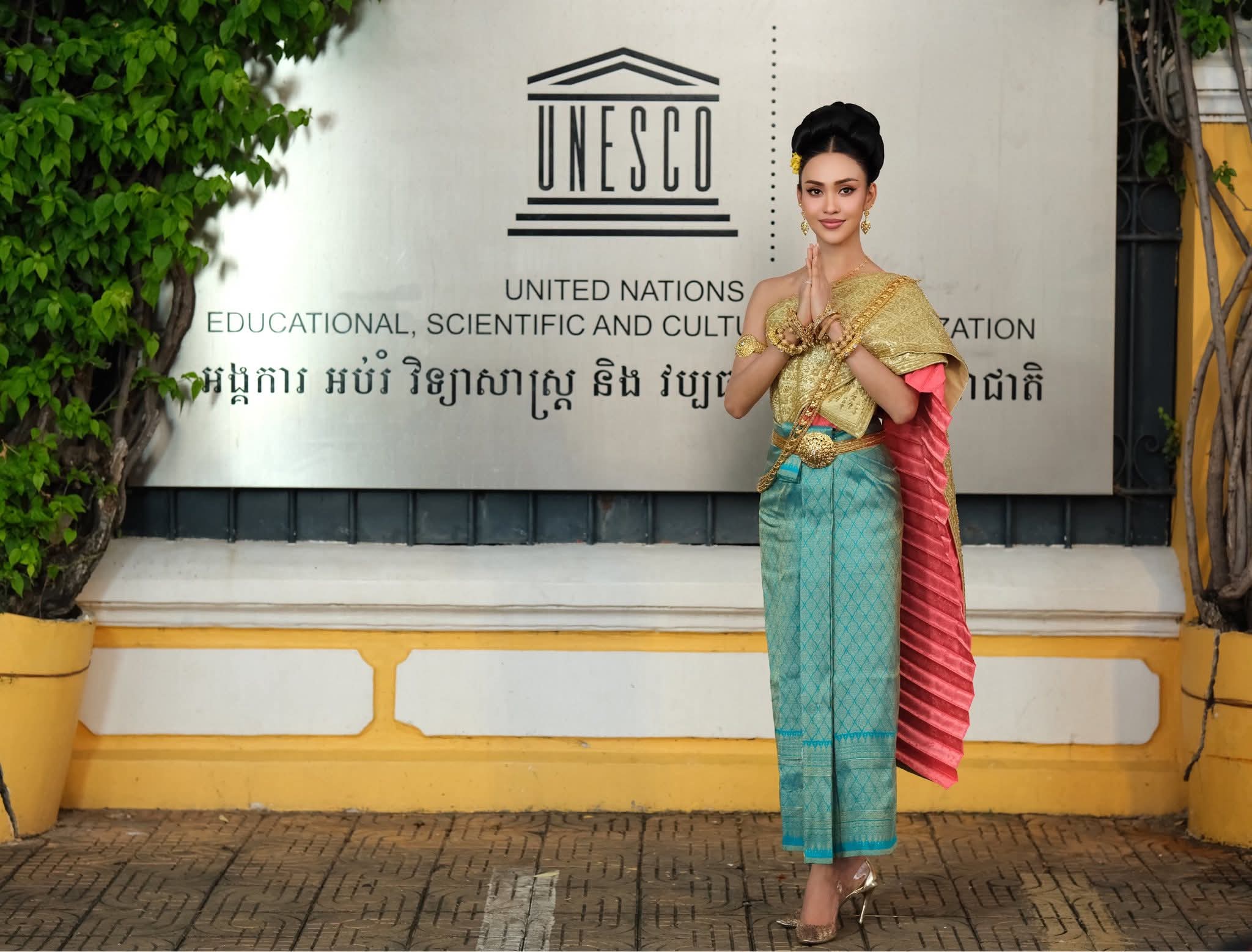
Among these is the Sbai, a key element of traditional Khmer women’s attire used in ceremonial costumes and wedding dress. The garment plays a central role in the ritual known as Preah Thong Taong Sbai, which is closely tied to the origin story of Khmer civilisation.
According to the ministry, the tradition dates back to the period of the ancient kingdom of Funan and has been preserved and practiced continuously by the Khmer people for generations.
“This tradition has been preserved, respected and practiced continuously by the Khmer people across generations up to the present day,” the ministry said. “It has become an integral part of Khmer historical identity and will remain an enduring and inseparable element of that identity both now and in the future.”
While reaffirming Cambodia’s cultural heritage, the ministry also urged the public to maintain dignity and responsibility in responding to the issue, stressing that reactions should reflect high standards of cultural ethics.
“As a nation with a long-standing civilisation and deep respect for cultural dignity, we must continue to stand firmly on historical truth,” the statement said, adding that Cambodia’s position is grounded in the strength of its cultural heritage inherited over thousands of years and in confidence in international law.
The ministry also warned against using cultural heritage for political purposes, social incitement or racial discrimination.
Instead, it said culture should serve as a bridge that promotes mutual understanding and shared prosperity among nations.
In the same spirit, the ministry called on cultural institutions, educational organisations and public authorities across ASEAN to work together to promote accurate historical understanding and mutual respect for cultural identities.
Cambodia, the ministry added, remains committed to protecting its cultural heritage while strengthening international cultural cooperation and respecting the cultural values of other nations.
The statement emphasised that safeguarding cultural heritage while promoting regional respect and diversity remains an important principle for Cambodia within Southeast Asia and the wider international community.