Governments across Asia and the Pacific have made a renewed commitment to register every birth and record every death by 2030.
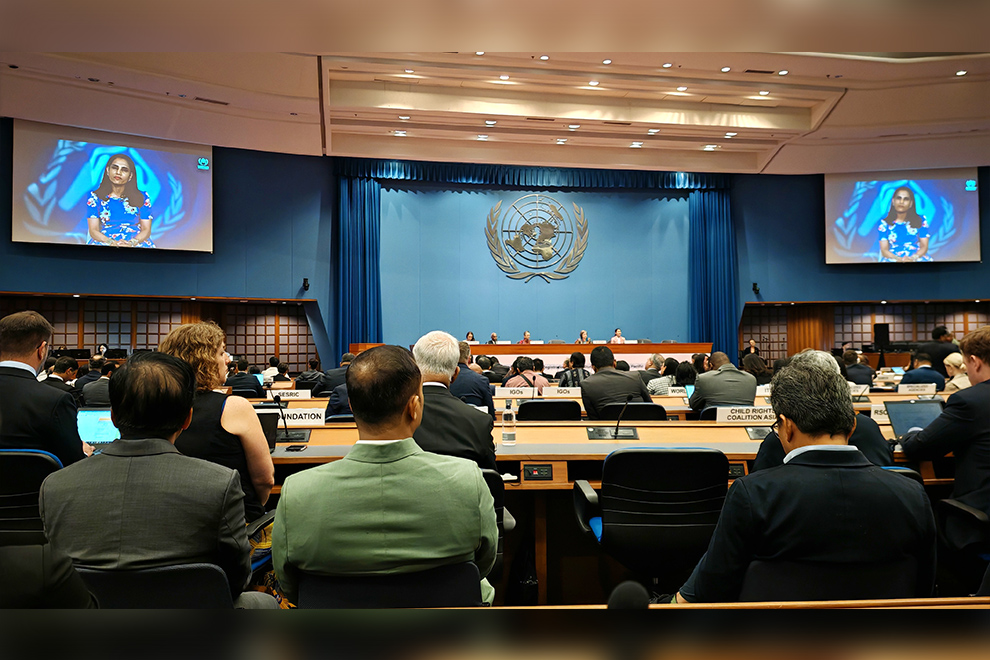
This pledge, made during the Third Ministerial Conference on Civil Registration and Vital Statistics (CRVS), held from June 24-26 at the UN Conference Center (NUCC) in Bangkok, signals the region’s resolve to build inclusive and resilient CRVS systems that leave no one behind.
“This week has been a powerful call to action,” said Armida Salsiah Alisjahbana, undersecretary-general of the UN and executive secretary of the Economic and Social Commission for Asia and the Pacific (ESCAP).
“We have seen inspiring examples of countries reaching the most marginalised, embracing digital innovation and strengthening legal and institutional frameworks,” she said.
Civil registration serves as the foundation of a person’s legal identity. Birth registration grants individuals’ formal legal recognition, enabling access to essential rights and services, she explained.
Death certificates serve as legal proof of death, supporting families with matters such as inheritance, insurance and other administration processes.
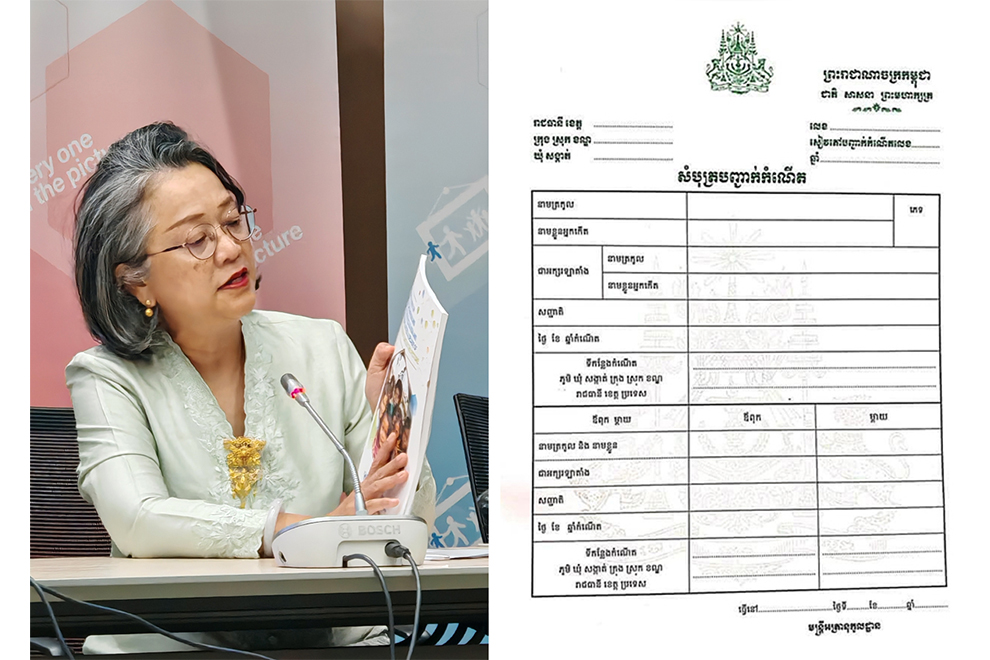

“Importantly, civil registration and vital statistics (CRVS) systems help protect populations in vulnerable situations, as birth and marriage registration can serve as safeguards against child marriage, trafficking and modern slavery by verifying age and identity,” noted and ESCAP statement.
Over the past decade, Asia and the Pacific has made remarkable progress: The number of unregistered children under five has dropped to 51 million today from 135 million in 2012, a reduction of more than 60 per cent, according to ESCAP data.
“Twenty-nine countries now register over 90 per cent of births within a year, while 30 countries achieve the same for death registration,” it said.
The quality of cause-of-death reporting has also improved, thanks to sustained efforts to strengthen civil registration and health systems.
Despite this progress, an estimated 14 million children across the region still do not have their births registered by their first birthday. And each year, approximately 6.9 million deaths go unrecorded, most often those occurring outside health facilities or in remote communities.
“These numbers are more than statistics, they represent lives without legal recognition and families left without support,” said Alisjahbana.
Ruvendrini Menikdiwela, assistant high commissioner for protection at the UN High Commissioner for Refugees (UNHCR) addressed the opening of the conference. She highlighted the progress made since the 2021 declaration and Regional Action Framework.
Countries such as Cambodia, India, Papua New Guinea, the Philippines and Vietnam have strengthened CRVS laws, resulting in a 60 per cent drop in unregistered children under five — meaning 84 million more children now have birth certificates.
However, challenges remain. Each year, over 8 million deaths go unrecorded, and 97 million children lack birth registration.
She said vulnerable groups — including non-citizens, refugees and stateless persons — face barriers such as missing documents and limited access to services.
Menikdiwela emphasised that mobile registration, data protection and simplified procedures are key tools in overcoming this issue.
“Civil documents are not just paper — they are keys to rights and protection,” she said, noting their role in preventing child labour, early marriage and statelessness, and in securing women’s rights.
“These policies will benefit future generations. Cambodia’s 2023 CRVS commits to ensuring everyone in its territory is documented, thereby ensuring that no one born in the country is left behind,” said Menikdiwela.
Cambodia’s progress was prominently featured at the second meeting of the South-East Asia Civil Registration Professionals Network, held in Phnom Penh in January, following the enactment of its landmark Law on Civil Registration, Vital Statistics and Identification (CRVSID) on July 1, 2024.
The law established a universal, integrated, and compulsory CRVSID system, covering births, deaths, marriages and other vital events — both within Cambodia and for Cambodians abroad.
“This law is a powerful testament to the government’s bold leadership, collaboration and commitment to ensuring every person is counted,” said Romain Santon, deputy director of the CRVS Program at global public health organisation Vital Strategies.
Vital Strategies has partnered with Cambodia since 2017, through the Bloomberg Philanthropies Data for Health Initiative.
Cambodia’s civil registration system was completely destroyed during the Khmer Rouge regime (1975–1979). Since then, the country struggled with fragmented registration, manual processes and a lack of uniform legislation.
Recognising this, the government created the General Department of Identification (GDI) under the Ministry of Interior in 2014 and developed the National Strategic Plan of Identification (NSPI) 2017–2026, aiming to ensure that “everyone is identified” by 2030.
The law is backed by 182 articles across 12 chapters and brings transformative provisions: assigning each person a unique identification code at birth, enabling registration at place of occurrence or residence and requiring health facilities to notify live births and deaths, even those occurring outside their premises.
It also introduces foetal death reporting and simplifies late and delayed registration, particularly benefiting underserved populations.
“Civil Registration and Vital Statistics ensure protection and benefits through legal identity. Our goal is to register all vital events, strengthen policy-making and provide legal identity for all by 2030,” Luy Chanmalen, deputy director of the Civil Registration Department said at the meeting in Phnom Penh.
Cambodia has committed to the CRVS Decade target of 100 per cent birth registration and 80 per cent death registration by 2030.
According to 2025 Asia-Pacific CRVS progress report, by 2024, birth registration in the Kingdom territory and jurisdiction increased to at least 90 per cent, from 80.1 per cent in 2023. 91.7 per cent of children under five were registered, exceeding the target set.
Meantime, the rate of death registration also exceeded the target, to 70.2 per cent in 2023.
Digital Systems for Modern Governance
The digital transformation is central to Cambodia’s CRVS reform. Pilots of an ICT-based civil registration system began in Kep and Kampot provinces in 2018, expanded to 14 communes in Phnom Penh by 2022.
The “CR-Link” system has been piloted in six communes of the capital’s Por Senchey district since November 2023.
CR-Link is designed to connect civil registration with systems at the Ministry of Health and National Institute of Statistics, enhancing data quality and service delivery.
Chanmalen said the transition from paper-based to digital records is a major challenge, with approximately 14 million backlogged records, mostly handwritten, that need to be digitised.
“We face challenges in ensuring data accuracy and uniqueness, raising public awareness across various sectors and overcoming geographic barriers, especially in remote areas with limited internet access,” she explained.
Additionally, she added, technical and financial support are crucial to drive nationwide CRVS digitisation, capacity building, and effective monitoring and evaluation.
Chanmalen noted that in the second half of 2025, the CRVS digital system will expand to 105 communes across Phnom Penh, accompanied by a plan to develop digital identities for seamless integration across public and private sectors.