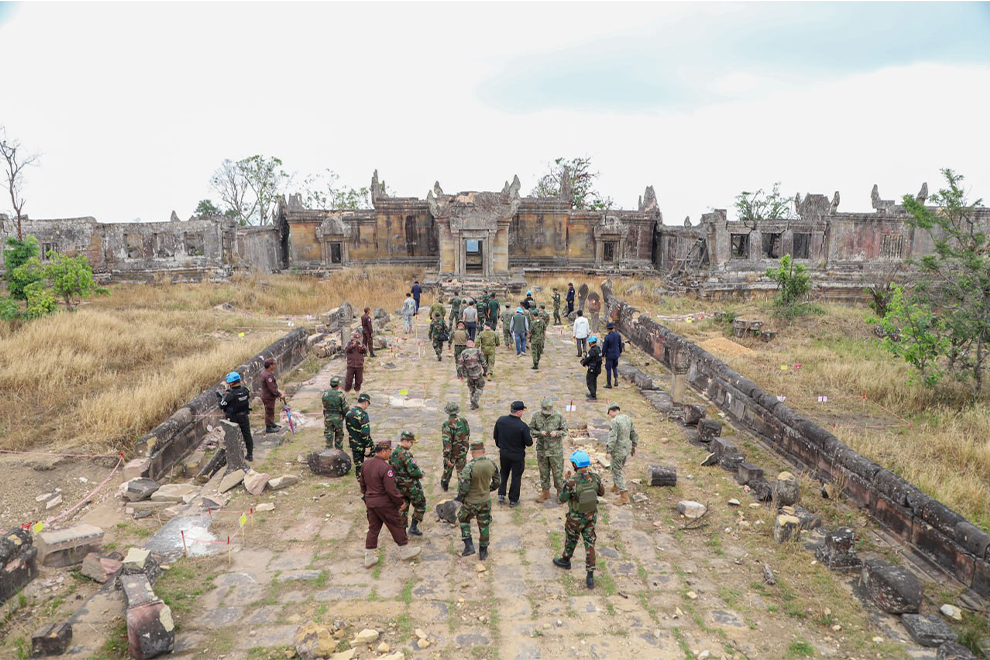
The Ministry of National Defence escorted foreign military attachés from 12 countries to visit Preah Vihear Temple and its surrounding area on March 5, to show the visitors the extent of damage that Cambodian authorities say was caused by Thai military attacks.
According to a press release issued by ministry spokeswoman Maly Socheata, the visit to the temple complex, located in Sra’em commune of Choam Khsant district in Preah Vihear province, took place at around 11am.
The tour was organised to provide international observers with a direct view of damage to the ancient monument and nearby areas following armed confrontations along the Cambodia–Thailand border.
Preah Vihear Temple, an 11th-century Khmer sanctuary perched on a cliff along the border, is recognized as a UNESCO World Heritage Site and is considered one of Cambodia’s most significant cultural and religious landmarks.
“This site is one of the most valuable World Heritage Sites of humanity and has been severely damaged by attacks carried out by Thai military forces,” said Socheata.
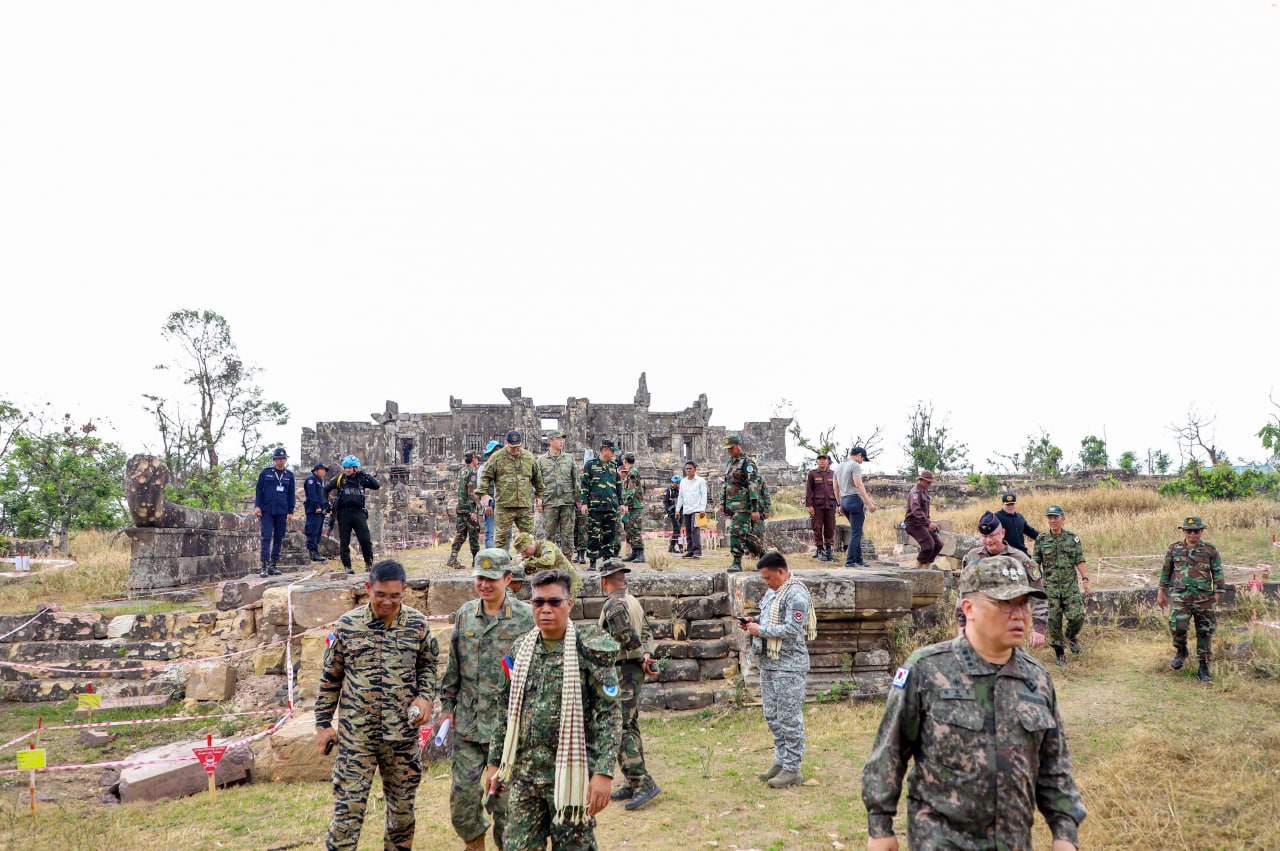

The temple and surrounding structures sustained extensive damage during military attacks carried out by Thai forces in 2025, including aerial bombardments involving drones and fighter jets.
The defence ministry said the attacks caused severe destruction to the physical structure of the temple complex and nearby heritage sites.
“It should be noted that two attacks involving a large number of heavy weapons, particularly aerial bombardments from drones and fighter jets conducted by the Thai military, caused severe damage and destruction to the physical structure of the World Heritage Site, Preah Vihear Temple, and its surrounding area,” it explained.
“These acts demonstrated immorality and contempt for culture, civilisation and sacred places that are part of the heritage of humanity, especially the invaluable cultural heritage built and left behind by Khmer ancestors,” it added.
Assessments conducted by the Ministry of Culture and Fine Arts between December 7 and 27, 2025, recorded a growing scale of damage compared with earlier inspections in July of the same year.
Evidence collected by the Preah Vihear National Authority during a December 28 inspection identified 562 locations within the temple complex that had suffered serious damage, based on photographic and video documentation.
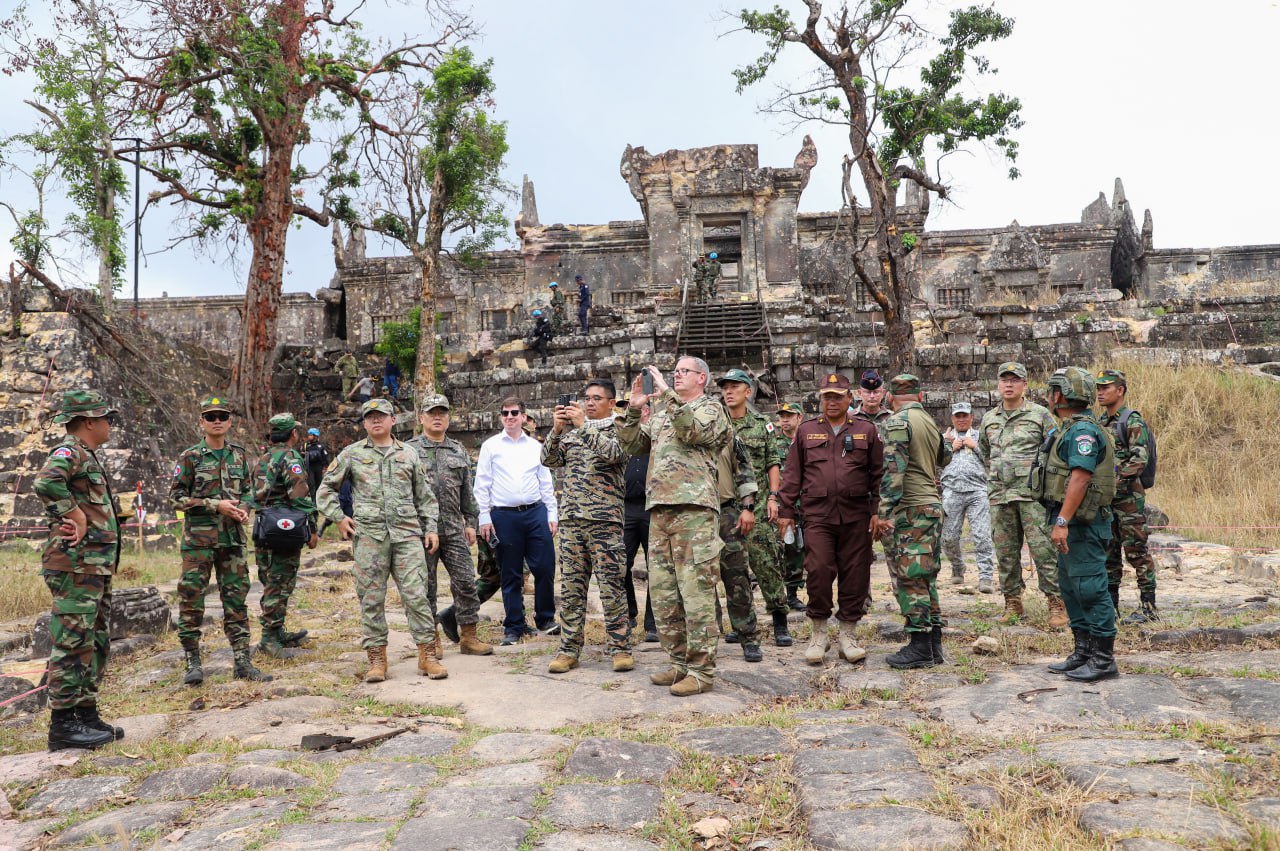
The Cambodian government described the attacks as “acts that damaged cultural heritage of global significance” and stressed the need for international attention to the destruction of a site regarded as part of humanity’s shared heritage.
In late February, Cambodia rejected claims attributed to Thai Foreign Minister Sihasak Phuangketkeow that the temple had been used as a Cambodian military base.
Cambodia’s culture ministry dismissed the allegations as unfounded, stressing that the temple remains a sacred cultural and religious monument and has never been designated or used for military purposes.
The ministry also reaffirmed Cambodia’s sovereignty over the temple, citing the 1962 judgment of the International Court of Justice, which ruled that the temple belongs to Cambodia and ordered Thailand to withdraw any military forces from the area.
A subsequent interpretation of the ruling in 2013 further clarified that Cambodia’s sovereignty extends across the entire promontory surrounding the temple.
Cambodia says it remains committed to resolving disputes through peaceful means in accordance with international law and the principles of the UN and ASEAN charters.