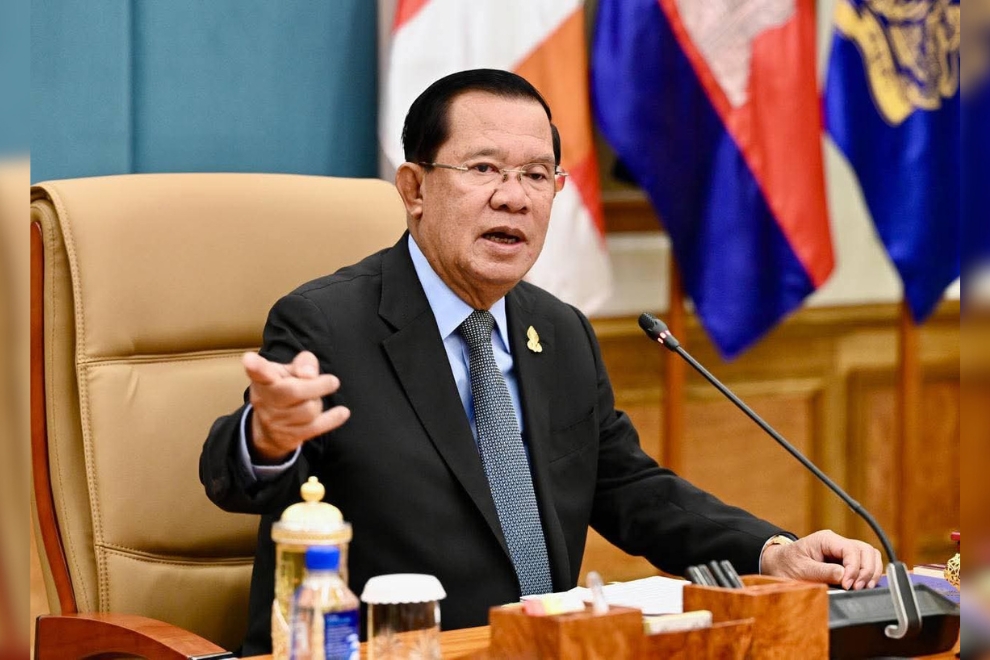
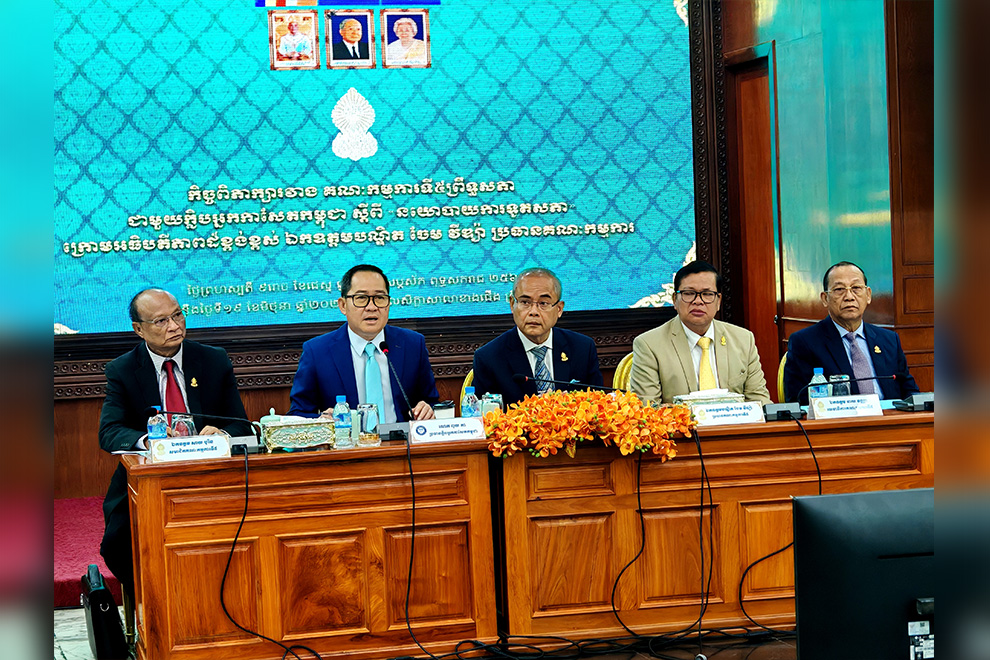
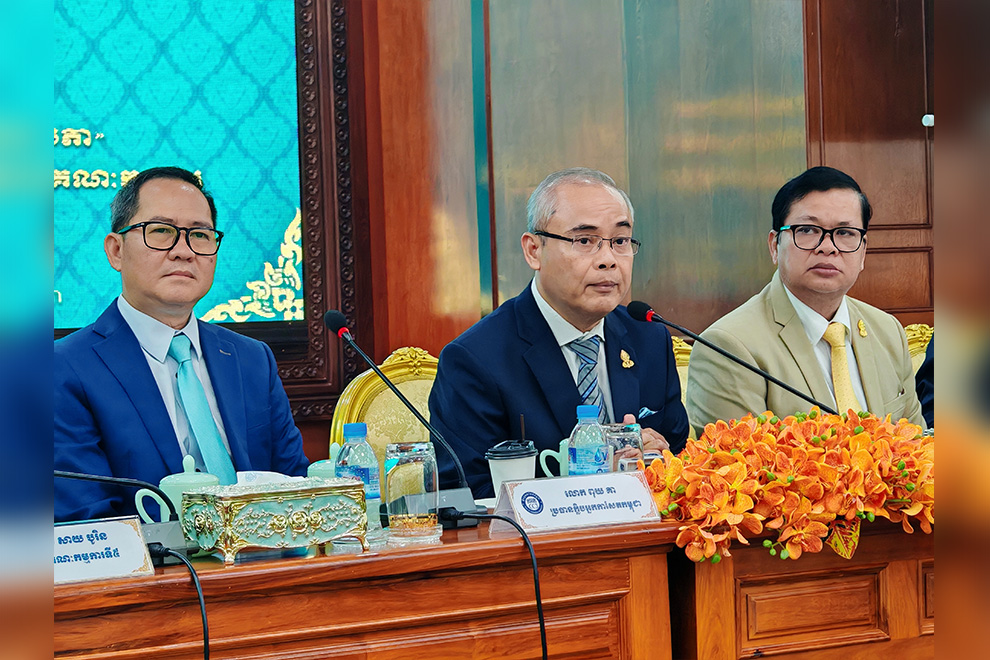
Cambodia’s diplomatic efforts are gaining momentum under the leadership of Senate president Hun Sen, with the Senate playing a critical role in the nation’s international relations, according to Chem Widhya, head of the Senate’s 5th Committee.
He outlined the Senate’s influential role in strengthening Cambodia’s diplomatic policy during a June 19 press conference with the Club of Cambodian Journalists (CCJ).
Widhya highlighted the systematic process behind Cambodia’s participation in international agreements, emphasising that while the prime minister initiates diplomatic actions, the Senate supports these efforts through strategic parliamentary diplomacy.
He explained that when Cambodia joins a treaty or convention, the prime minister decides to accede to it and then requests ratification from the National Assembly. Once the Assembly approves, the treaty is submitted to the King for signature to complete the legal procedure.
“The Kingdom of Cambodia is ready to ratify the UN Convention on the Law of the Sea 1982,” Widhya noted.
“In fact, Cambodia has been a party to this convention for many years, since the 1980s, when it was signed by the tripartite government,” he added.
However, the Senate’s “parliamentary diplomatic policy” is not governed by law. While diplomatic policy is primarily the responsibility of the prime minister, the Senate plays a significant role in supporting the state’s diplomatic efforts through its political influence.

As Senate president, Hun Sen draws on decades of experience to elevate Cambodia’s diplomatic profile.
Widhya emphasised that Hun Sen’s diplomatic policy focuses on national stability, peace and international cooperation, with Hun Sen prioritising diplomacy as the first of his five key goals.
“He draws on his experience as Foreign Minister since 1979, believing that diplomacy is crucial for strengthening peace and political stability in the country,” said Widhya.
He then outlined the diplomatic activities with international leaders that have taken place since Hun Sen assumed office as Senate president on April 3, 2024.
Chea Thyrith, spokesman for the Senate president, told BTV that Hun Sen focuses on two main priorities: first, advancing parliamentary diplomacy, and second, fostering collaboration between senators and the electorate, particularly members of commune and sangkat councils at the local level.
In discussing the broader concept of parliamentary diplomacy, Widhya made it clear that Cambodia’s two-tier parliamentary system allows for a dual focus on diplomatic work.
The Senate, while distinct from the National Assembly, plays a central role in international affairs, handling a substantial amount of the nation’s diplomatic engagements, except for those related to the ASEAN Inter-Parliamentary Assembly (AIPA), which falls under the jurisdiction of the National Assembly.
“Samdech Techo is the leader of parliamentary diplomacy,” Widhya stated.
“He is the head of the party, able to appoint both the prime minister and the president of the National Assembly, but he does not take over the work of the National Assembly.”
“This division of roles enhances the Senate’s ability to focus on diplomacy while still cooperating with the National Assembly,” he continued.
National Assembly president Khuon Sudary emphasised that parliamentary diplomacy is a key priority of the National Assembly, aligned with the Senate under Hun Sen’s leadership.
She noted that this collaboration enhances Cambodia’s role in fostering dialogue for peace, addressing global challenges and strengthening international relations to benefit the people.
At a seminar on Cambodia’s foreign affairs on May 21, Sudary stressed the need for mutual complementarity between the Royal Government and parliamentary diplomacy to navigate a fragmented world marked by geopolitical tensions.
She advocated for an inclusive, peaceful and neutral diplomatic approach to restore trust, promote cooperation and build genuine international friendships.
Widhya highlighted the extensive international engagements undertaken by Hun Sen, including high-level meetings with leaders such as the Laos president, the Sultan of Brunei, the president of Vietnam and military leaders from Myanmar.
These interactions underscore Cambodia’s growing diplomatic footprint under Hun Sen’s leadership.
Widhya further explained that Hun Sen’s diplomatic policy is grounded in the nation’s political programme, which he outlined during his inauguration.
According to Widhya, Hun Sen is committed to defending the constitution, safeguarding the monarchy and maintaining national sovereignty and territorial integrity.
In addition, he pointed out the Senate president’s willingness to pursue delicate diplomatic efforts, including his meeting with Myanmar’s military leaders to help bring peace to the ASEAN region.
In terms of regional diplomacy, Widhya noted Cambodia’s relationship with Thailand, specifically mentioning the support from Thai Prime Minister Chatichai Choonhavan during the 1980s.
He further highlighted the close ties between Hun Sen and former Thai leaders, including ex-Prime Minister Thaksin Shinawatra and military leader Prayut Chan-o-cha, which have contributed to strengthening bilateral relations between the two nations.
“Samdech Techo is recognised as a leader who can solve complex problems,” Widhya said, emphasising the trust placed in Hun Sen’s leadership by both regional and international counterparts.