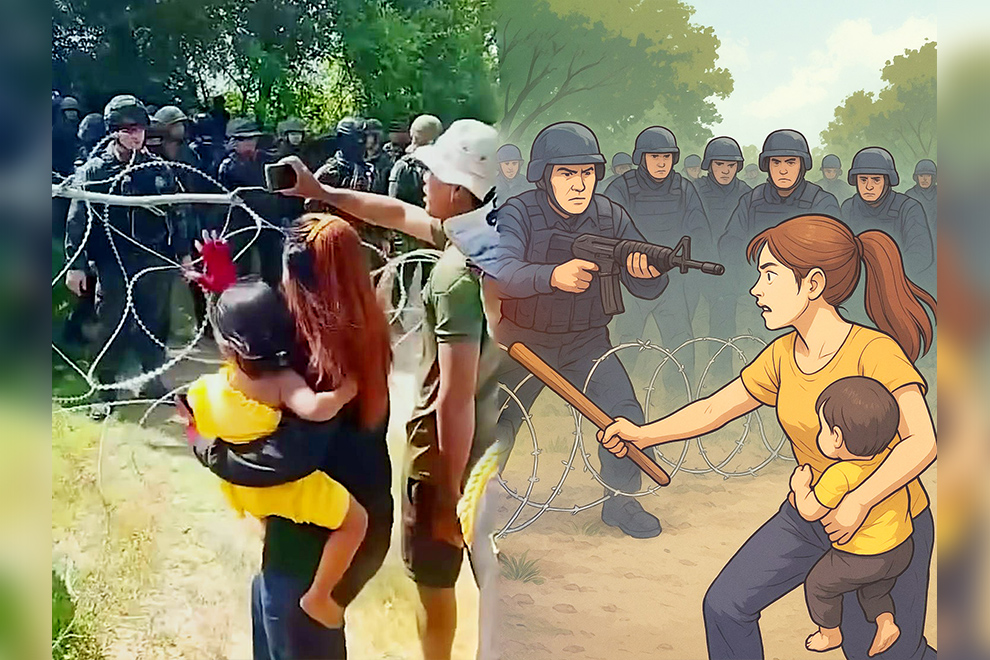
The scene was heartbreaking, and unforgettable. A Cambodian mother, child clutched tightly in her left arm, used her right hand to stop Thai soldiers from pushing barbed wire deeper into her village.
That single moment, captured live on Facebook and replayed countless times, has become the symbol of Cambodian resilience: the powerless standing against the powerful, the unarmed facing rifles, and a mother defending not only her land but her child’s tomorrow.
On August 25 at around 2pm, dozens of Thai paratroopers crossed into Chok Chey village, O’Bei Choan commune in Banteay Meanchey’s O’Chrov district, and attempting to install razor wire barricades several hundred metres inside Cambodian territory.
The act violated the ceasefire agreement both nations had pledged to uphold and risked reigniting long-simmering tensions.
But before Cambodian soldiers could respond, it was villagers — farmers, mothers, grandmothers and young women — who rushed forward.
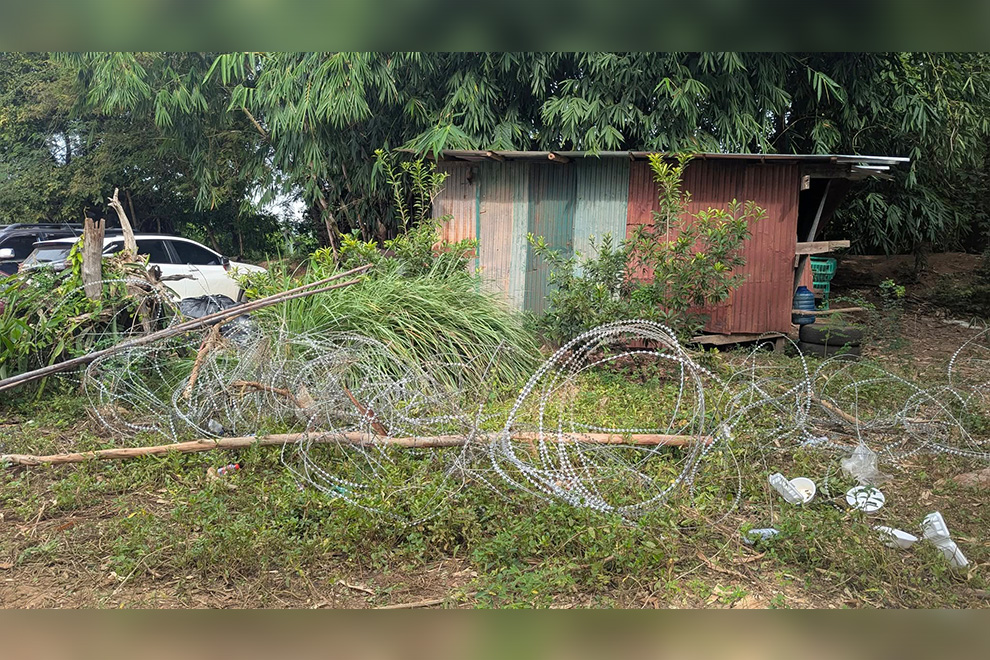
They carried no weapons, only long wooden sticks, used not to strike but to push back the razor wire that threatened to cut across their corn fields and ancestral homes.
The air was filled with cries and shouts like, “Stop invading Cambodian territory! You are endless thieves of Cambodian land!”
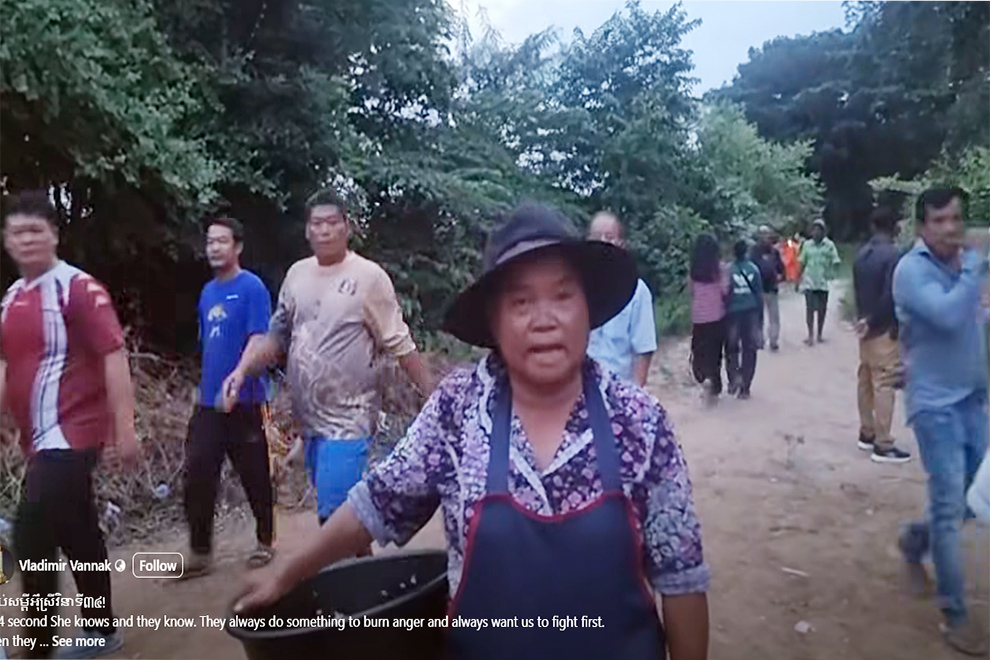

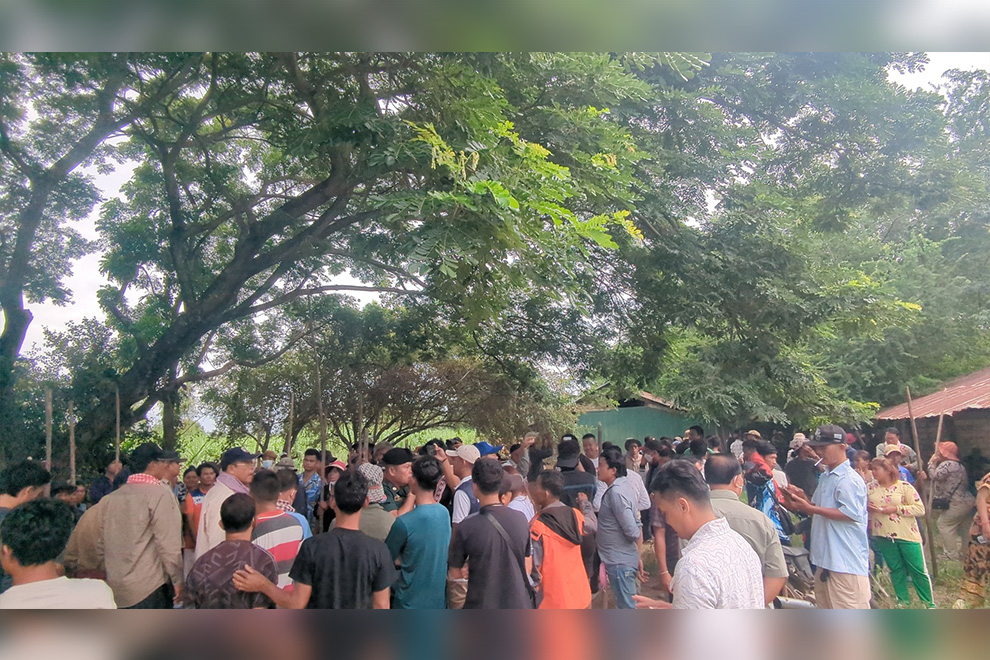
Hundreds of villagers raised their voices together as they resisted the soldiers’ advance. Some warned their neighbours of the danger, fearful that armed troops might fire at any moment.
Among them was a 60-year-old woman, her voice steady despite the rifles before her.
“Our soldiers stand aside, don’t come in, stand behind us. Don’t come, don’t come in. If you get involved you will only shoot each other because they have guns, we don’t have any,” she said.
Her plea was not only to her fellow villagers but to Cambodian soldiers — a call to avoid bloodshed, even as she placed herself in harm’s way.
That same night, another elderly woman hung her hammock under a tree near the contested area. She insisted she would stay on guard, despite her age.
“Do not worry about my health,” she said. “I can defend the territory.”
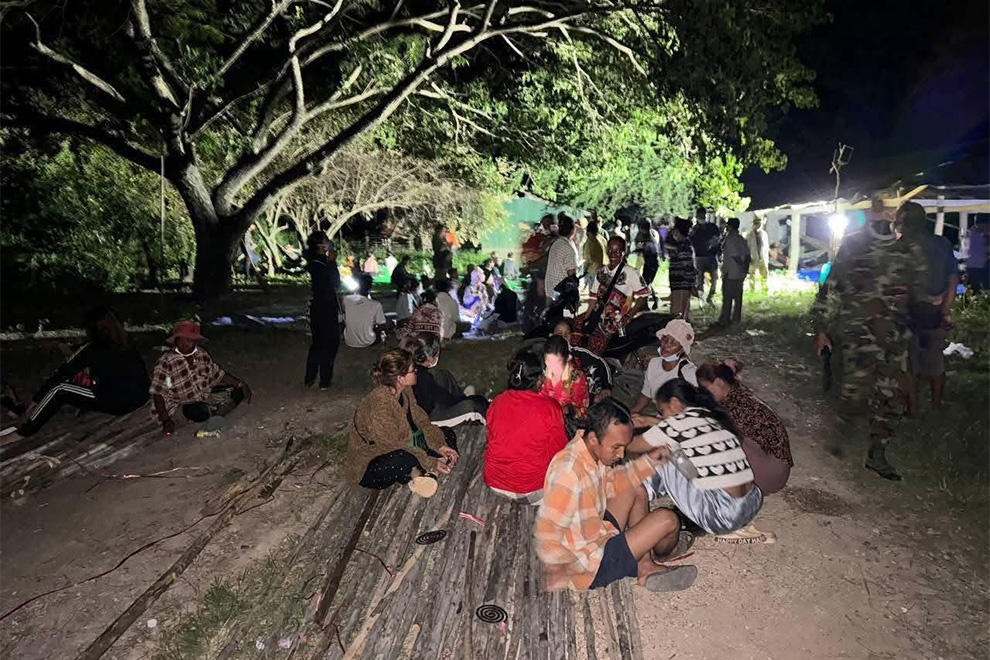
For many villagers, the defence of the border has become a vigil. They camp under trees, sleep in fields and keep watch for signs that the barbed wire might return.
In another video, a young Cambodian woman is seen confronting Thai soldiers while holding a stick in her hand, trying to break the barbed wire.
Many social media users praised her act as a heroic display of patriotism — defending the land and defending the homeland.
The citizens continued to push back both the barbed wire and the Thai soldiers. Now, the villagers remain steadfast, camping out to defend their land and their country.
A confrontation shared worldwide
The image of the mother with her child quickly spread across Cambodian social media. AI-generated art transformed her defiance into posters and tributes, while Cambodians overseas added their voices.
“What gives her such courage?” asked Moon Pich, a Cambodian citizen living abroad.
“It’s not just a house she’s protecting — it’s her dignity, her roots and the future of the child she carries in her arms,” she added.
International attention followed. Michael B. Alfaro, a U.S.-based lobbyist, condemned the Thai military’s actions.
“One hand holds the baby. The other pushes away the barbed wire. Horrible, horrible!” he said.
“Thailand broke the ceasefire — the deal we made, they broke it! Cambodia’s people are being trapped on their own land. This isn’t just Cambodia’s fight, it’s humanity’s fight,” he said.
Official response, continued tension
According to the Ministry of National Defence, Thai forces attempted to reinstall the barbed wire at around 3.15pm the same day.
Once again, villagers resisted until the soldiers pulled back and removed their fencing.
Ministry spokesperson Maly Socheata confirmed that villagers and local authorities played a central role in preventing the incursion.
“They were met with strong opposition by local villagers and authorities, forcing the Thai soldiers to withdraw their razor wire,” she said.
Cambodia has repeatedly urged Thailand to respect the ceasefire, particularly the commitments made during the August 22 meeting of the Regional Border Committee between Cambodia’s Military Region 5 and Thailand’s First Army Region.
Both sides have agreed not to expand disputed areas or escalate tensions.
The Cambodian government emphasised that all disputes must be resolved peacefully through the Joint Boundary Commission, in line with the 2000 memorandum of understanding.
Officials pointed to earlier high-level efforts, including the July 28 special meeting between the prime ministers of both countries — mediated by then US President Donald J. Trump — and the August 7 Extraordinary General Border Committee session in Malaysia.
Since August 9, villagers in O’Bei Choan and neighbouring communities have kept constant watch, motivated by what the ministry described as “their deep concern” over Thailand’s incursions and their determination to safeguard “legitimate property and legal possessions”.
Cambodian security forces remained unarmed and disciplined throughout, ensuring civilian safety without escalating tensions.
The human cost of peacekeeping
For all the political agreements and diplomatic reassurances, it is civilians who bear the heaviest burden on Cambodia’s frontier.
In O’Bei Choan, it was mothers, grandmothers and children who stood against the threat of razor wire and guns.
The bravery of ordinary people has drawn admiration across Cambodia and beyond. Yet beneath the praise lies a sobering reality: when ceasefires falter, it is villagers — not soldiers — who first face the consequences.
The villagers of Chok Chey do not speak of politics or treaties. They speak of fields where crops have grown for generations, of homes where children laugh, of the soil where their ancestors rest. To them, defending the land is defending life itself.
And so, a Cambodian mother, carrying her child, pushed back razor wire with her free hand. She had no weapons, no uniform, no orders. Only love, fear and unshakable courage.
Her defiance has now become a lasting symbol — a reminder that when borders are tested, the spirit of the people can be stronger than any fence.