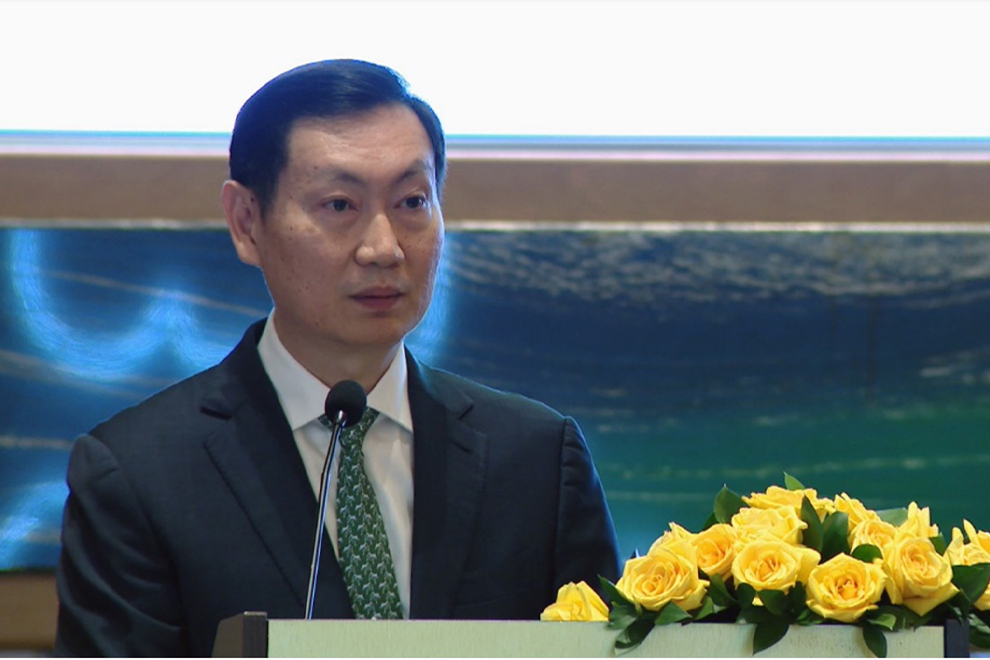
Cambodia is accelerating its energy transition with a bold plan to reach 70 per cent renewable power generation by 2030, underpinned by 23 new green energy projects worth nearly $5 billion. Minister of Mines and Energy Keo Rottanak announced the ambitious goal during the World Green and Sustainability Summit (WGSS) 2025 in Phnom Penh, on October 30.
Speaking at the summit under the theme “Shaping the Future of Sustainability & Building a Sustainable World,”
Rottanak noted that Cambodia’s transition to renewable energy was being driven by both opportunity and realism — an approach that aims to balance growth, investment confidence and social inclusion.
“The global energy transition is reshaping economies and industrial politics. For developing nations, it is both a promise and a test,” he said.
“Cambodia approaches this transition with realism. We know that every country must select its resources according to its stage of development and social policy,” he added.
Ambitious but grounded goals
Cambodia’s renewable energy capacity currently stands at 64 per cent, and the government aims to push it to 70 per cent by 2030.
Solar energy is expected to play a central role in this expansion, with Rottanak noting that solar module costs have fallen by more than 99 per cent since the 1970s, making it one of the most accessible forms of clean power.
The minister revealed that over the past two years, Cambodia has approved $5 billion in renewable energy projects, focusing heavily on solar power.
The investments are designed not only to increase generation capacity but also strengthen national and regional power connectivity under the ASEAN Power Grid framework.
“We believe the next phase of the energy transition will be defined by connections — by grids that link nations, by markets that reward carbon reduction and by investments that flow across borders,” he said.
Overcoming grid and transmission bottlenecks
Rottanak acknowledged that while Cambodia’s progress in renewable generation is strong, grid transmission remains a critical challenge.
“There can be no transition without transmission,” he remarked, underscoring that building major power lines can take up to a decade — far longer than constructing solar plants.
To address this, Cambodia is strengthening its solar transmission backbone, expanding 1.5 and 2.3 kV power lines, and modernising control centres to ensure renewable energy can be distributed more efficiently.
Energy storage breakthrough
One of the notable milestones, Rottanak said, was the launch of Cambodia’s first grid-scale energy storage facility in Kampong Chhnang province earlier this year.
The installation, certified by Germany’s CUSUN, is the first of its kind in the country to meet international IoT standards.
“This facility enhances grid flexibility and supports the integration of new renewable generation,” he said, describing it as a model for future storage systems that will stabilise supply during fluctuating demand.
Financing the transition
Access to financing remains one of the toughest barriers for developing economies pursuing clean energy, the minister noted.
Outside of China, emerging markets account for just 15 per cent of global clean energy investment, far below the level needed to meet climate goals.
To attract investors, Cambodia’s parliament recently approved solar guarantees for clean energy projects to improve investor confidence.
The ministry is also standardising project agreements and working within ASEAN to harmonise investment rules, reducing currency and off-taker risks that often-drive-up project costs.
“Financing is one of the most challenging parts of the transition,” Rottanak said.
“But we are turning high finance into better world assets by making green energy bankable and predictable,” he continued.
Inclusion and opportunity
Beyond technology and finance, Cambodia’s energy transition also aims to create inclusive economic opportunities.
The government is working with ASEAN partners to launch an energy efficiency revolving fund that will help small and medium enterprises (SMEs) access affordable financing to modernise their operations.
Green energy projects, Rottanak added, are already generating jobs in construction, engineering and operations.
Women’s participation in these sectors is being prioritised as part of Cambodia’s broader commitment to equitable growth.
A regional force for green leadership
Rottanak emphasised that Cambodia’s renewable energy momentum is part of its larger ambition to become a regional force in clean energy and grid integration.
“We are a strong force leading innovation and cooperation in ASEAN’s power future,” he explained.
“Cambodia’s actions today will define how our region powers a sustainable tomorrow,” he added.
The 2025 WGSS brought together government leaders, corporate executives and development partners under one roof to discuss how countries like Cambodia can shape a more sustainable global economy.
With billions committed and clear policy direction, Cambodia is signalling that it intends not only to power its own green growth — but to help lead Southeast Asia’s renewable transformation.