Minister of Environment Eang Sophalleth has urged directors of the provincial and municipal Departments of Environment to suppress natural resource and forestry crimes, particularly by prohibiting the use of products harvested from protected natural areas in wood-processing workshops, storage facilities and illegal charcoal kilns.
He issued the instructions as he presided over the first leadership and civil servants’ meeting of the Ministry of Environment for 2026, held on January 5.
“Awareness must be raised among local authorities and the public about the impacts of establishing charcoal kilns, forest encroachment for land grabbing, and the illegal logging and transportation of timber within protected areas, and all parties must cooperate in preventing crimes in protected natural areas,” he said.
He instructed the officials stationed in protected areas to continue strengthening cooperation with provincial, municipal, district and city unified command committees, as well as relevant law enforcement agencies, to prevent, monitor, investigate and promptly crack down on crimes involving trees, wildlife and forest land.
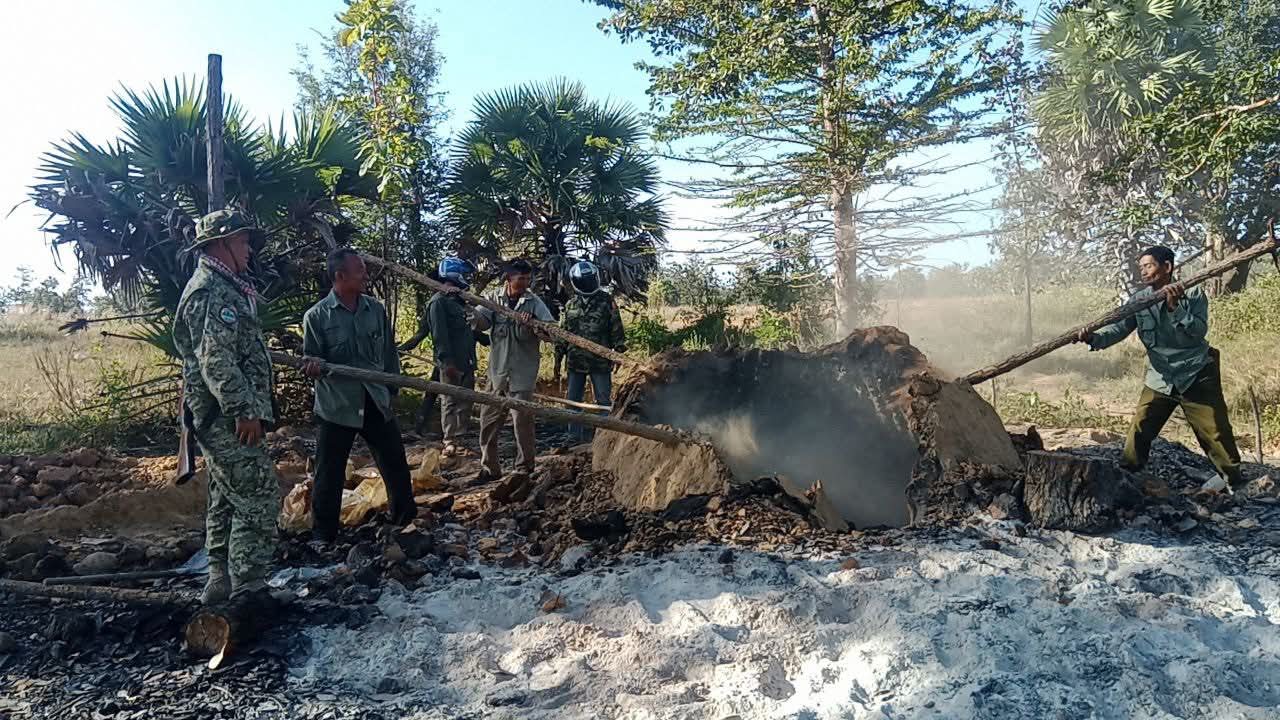
The ministry announced on Tuesday, January 6, that park rangers, together with local authorities and community members, conducted patrols in protected natural areas and dismantled five charcoal kilns in Kratie province’s O’Krieng Sen Chey district on January 4.
The operation was carried out to strengthen law enforcement in the management of natural resources, biodiversity conservation and sustainable livelihoods for local communities, particularly under the “Green” promotion measures, which constitute the second pillar of the Circular Strategy on Environment.
The strategy was developed in line with phase one of the seventh-mandate government’s Pentagonal Strategy, as well as directives from Prime Minister Hun Manet to prevent and combat natural resource crimes, strengthen law enforcement, expand green cover and improve community livelihoods in protected natural areas.
The ministry has finalised the draft National Biodiversity Strategy and Action Plan (NBSAPs). Sophalleth explained that this is of critical importance for Cambodia in formulating and implementing strategies to protect biodiversity and ecosystem services. The plans are currently undergoing consultations and receiving input from relevant ministries and institutions to identify national priorities, actions and commitments to address biodiversity loss, in line with global goals such as the Global Biodiversity Framework (GBF).
Cambodia has protected more than 7.2 million hectares of natural areas and biodiversity conservation corridors, accounting for over 40 per cent of the country’s total land area, all of which are under the management of the environment ministry.