Three towns and two districts in Cambodia have received ASEAN Environmental Sustainable Cities (ESC) Awards and Clean Land, Water and Air Certificates for 2025.
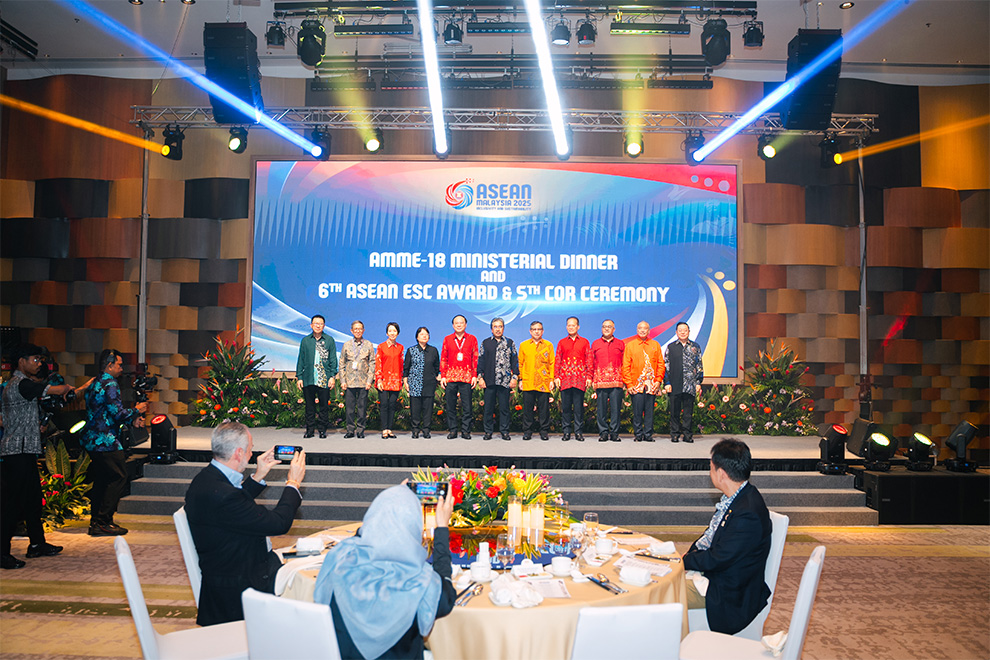
The award ceremony took place on Wednesday, September 3, during the 18th ASEAN Ministerial Meeting on the Environment in Langkawi, Malaysia.
According to the Ministry of Environment, the three towns include Siem Reap in Siem Reap province, which received a 2025 ASEAN ESC Award, Sihanoukville in Preah Sihanouk province, which received a Circular Economy Certificate and Takhmao in Kandal province, which received a Clean Water Certificate.
Tbong Khmum district of Tbong Khmum province received a Clean Air Certificate. Ponhea Krek district, also in Tbong Khmum, received a Clean Water Certificate.
Environment minister Eang Sophalleth led the Cambodian delegation to the meeting. He praised Cambodia’s achievements on the international stage, as demonstrated by the awards.
He believed the recognition reflected the government’s correct strategies and policies, especially under the smart, dynamic and energetic leadership of Prime Minister Hun Manet, in line with Cambodia’s Circular Environmental Strategy, which is built on three pillars: clean, green and sustainable.
The minister stressed that the circular strategy has prioritised work to ensure environmental sustainability and good governance, addressing climate change and promoting a green economy, aimed at increasing green coverage and making Cambodia carbon neutral by 2050.
The ministry has launched multiple campaigns to curb pollution, focusing on clean land, clean water and clean air. These involve the support and participation from leadership, ministries and institutions, subnational administrations, the armed forces, public institutions, the private sector, civil society, development partners, monks, teachers, students and all citizens nationwide.
“These campaigns aim to ensure that our homes, our society and our country remain clean, for the well-being of both the people and the environment,” the ministry stated.
Initiatives include the “Today I Will Not Use Plastic” campaign, with over 11 million participants; the “Clean Cambodia, Khmer Can Do” campaign, which mobilised over 6 million participants to collect and remove plastic waste simultaneously in communities, households and along roads, and the “National Roads Without Trash and Plastic Waste” campaign, encouraging cities, districts, and communes along national roads to keep their areas free from litter and plastic.
For clean water, the ministry has focused on reducing water pollution from factories and enterprises, strictly enforcing the law by requiring polluters to install and operate wastewater treatment systems and automatic monitoring devices. By August 2025, 52 factories had signed compliance agreements, of which 42 had already installed monitoring devices, especially in Kandal Province, which will soon be declared Cambodia’s model province for clean water implementation.
For clean air, the ministry has deployed 59 automatic air quality monitoring stations nationwide, 3 mobile air quality testing vehicles and 1 satellite-based monitoring system. Data from these systems is regularly published in real time. The ministry has also banned the burning of fabric scraps and industrial waste in boilers, kilns and brick ovens that lack proper filtration systems.