For Nov Lorn, the National Solar Park is more than a symbol of Cambodia’s renewable energy ambitions. It is the reason three generations of his family now have stable employment.
At 60 years old, Nov Lorn works as a construction labourer at the sprawling Kampong Chhnang province solar facility. His children joined the workforce during the installation phase. Even his grandchildren have taken up roles connected to the project.
“Myself, my children and even my grandchildren are working here,” he said. “Before this, we depended on farming and small jobs. It was not steady. Now we have regular income.”
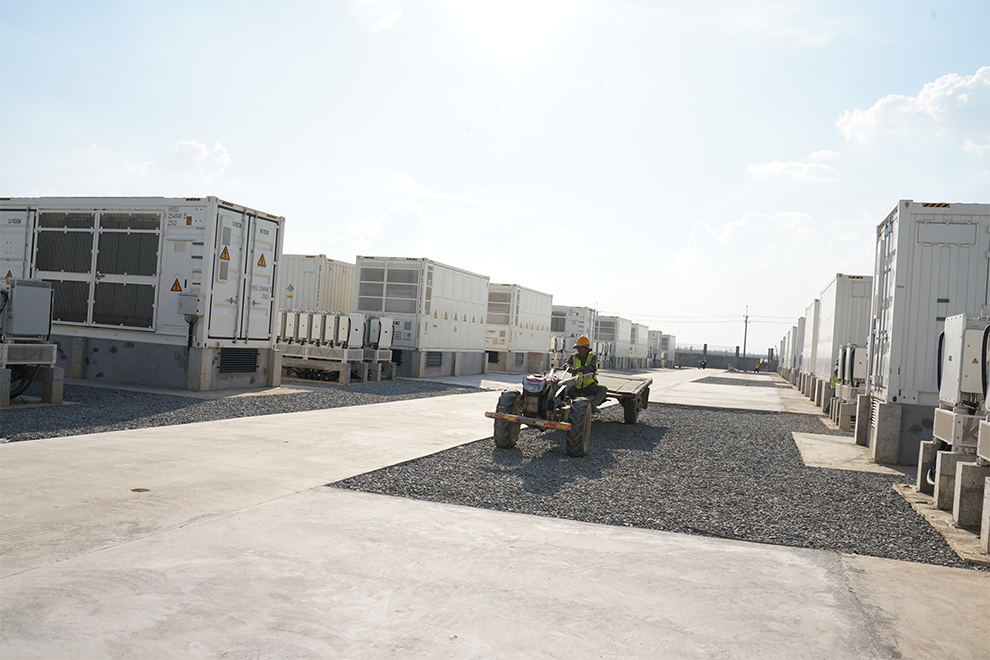
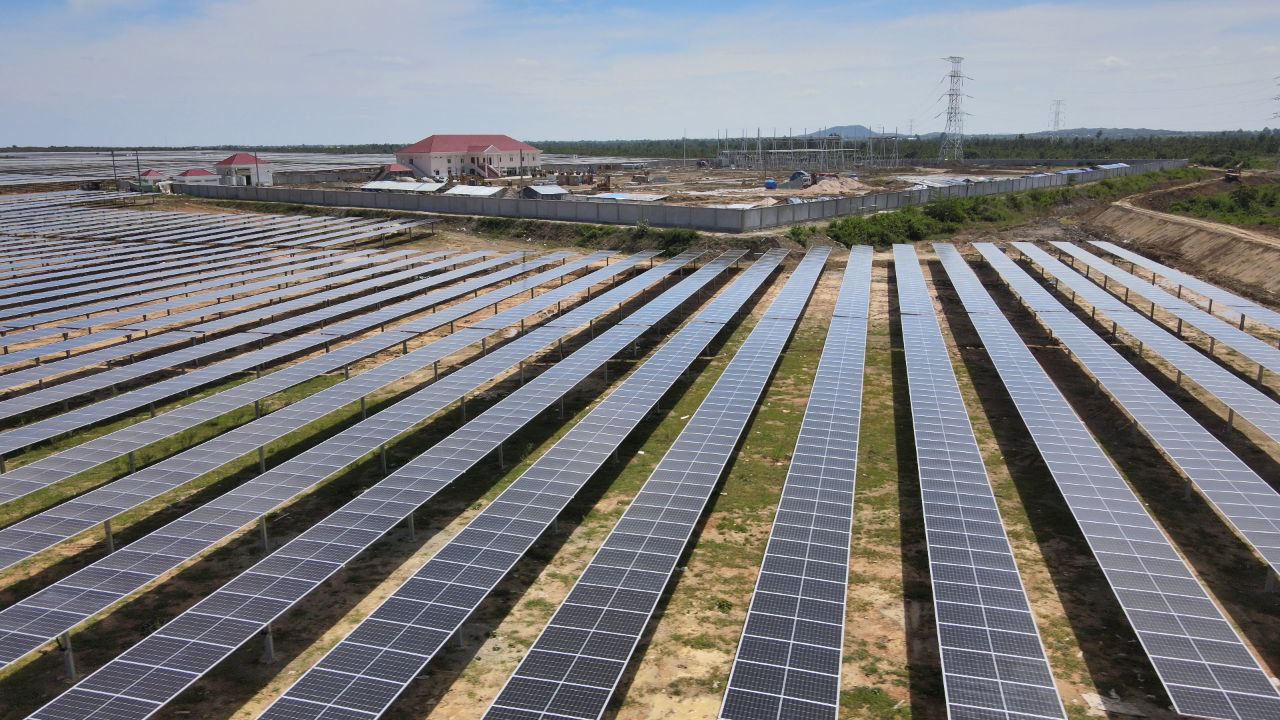
Located in Prey Chrov village, Kbal Teuk commune, Teuk Pos district, the solar park, which includes two phases totalling 100 megawatts, required more than 100 hectares of land for its 60MW first phase alone.
Construction extended beyond solar panels to include substations, a 40-kilometre transmission line, internal roads and a bridge.
These developments created hundreds of jobs for local residents, both skilled and unskilled.
“Capacity-building programmes benefitted 524 participants, many of them Cambodian engineers, technicians and energy-sector staff, strengthening long-term national technical expertise,” said Asia Development Bank (ADB) country director Yasmin Siddiqi.

Beyond employment, the infrastructure has changed daily life in surrounding villages.
Newly built access roads have improved connectivity to markets and schools, while the bridge has reduced travel time during the rainy season.
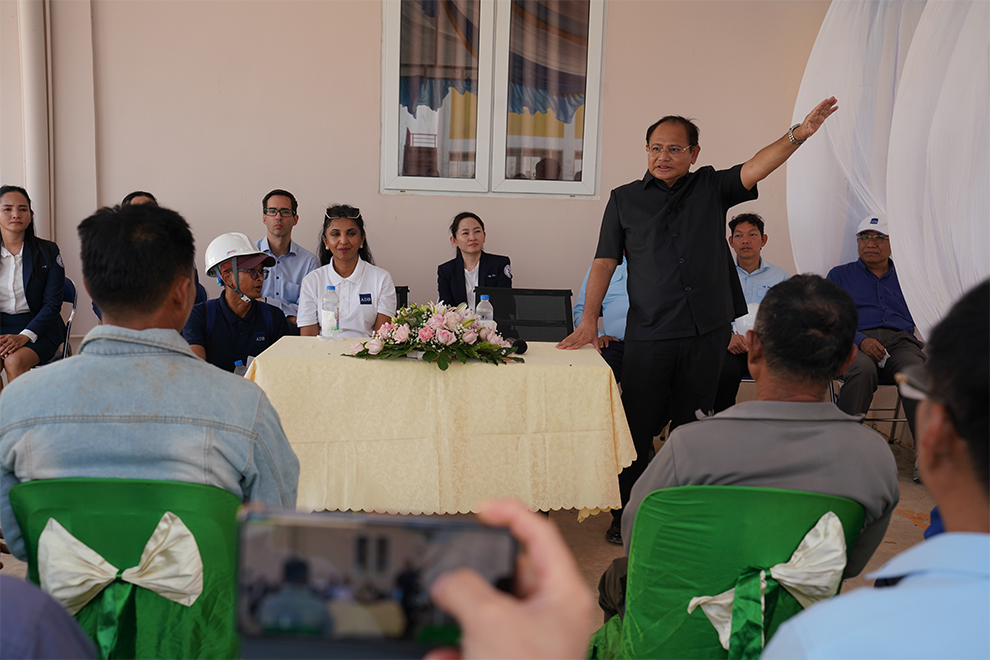
Siddiqi noted that interacting with community members was among the most meaningful aspects of the project visit.
“When they shared their actual stories about their children and grandchildren receiving benefits from this project because they worked as construction workers, you could really see the impact,” she said.
She added that the improvements go beyond electricity generation.
“It’s not just from the power generation, but the associated infrastructure that’s been developed — particularly the access road, the bridge and the opportunity for employment,” she continued.
Electricité du Cambodge managing director Praing Chulasa explained that land acquisition followed strict government and ADB safeguard guidelines.
“Normally, each project affects many sectors,” he said.
“When we acquire land, we make compensation following the guidelines of the government and ADB,” he added.
A dedicated committee comprising municipal, provincial and local authorities was established to identify land parcels and oversee negotiations.
For transmission lines, only right-of-way corridors were used.
“We cannot use all the land,” Praing said.
He said land required for substations was purchased directly based on independent valuation studies conducted in coordination with tax authorities.

“So finally, after discussion and negotiation, people agreed to contribute to the national project,” he said.
For Nov Lorn, the benefits are visible every day. The steady income has improved household stability and reduced the need for family members to migrate in search of work.
“When I look at how things were before and how they are now,” he said with a quiet smile, “the difference is like the sun and the earth.”
As Cambodia advances its clean energy strategy, the National Solar Park is not only feeding renewable power into the grid — it is lighting a path toward more secure livelihoods for families in Kampong Chhnang.