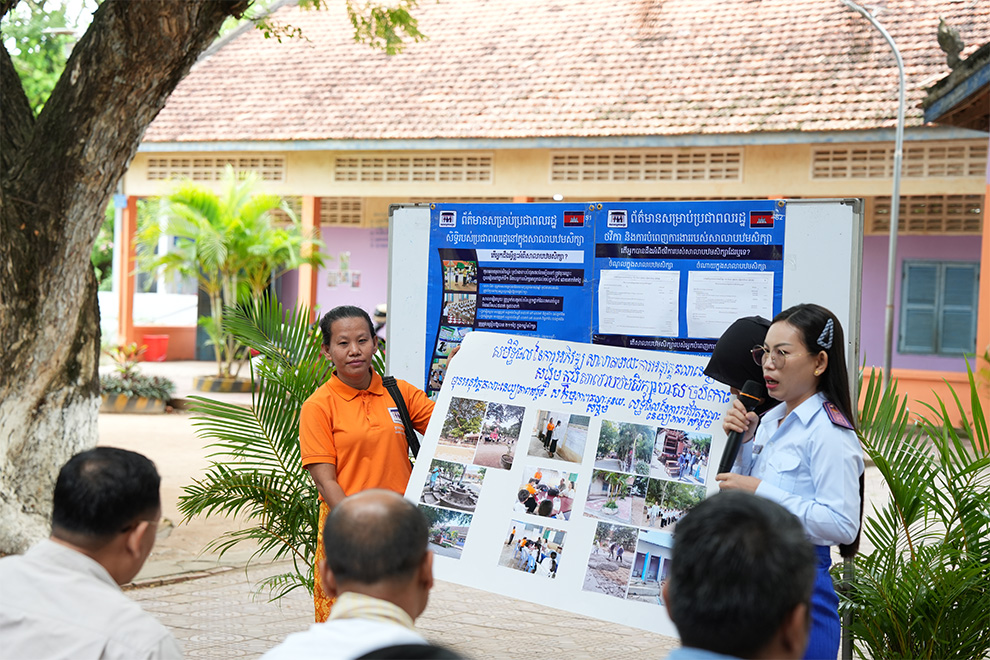
Cambodia is moving to secure the long-term future of its social accountability reforms by shifting responsibility and budget ownership to national and sub-national administrations, a development highlighted during a November 20 study visit to Kandal province.
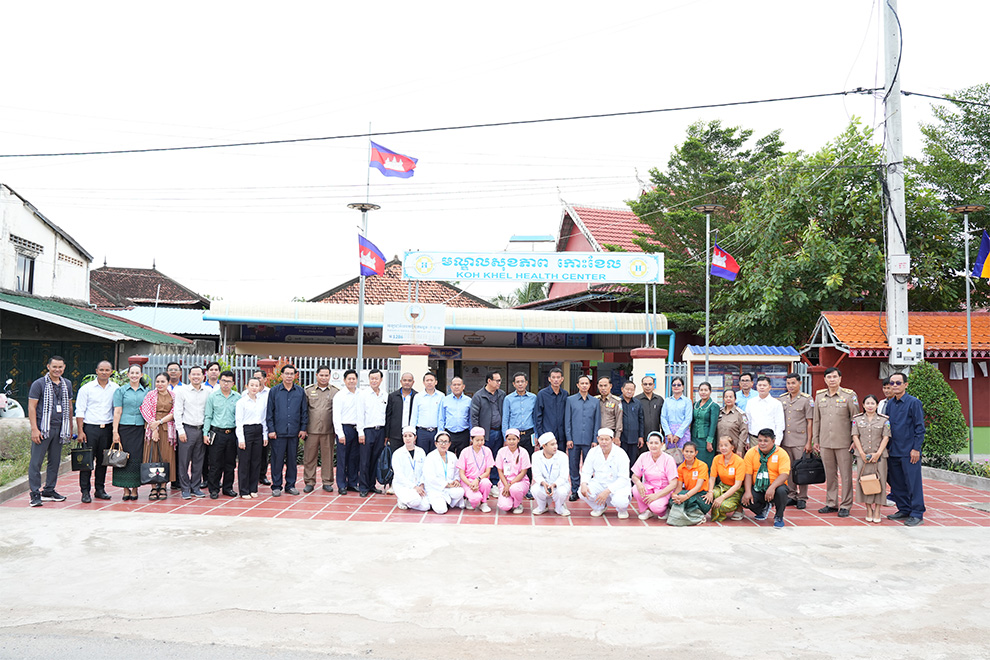
The visit, organized by the national committee for sub-national democratic development (NCDD) Secretariat, in collaboration with the Kandal Provincial Administration and World Vision International, brought together ministries, provincial authorities and members of the Capital–Provincial Social Accountability Working Groups to observe how local administrations are beginning to fund and implement social accountability work on their own.
“The initiative marks a major step toward sustaining social accountability efforts after years of reliance on development partners,” according to the NCDD.
The programme aims to fully integrate the reforms into state systems to ensure that citizen participation and transparency remain in place even as external support decreases.
Ma Onn Ma Onnath, deputy head of the NCDD secretariat and project director of ISAF II, said the study visit underscored the government’s intention to maintain the momentum of reform.
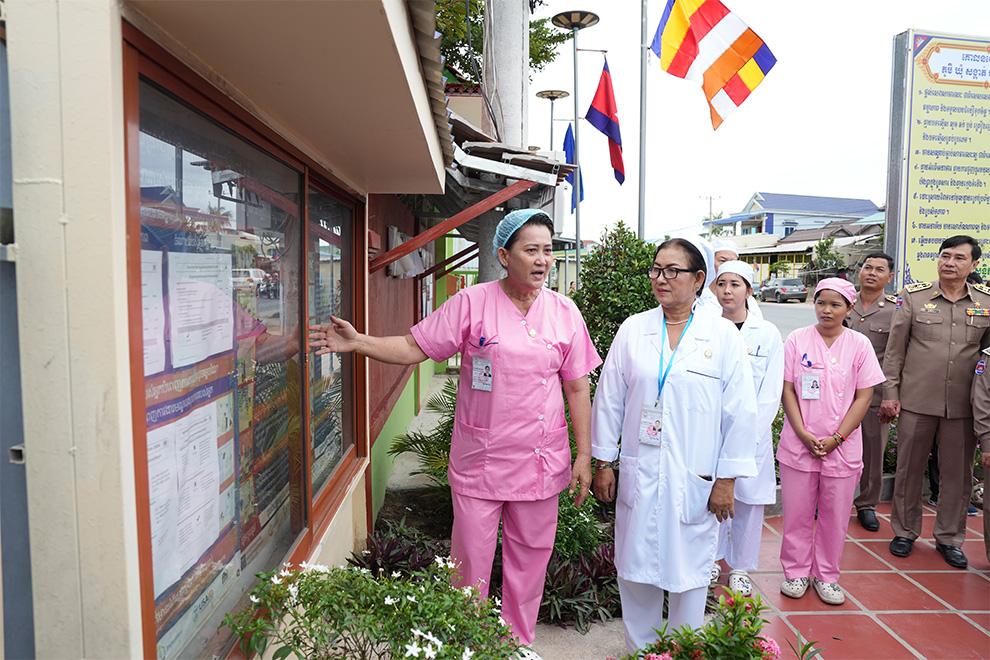

“The initiative of this study visit reflects the government’s continued commitment to strengthening citizen participation and improving public service delivery at all levels,” he said.
The shift comes at a time when a growing number of sub-national administrations are allocating their own budgets to support social accountability activities—a key step for sustaining reform nationwide.
Participants observed how these allocations are directly contributing to more responsive services across local administrations.
The World Bank, which manages trust-fund support from Switzerland, Germany, and Australia for ISAF Phase II, welcomed the government’s approach.
“By advancing these efforts, we are helping to create more transparent, responsive and inclusive public services — key priorities for Cambodia’s development agenda, and for generating more and better jobs for its citizens,” said Manuela Faria, the Bank’s technical team leader.
By 2025, the initiative had been rolled out across 190 municipalities, districts, and khans in 25 provinces and the capital, extending to 1,550 communes and districts — about 94 per cent of local administrations nationwide.
It also spans 6,922 primary schools, equal to 94 per cent of the national total, and 1,256 health centres, representing 96 percent of health facilities.
In addition, 54 municipal and district administrations — roughly a quarter of those across the country — are participating in the reform.
Under the second phase of the Social Accountability Framework (ISAF II), the NCDD Secretariat continues to receive support from Switzerland (SDC), Germany (GIZ) and Australia (DFAT) through World Bank–managed trust funds.
With this assistance, ISAF II is being implemented in 102 municipalities, districts, and communes across 20 provinces, covering 865 districts and communes, or 52 per cent of the national total.
The program also reaches 3,903 primary schools — 51 per cent of all such schools — and 694 health centres, accounting for about 53 per cent nationwide.
Twenty municipal and district administrations, or 10 per cent of those nationwide, are also included in this phase.
Provincial authorities used the visit to compare experiences and identify common challenges.
“Through this exchange, we learn from each other’s experiences to better serve our citizens and ensure transparent and accountable governance,” said Prak Sarat, deputy governor of Kandal province.
World Vision International, which supports citizen engagement in public service monitoring, said sustained government ownership is crucial.
“We are very pleased to support this study visit, which reflects our shared commitment to strengthening local governance, promoting transparency and accountability, encouraging citizen participation and ensuring that people’s voices are truly heard,” said Lim Bun, chief of party for World Vision’s social accountability programme.
This expansion has already helped strengthen service delivery and citizen participation in line with Cambodia’s decentralisation and deconcentration reforms.
Authorities expect that deeper government ownership, supported by continued peer learning across provinces, will be key to sustaining reforms as Cambodia prepares for the gradual withdrawal of external support.