Prime Minister Hun Manet has called for increased investment in research and development (R&D) and emerging technologies, including artificial intelligence (AI), as Cambodia accelerates its shift toward an innovation-driven economy aimed at achieving high-income status by 2050.
In a message marking the 4th National Science, Technology and Innovation Day, held from March 26 to 28, Manet said science, technology and innovation are no longer optional but essential to strengthening Cambodia’s competitiveness and resilience amid growing global uncertainties.
“Science, technology and innovation are not merely choices, but indispensable tools to enhance competitiveness and resilience across all sectors,” he explained.
The premier noted that over the past two decades, Cambodia has been transitioning from a labour-intensive and agriculture-dependent economy toward a more diversified, knowledge-based model driven by innovation and higher value-added production.
As part of this effort, the government has established a national research fund to support R&D activities in both public and private institutions, in a bid to strengthen the country’s national innovation system in an effective, inclusive and sustainable manner.
Manet stressed that sustained investment in R&D would generate new knowledge, technologies, products and services that can boost economic growth and improve public welfare.
He described the move as a key step in transforming Cambodia from a technology importer into a future technology creator in the region.
AI was highlighted as one of the fastest-evolving technologies, offering Cambodia opportunities to advance its digital economy and improve productivity across both public and private sectors.
The prime minister called for a “whole-of-ecosystem” approach, urging ministries, institutions, universities, development partners, the private sector and citizens to work together to build a robust national innovation system.
He emphasised that innovation should not be confined to any single sector but cultivated as a national culture, embedded in homes, schools, workplaces and communities across the country.
Human capital development, particularly in science, technology, engineering and mathematics (STEM), was identified as a core pillar of the innovation agenda. Manet underscored the need to expand the pool of skilled graduates to meet the demands of a rapidly evolving technological landscape.
He further linked innovation to national security and sovereignty, noting its role in enhancing long-term resilience as countries navigate increasing geopolitical and economic risks.
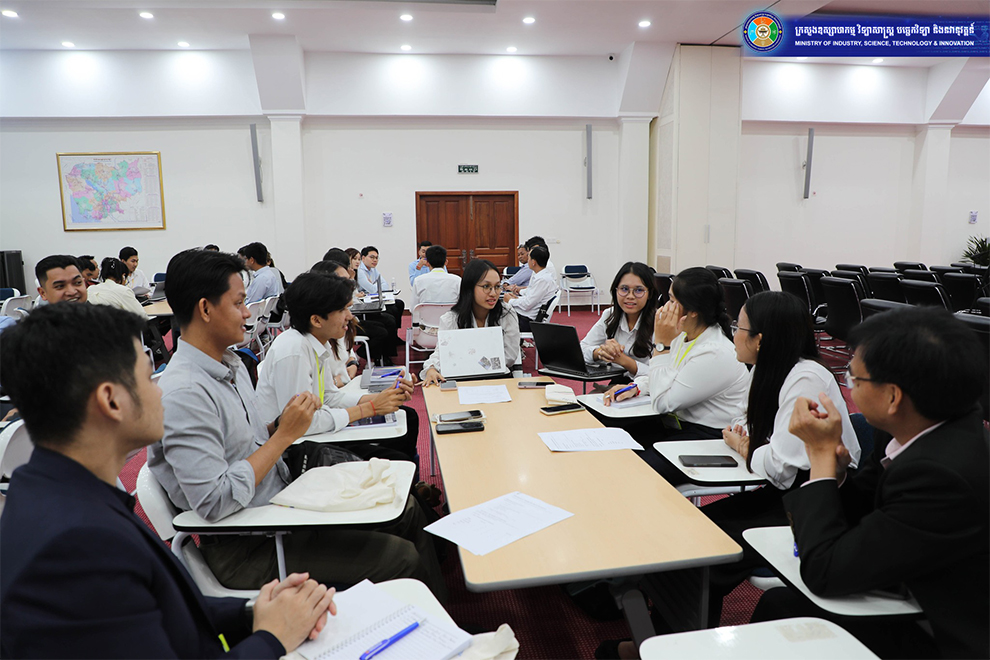
The three-day national event features exhibitions, competitions and forums bringing together students, researchers, innovators, government officials and private sector representatives to showcase Cambodia’s growing capabilities in science and innovation.
Manet concluded by calling on all stakeholders to actively support the development of science, technology and innovation, and to help foster a culture of innovation that can drive sustainable and inclusive growth, in line with the theme “Innovation for National Advancement”.