Indigenous communities in Cambodia will take centre stage this week as environmental stewards and knowledge holders, with a dedicated cultural festival highlighting their role in protecting water, land and forests amid growing climate pressures.
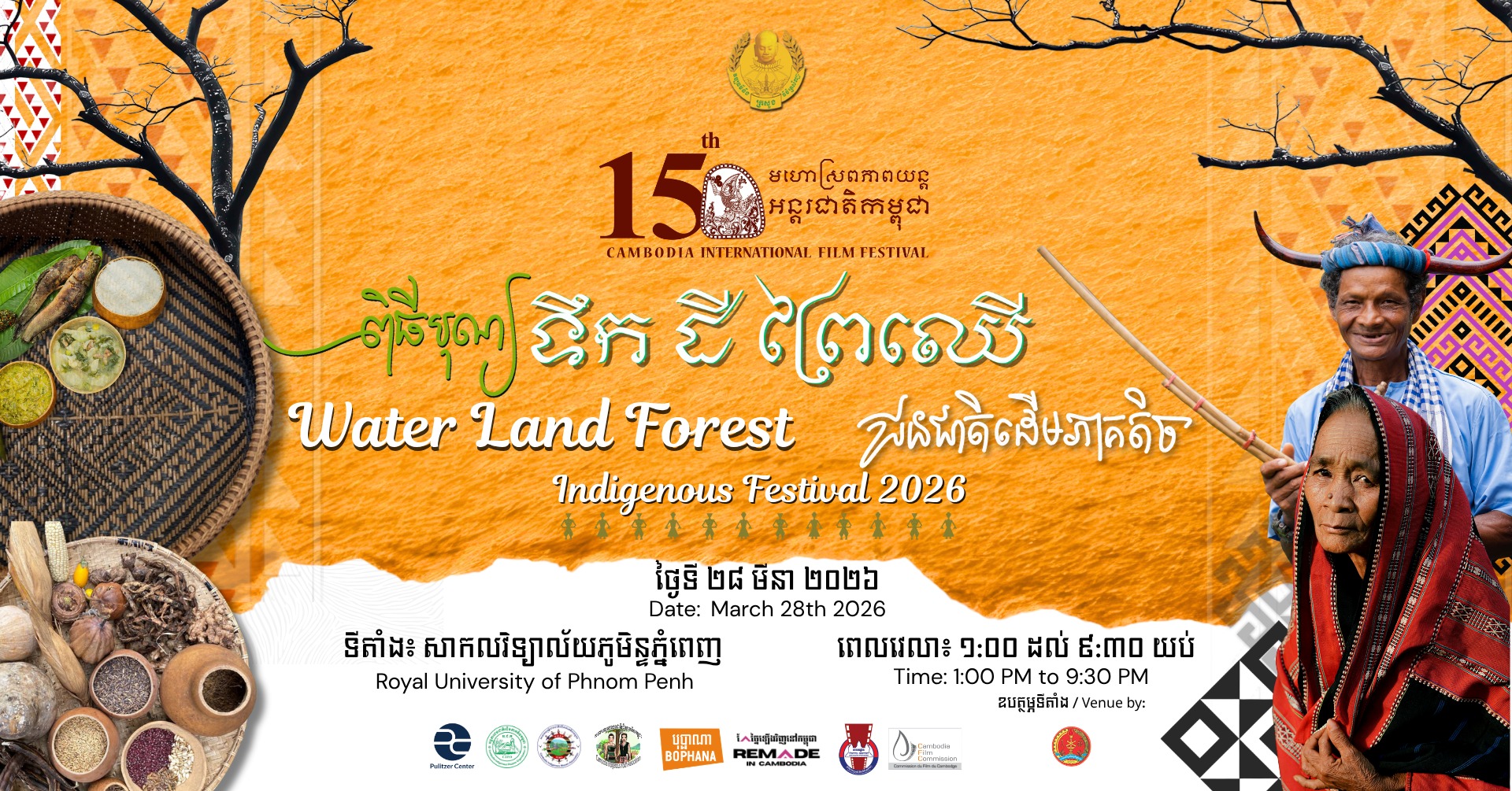
The “Water, Land, Forest” Indigenous Festival, set for March 28 at the Royal University of Phnom Penh, forms part of the 15th Cambodian International Film Festival, which runs from March 24 to 29.
Organisers say the event aims to shift public perception of indigenous peoples — from marginalised groups to frontline defenders of ecosystems critical to the country’s future.
Bringing together indigenous organisations, filmmakers, artists and youth groups, the day-long festival will combine film screenings, performances, exhibitions and discussions that connect traditional knowledge with modern environmental challenges.
“Our festival is a space to show that indigenous peoples are not just part of nature — we are connected to it in every breath, every story and every generation,” said Munny Rochom, an indigenous youth representative with the Cambodia Indigenous Women Association and coordinator of the event.
“Healing the Earth is not only an environmental action — it is an act of justice,” she added, stressing that indigenous communities should be recognised as “knowledge holders, culture bearers and protectors of Mother Earth”.
The festival is organised in collaboration with indigenous groups including the Cambodia Indigenous Peoples Organisation, Cambodia Indigenous Women Association, Cambodia Indigenous Youth Association and Cambodia Indigenous People Alliance, with support from the Pulitzer Center.
Taking place at the university’s central lake from 1pm to 10pm, the free public event will feature premiere screenings of films on Indigenous experiences from Cambodia and abroad, alongside exhibitions by journalists and photographers documenting environmental issues and Indigenous struggles.
The programme is designed to create dialogue between local communities and global perspectives, with contributions from artists and storytellers working in regions ranging from the Amazon to Southeast Asia.
“For indigenous peoples, land and natural resources are both fundamental rights and our identity,” said Mane Yun, executive director of the Cambodia Indigenous Peoples Organisation.
“Water, land and forest are life for Indigenous Peoples and all of us humans. Without these, none of us can exist.”
Beyond film, the festival will showcase Indigenous fashion created in collaboration with local weaving communities, traditional food and crafts, and rarely seen rituals such as a blessing ceremony performed by Suy elders from Kampong Speu.
One highlight of the programme will be a Lakhon-style musical theatre performance led by indigenous youth, blending contemporary and traditional forms to explore themes of identity, environment and cultural continuity.
Other activities include hands-on demonstrations of weaving and musical instruments, as well as “village circle” discussions modelled on traditional storytelling practices.
The event will also premiere “Wisdom of the Land”, a video project focusing on the role of indigenous women in climate resilience and cultural preservation, alongside presentations from grassroots documentation initiatives working to preserve Indigenous knowledge.
According to organisers, the inclusion of the festival within the film festival’s official programme reflects a broader shift in how storytelling platforms are being used to address environmental and social issues.
“Water, Land, Forest brings Pulitzer Center-supported reporting into a public cultural setting — where journalism becomes dialogue,” said Vijitra Duangdee, Southeast Asia outreach programme manager at the Pulitzer Center.
As Cambodia faces increasing environmental challenges — from deforestation to water resource pressures — the festival’s organisers say recognising indigenous knowledge systems is critical to building sustainable solutions.
By opening the event to the public, they hope to foster greater understanding of indigenous cultures while reinforcing their role in safeguarding ecosystems that support communities far beyond their own.
“If you truly want to protect the Earth, you must also protect the Indigenous peoples who have protected her for generations,” Rochom said.