The Ministry of Environment has ordered the temporary suspension of a sand dredging operation in Koh Kong province, after determining that it may negatively impact natural resources in the Prek Kampong Som — particularly the habitat of the royal turtle, a critically endangered species.
An inspection team from the ministry’s General Directorate of Environmental Protection, together with local authorities and community members, conducted a recent site inspection, the ministry announced on January 27,
They determined that a dredging operation, in Bak Angrut village, Dang Peang commune, Sre Ambel district, posed potential risks to the natural resources of the Prek Kampong Som stream. The business was operating with two companies on an area of nearly two hectares.
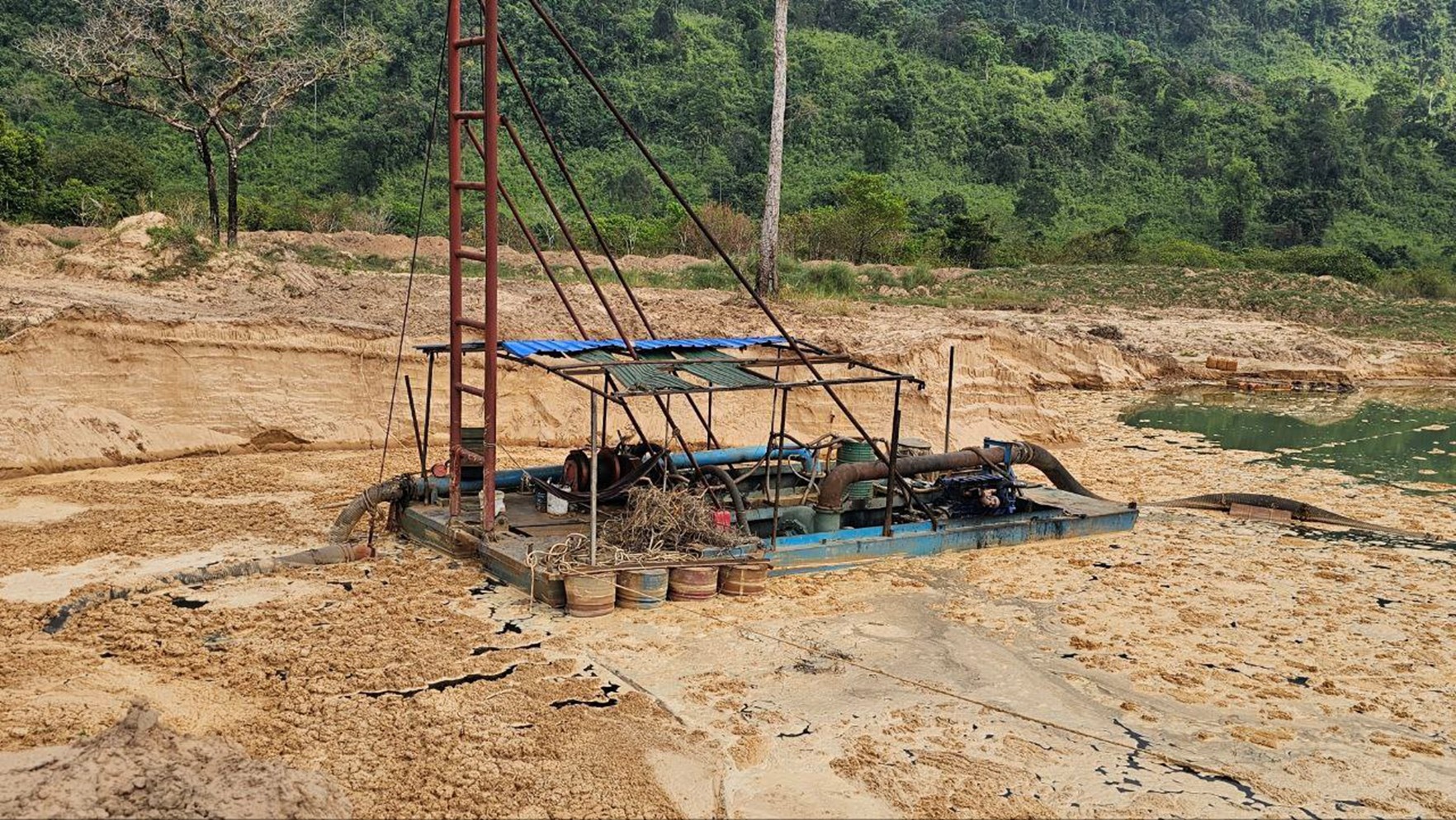

“Based on what we observed during the site inspection, the sand dredging site is close to the Prek Kampong Som stream, the habitat area of the royal turtle,” it said.
To prevent environmental pollution and ensure water quality, the ministry suspended the sand dredging operation until further decisions are made by the relevant competent authorities. The business owner is required to prepare an Initial Environmental Impact Assessment (IEIA) report before operations may resume.
The royal turtle, one of the world’s most critically endangered species, faces numerous threats to its survival. Sand dredging is considered a major threat, following illegal fishing and habitat loss, according to the USAID Conserve project.
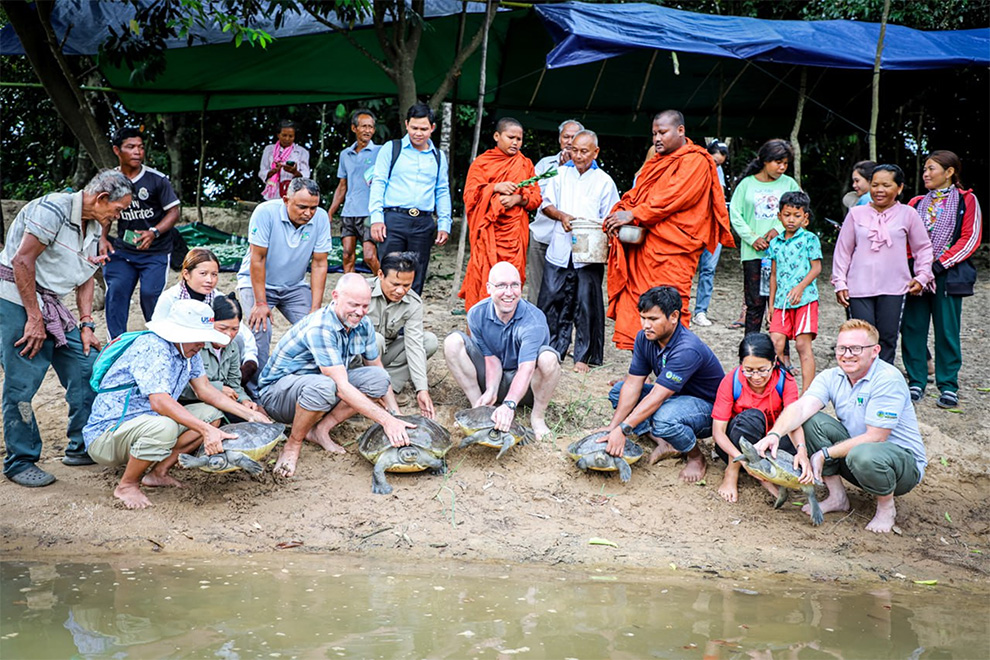
The Fisheries Administration, USAID Conserve and the Wildlife Conservation Society (WCS) have released many royal turtles into the Sre Ambel river system. Since 2015, nearly 200 turtles have been released back into the wild through WCS’s turtle protection programme and the breeding program at the Koh Kong Reptile Conservation Center.
The royal turtle was declared Cambodia’s national reptile in 2005. It is found only in Cambodia, Malaysia, and Indonesia.