Cambodia has launched a $7 million Korea-backed initiative aimed at narrowing healthcare gaps in the remote northeastern province of Ratanakkiri, as part of a broader push to strengthen the country’s public health system and expand access to essential services in underserved areas.
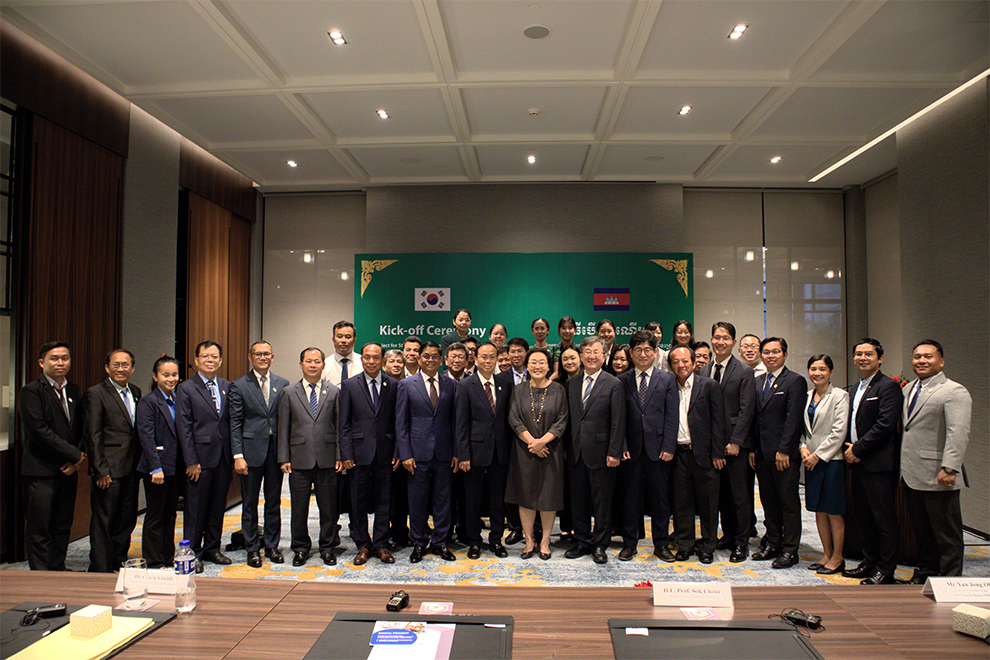
The project, officially titled the “Project for Strengthening Comprehensive Public Health System in Ratanakkiri Province”, was launched on March 20 through a partnership between the Korea International Cooperation Agency and Cambodia’s Ministry of Health Cambodia.
Set to run until 2030, the initiative adopts what officials describe as an integrated approach — targeting not only healthcare infrastructure, but also human resources, service delivery and system governance.
Speaking at the launch ceremony, KOICA Cambodia country director Moon Jung Choi highlighted the stark realities facing communities in the province.
“I was deeply moved by the resilience and warmth of its people, yet equally struck by the limited access to quality healthcare. This project is precisely what I believe will help change that reality,” she said.
“The initiative is not simply about building hospitals, but about building a better health system for the people of Ratanakkiri,” she added.
The programme will see the construction of new facilities at key provincial hospitals, including a 1,201-square-metre building at Ratanakkiri Provincial Referral Hospital and a smaller facility at Koun Mom Referral Hospital.
The project also includes the provision of essential medical equipment, alongside technical support to improve hospital management and service quality.
Beyond physical infrastructure, the initiative places strong emphasis on capacity-building.
Training programmes will be delivered for doctors, nurses and biomedical engineers, while community-level interventions are expected to improve public health awareness and strengthen primary healthcare services.
Health ministry secretary of state Sung Vinntak described the project as both a development milestone and a symbol of continued cooperation between Cambodia and South Korea.
“With a financial commitment of approximately $7 million, this project represents a symbol of trust and solidarity, addressing both infrastructure development and human resource capacity,” he said.
“It will contribute to improving healthcare access in underserved areas and advancing Cambodia’s progress toward Universal Health Coverage,” he added.
Ratanakkiri, one of Cambodia’s most remote and least developed provinces, has long faced challenges in accessing quality healthcare, particularly among rural and indigenous communities.
Limited facilities, shortages of trained medical personnel and geographical barriers have contributed to gaps in service delivery.
The new initiative builds on a previous phase implemented between 2019 and 2023, which reported improvements in maternal health services and patient satisfaction.
The current phase expands the scope to a more comprehensive, system-wide model aimed at long-term sustainability.
The project will be implemented by the National Medical Centre, in partnership with Team Sailors, combining technical expertise with field-level operational support.
According to KOICA, the ultimate goal is to create a more resilient and equitable health system in the province — one capable of delivering accessible and reliable care to local communities.
“As development cooperation is most meaningful when it translates into tangible improvements in people’s lives,” Choi said.
“We are confident that by 2030, the people of Ratanakiri will have access to healthcare services that are more accessible, equitable and dignified,” she added.
The initiative comes as Cambodia continues to prioritise health sector reforms in line with its long-term goal of achieving universal health coverage, particularly in hard-to-reach areas where disparities remain most pronounced.