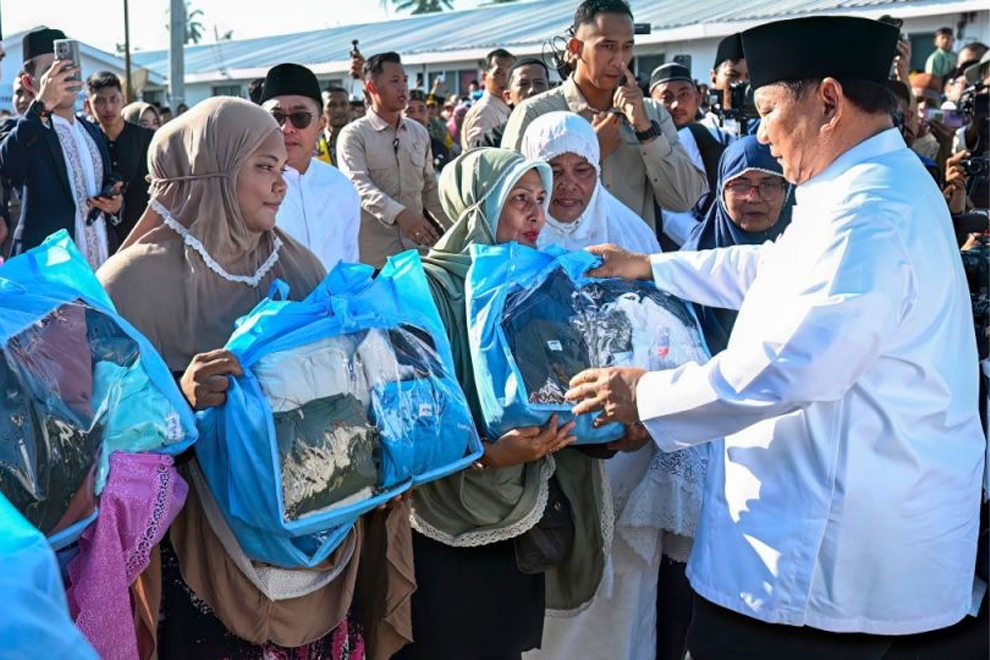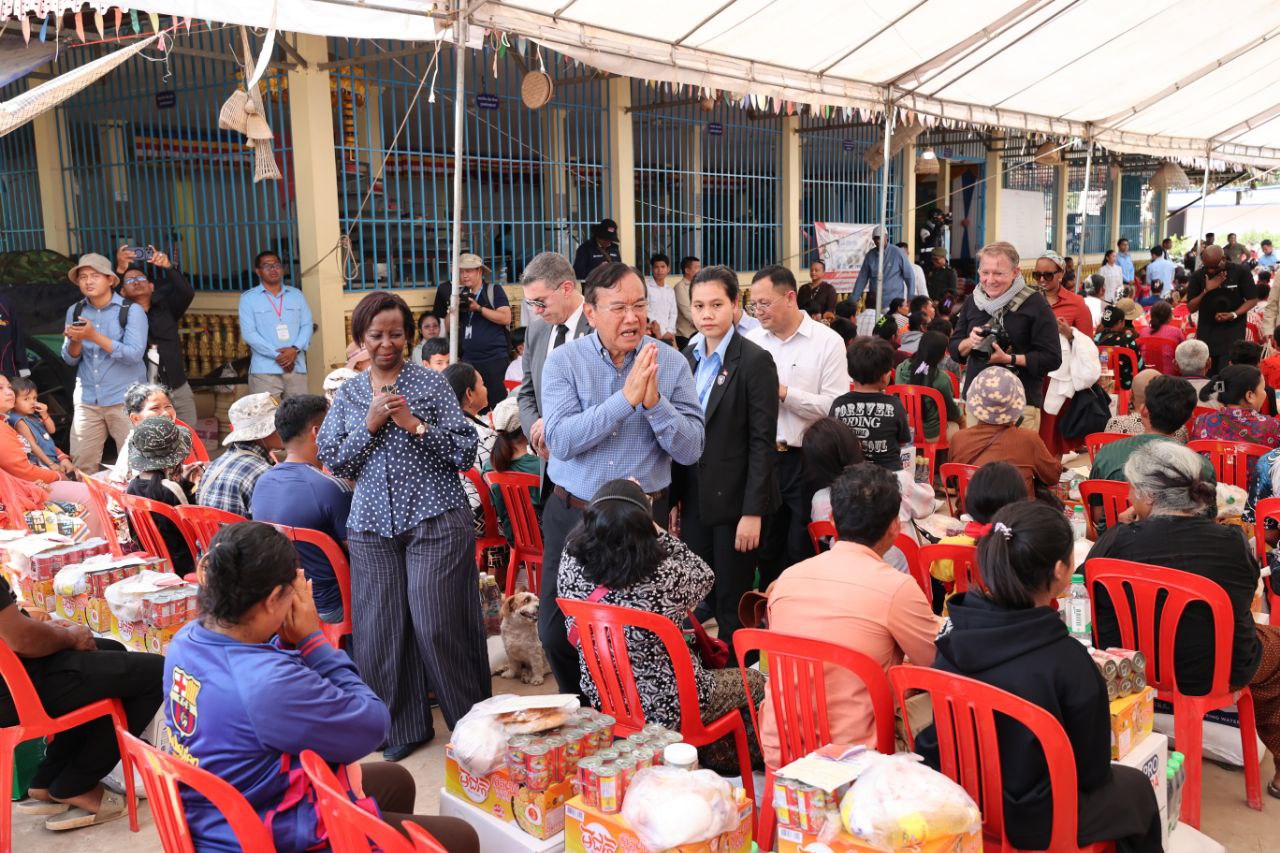
Louise Mushikiwabo, secretary-general of the International Organization of La Francophonie (OIF), visited the Wat Thormark Rangsey displacement camp, in Siem Reap province’s Kralanh district on March 2.
The camp houses 414 families, many of them are unable to return to their homes due to Thai shipping container and razor wire barricades. The provincial administration recorded 1,395 individuals in the camp.
Mushikiwabo is visiting Kingdom ahead of the Summit of the International Organization of La Francophonie, which Cambodia will host in November. It is expected that almost all of the 93 member nations will attend.
Speaking at the camp, she noted that her organisation, which is headquartered in France, is well aware of the situation in Cambodia. She personally understands these hardships deeply, as she also experienced displacement in her home country of Rwanda.
“I understand how you all feel because I have lived through such hardships myself. As someone who was once a victim and was displaced in 1960 — moving to the city with a large family— I have been through it. Therefore, I wish to express my solidarity with all of you on behalf of the member states of the Francophonie,” she said.
“I wish for you all to overcome these difficulties as soon as possible, and I hope for a swift solution so that you can all return to living your lives normally again,” she added.
Minister of Foreign Affairs and International Cooperation Prak Sokhonn, who accompanied her on the visit, explained that the government is currently seeking a peaceful solution to the border conflict.
Siem reap is currently hosting 13,451 displaced individuals from 4,237 families. Of them, 8,000 people are staying at locations arranged by the provincial administration, while more than 5,000 others are staying with relatives.
According to the provincial administration, Siem Reap saw 15 soldiers and one border guard killed in action during the second round of fighting last December.
Kin Phea, director-general of the International Relations Institute at the Royal Academy of Cambodia, said that many countries have acknowledged that Cambodia was the victim of a Thai invasion. He added that the visit by the senior La Francophonie official is crucial for gaining a clearer understanding of the realities of the Thai invasion, despite this major institution not being a part of the UN.
“The remaining tens of thousands of displaced persons are the consequence of the Thai invasion, where they deployed barbed wire and shipping containers to encircle and seize their villages and farmlands, making it impossible for them to return home. The unilateral actions by the Thai military were carried out even after the ceasefire came into effect,” he noted.
Phea explained that by observing these realities on the ground, the international community will gain an honest understanding on the ground. He believed that the members of La Francophonie will hear the cries for justice, truth and peace from Cambodia and from the tens of thousands of displaced Cambodians.
According to the Ministry of Interior, as of March 2, nearly 50,000 displaced Cambodians are still unable to return home. This is due to the Thai occupation of Cambodian territory, as well as some locations being declared “red zones”.