The prime minister has instructed the Ministry of Education, Youth and Sport to collect data on the children of migrant workers who have returned from Thailand and ensure they can enter school without being required to present supporting documents.
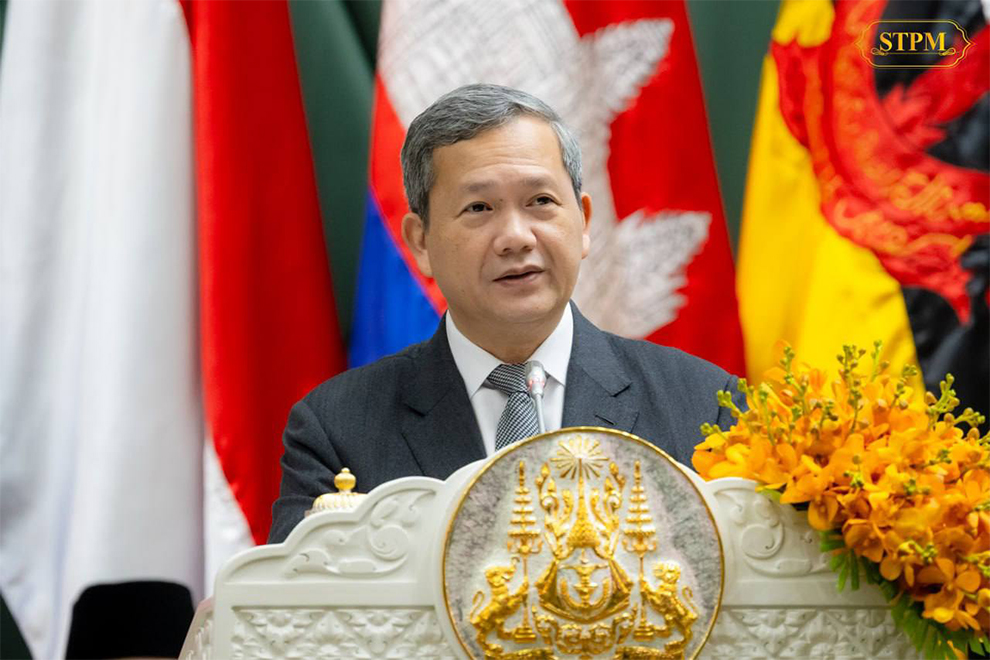
This directive was made in a congratulatory message for the opening of the 2025–2026 academic year, scheduled for tomorrow, Saturday, November 1.
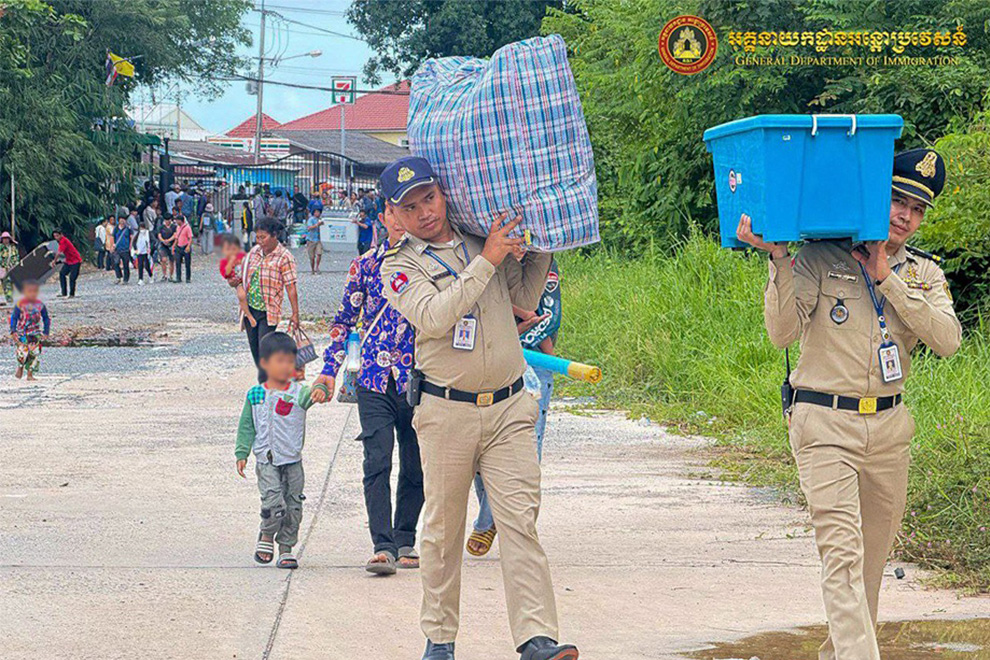
Prime Minister Hun Manet noted that around 930,000 Cambodian workers who had been in Thailand have returned to the Kingdom due to the recent border conflict. Among them are many children of school age, some of whom had previously studied.
The education ministry has already issued guidance to local authorities and relevant stakeholders to facilitate the registration and enrolment of these children at their nearest school.
Manet instructed the ministry to coordinate with provincial and municipal authorities to conduct surveys of the returning children, encouraging them to register or resume their studies at nearby schools.
“Special attention must be given to children and students with specific needs by providing support and simplified procedures for enrolment — without requiring documents such as birth certificates, residence books, family records or hospital certificates,” he said.
The Ministry of Labour and Vocational Training reported in August that of the more than 900,000 returnees, approximately 50,000 are children.
The prime minister noted that during the border conflict, when some schools were forced to suspend operations, the education ministry collaborated with local authorities and partners to offer education through temporary classes in schools and refugee camps.
After the situation stabilised, some schools reopened, but student attendance remained low due to fear and displacement, with many children still living in camps with their parents or guardians.
Manet further instructed the education ministry to work with the Cambodian Mine Action and Victim Assistance Authority (CMAA) to inspect school campuses that were directly affected by the fighting, assess damage, and ensure mine clearance is completed before rebuilding or repairing school facilities.
He said the inspections should also include mine-risk education for communities, teachers and students, to ensure a safe learning environment.

If any schools are too badly damaged to reopen, education departments and school management committees should select nearby schools for temporary classes during the 2025–2026 school year.
In areas where formal schooling remains impossible, the education ministry should coordinate with relevant authorities to establish classes in temporary shelters or camps, such as the Wat Por 5000 Camp and Tuol Andet Camp.
The prime minister noted that the education ministry is developing schools nationwide, in accordance with “Model School Standards”, which consist of five benchmarks. By the 2024 school year, 250 schools had been officially recognised as meeting model standards.
Furthermore, for the 2024–2025 academic year, the Secretariat of the National Committee for the Implementation of Key Measures in the Education Sector urged the application of four key reform measures in 161 targeted primary schools, including adding two extra study hours per day to strengthen Khmer language, reading and mathematics.
Manet reiterated that the ministry must continue education reforms, focusing on school governance through the Model School Standards and maintaining close cooperation with the Secretariat, with an emphasis on quality and sustainability, rather than expansion.
He explained that the seventh-mandate government remains committed to education, seeking new policies and strategies to make schools more effective, transparent and accountable, so they deliver better learning outcomes.
The government aims to foster discipline, morality, and dignity among students, so they become respectable citizens and future leaders of Cambodia. It will continue implementing four key measures to improve education quality at public schools, from preschool to secondary level.
They include strengthening school governance, revising curricula and extracurricular activities to improve knowledge, discipline and moral behaviour, enhancing student health and nutrition, including school meal programmes and food quality checks and encouraging greater participation from parents, guardians and communities, under the motto “Government–Community Partnership for Education”.
Lastly, the prime minister urged the ministries of education and labour to pilot new educational pathways starting from Grade 10, including science, social science and vocational tracks, in selected high-potential schools — especially those located in special economic and industrial zones.
These pathways are designed to prepare students for future careers, with career guidance beginning in Grade 7 and placement by academic ability in Grade 10.
His instructions aim to ensure that the 2025–2026 academic year produces stronger educational outcomes for Cambodia’s children.