The Ministry of Environment has welcomed the news that two large mango processing plants have installed treatment systems to prevent untreated wastewater from entering surrounding water sources. One of the two wads previously fined for pollution.
In a March 14 statement, the ministry noted that KRR Processing Food and Kirirom Food Production (K.F.P) have joined the increasing number of factories that are taking measures to comply with environmental regulations and protect natural resources.
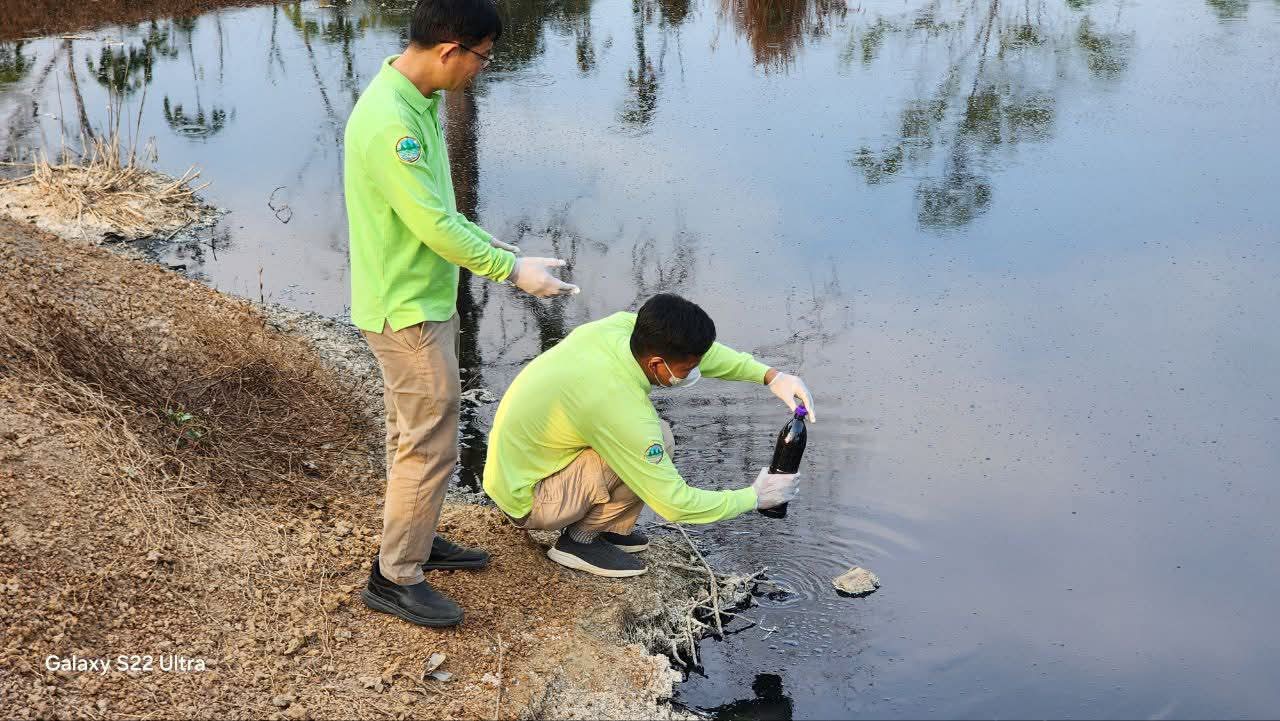
K.F.P was previously determined to be the source of pollution in a nearby water source but has now implemented the measures set by the ministry.
Officials found that the natural outlet from the final settling pond contained normal water quality with no noticeable odour (pH = 6.38 and DO = 4.5 mg/l). Additionally, the company has installed self-monitoring equipment, showing pH = 8.18, TSS = 7.73 mg/l, and COD = 102 mg/l. It is also constructing a new treatment pond with the capacity to treat 700 m³/day.
“In addition to treatment systems, the two companies have also installed self-monitoring water quality systems that allow them to regularly check the condition of treated wastewater before it is released. The monitoring systems help ensure that discharged water meets environmental standards and remains within regulatory limits,” stated the ministry.
Officials described the measures implemented by the two companies as demonstrating a growing sense of environmental responsibility among factory owners. Compliance with environmental laws is increasingly seen not only as a legal duty but also as part of sustainable business practices.
The ministry has also observed that public awareness of environmental protection is increasing. Many citizens are participating in activities such as reducing plastic use, collecting plastic waste in public areas and reporting activities that may cause environmental pollution.
It noted that the collaborative efforts of the public and private sector, as well as citizens, are a positive sign for the country’s environmental future. Officials expressed confidence that Cambodia’s environment will become cleaner and greener, providing healthy living conditions for citizens and attracting sustainable investment in the future.
It continues to promote measures to prevent all sources of pollution caused by liquid wastewater from companies, factories, and enterprises nationwide. The ministry claimed that through strict management systems, it has succeeded in preventing up to 70,000 cubic metres of untreated wastewater from entering natural water bodies per day, demonstrating a high level of care for water quality and public health.
As of January 2026, 55 enterprises had installed self-monitoring equipment, allowing specialists to remotely monitor and manage wastewater discharge data. The use of this system not only increases the efficiency of environmental law enforcement but also facilitates a better investment climate by reducing direct inspections.