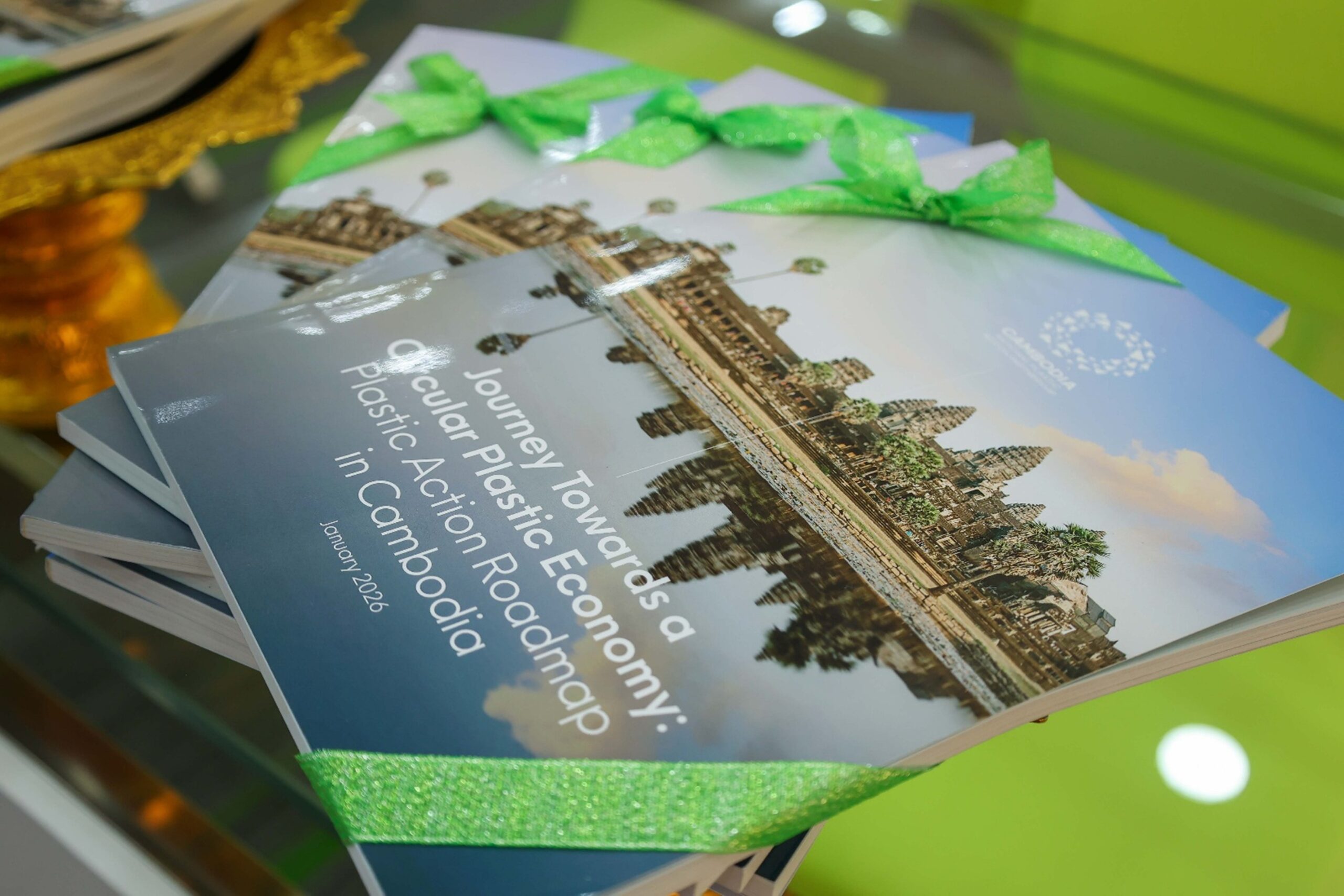
The Ministry of Environment officially launched the “Cambodia Plastic Action Roadmap” on January 20. The ministry expressed the expectations that it will help reduce to plastic pollution by up to 74%, cut greenhouse gas emissions by 40% and achieve an estimated 37% cost savings for the government.
The announcement, themed “Journey Toward a Circular Plastics Economy”, was presided over by the Minister of Environment Eang Sophalleth, with the participation of representatives from several key development partner organisations.
“This roadmap has been developed strategically in alignment with the national circular economy strategy for the environment. It aims to ensure that efforts to reduce plastic consumption are integrated into national environmental modernisation goals. Of note, the ministry has designated 2026 as a year of action with tangible results — a year in which we will work together to transform actions into meaningful outcomes for our homeland,” he said.
Sophalleth added that the development of the roadmap clearly demonstrates Cambodia’s strong commitment and unwavering determination to join the global fight against plastic pollution, especially in achieving “cleanliness” in Cambodia for all generations.
It sets out strategic actions to accelerate systemic change, focusing on several key priorities.
They include strengthening and expanding the legal and regulatory framework related to circular plastics, establishing sustainable financing mechanisms, enhancing cooperation across the plastics value chain, developing infrastructure to promote collective solutions and encouraging inclusive behavioural change for plastic reduction and waste management.
The ministry noted that the roadmap presents a system-change scenario by 2040, with a 74% reduction in plastic pollution, a 40% reduction in greenhouse gas emissions, an estimated 37% cost savings for the government and the creation of 26,000 new jobs, compared to a scenario in which no action is taken.
According to one study, in Cambodia generated approximately 546,000 tonnes of plastic waste, averaging 33 kilogrammes per person per year, in 2022. The volume was higher than low-middle-income countries in the same year.
There is a noticeable gap between waste collection rates in urban areas (around 70%) and rural areas (less than half of that figure), due to difficulties in access and limited infrastructure.
Enrico Gaveglia, UNDP Cambodia country representative, stated that the roadmap not only fills a critical knowledge gap regarding the generation and flow of plastic waste in Cambodia and highlights remarkable opportunities to improve waste management, but also helps reduce single-use plastics and capture the value of recyclable materials and biodegradable plastics.
These efforts will contribute to Cambodia’s transition toward a circular economy, he added.
Clemence Schmid, director of the Global Plastic Action Partnership (GPAP) at the World Economic Forum (WEF), noted that the roadmap is a collective, evidence-based effort driven by cooperation and led by the ministry. It establishes a national strategy to reduce plastic pollution and increase circular plastics to up to 52% by 2040.
“This transformation is far more significant than merely driving economic development, as it will stimulate innovation and strengthen the resilience of Cambodia’s economy,” she said.
The roadmap is the result of joint efforts coordinated by the United NNDP and the ministry, under the GPAP, an initiative which brings together the world’s largest stakeholders in addressing plastic pollution. GPAP spans partnerships across 25 countries and is convened by the World Economic Forum (WEF).