A total of 4,312 drug-related offenses were suppressed in the first half of 2025 — an increase of 13% — with over 10,000 arrests carried out. Over five tonnes of narcotics and chemical precursors were also seized during this period.
The National Police announced the figures on Friday, August 15, during a meeting held to review anti-drug law enforcement efforts during the first half of the year and outline plans for the second, under the National Drug Control Plan.
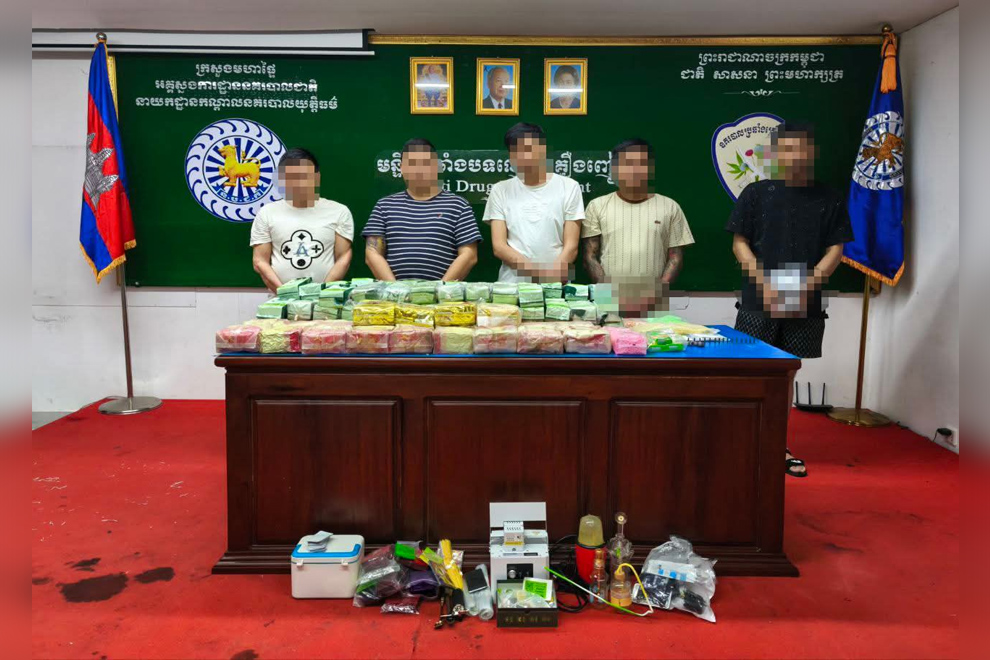
Police arrested 10,971 people on drug-related charges, up from 9,411 people last year — an increase of 1,560 people (17%). They seized 3.939 tonnes of all types of drugs, up 512 kilogrammes (15%). In addition, 1.099 tonnes of chemical precursors were confiscated, compared to just 141 kilogrammes in the same period last year — a jump of almost a tonne, or 679% — along with drug production equipment and paraphernalia.
Among the major offenses recorded were trafficking, transportation and storage charges, with 2,630 cases and 5,462 arrests.
Drug use charges saw 5,440 individuals arrested in 1,657 cases, with 1,134 of them prosecuted in court, 4,119 sent to drug rehabilitation and reintegration centres, and 187 released into community-based treatment under guardianship.
“There were 52 major cases involving major rug networks. Police arrested 49 ringleaders, 125 network members, and seized a total of 3.873 tonnes of drugs and 1.095 tonnes of chemical precursors,” noted the police.
Anti–money laundering efforts were also reported, with 52 serious cases, including 10 with money laundering charges and 633 minor cases, including 1 with money laundering charges.
The authorities froze or seized assets including 112 cars, 1,488 motorcycles and 101 bank accounts.
National Police Chief Sar Thet ordered all specialist forces to step up the prevention, deterrence and suppression of drug crimes at the local level, in line with the National Police plan and the Royal Government’s strategy, noting that global trends show no decline in drug trafficking activities.
He also urged the enforcement of administrative measures alongside legal measures, particularly targeting high-risk locations such as hotels, guesthouses, rental homes, rental rooms, entertainment clubs, karaoke venues and other areas — to shrink the domestic drug market and move towards eliminating the import, transport, and trade of drugs in Cambodia.
Furthermore, he called for intensified investigations into the assets derived from drug crimes to strengthen prosecutions for money laundering and to freeze or seize such assets for the state.
Officers were also told to enhance cooperation with all government institutions and relevant authorities both inside and outside of the country. Thet emphasised the importance of improving the technical skills of officers in investigating, detecting and suppressing concealed import, transport, trafficking and use of drugs — especially the targeting of concealed drug-production operations.
As drug trafficking groups are often armed and violent, he stressed that commanders leading anti-drug missions must apply professional tactics and use their experience to ensure operations succeed without causing any risk or danger to the units involved.