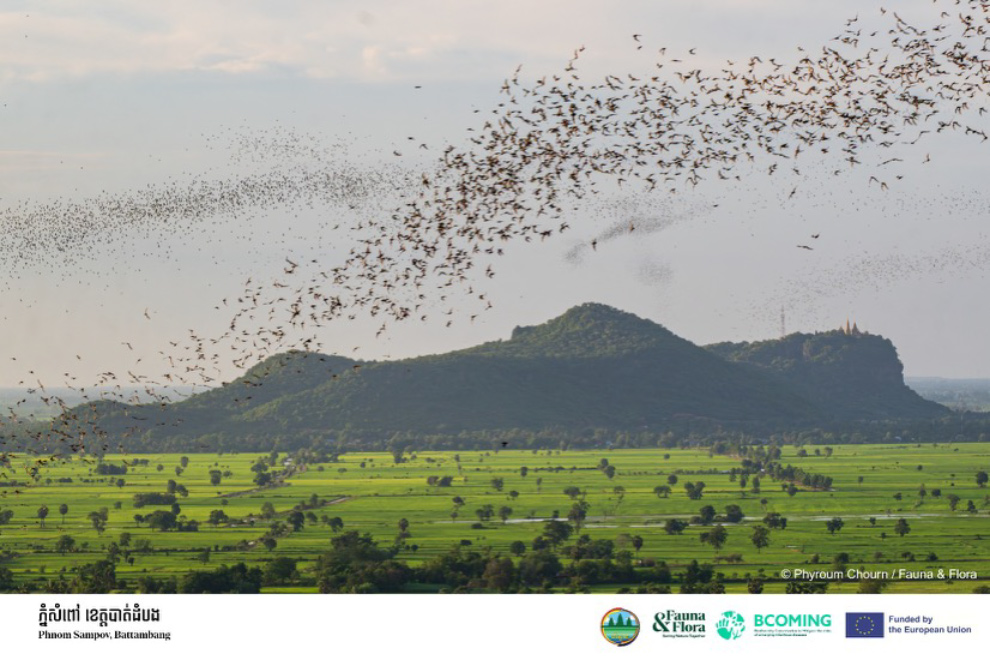
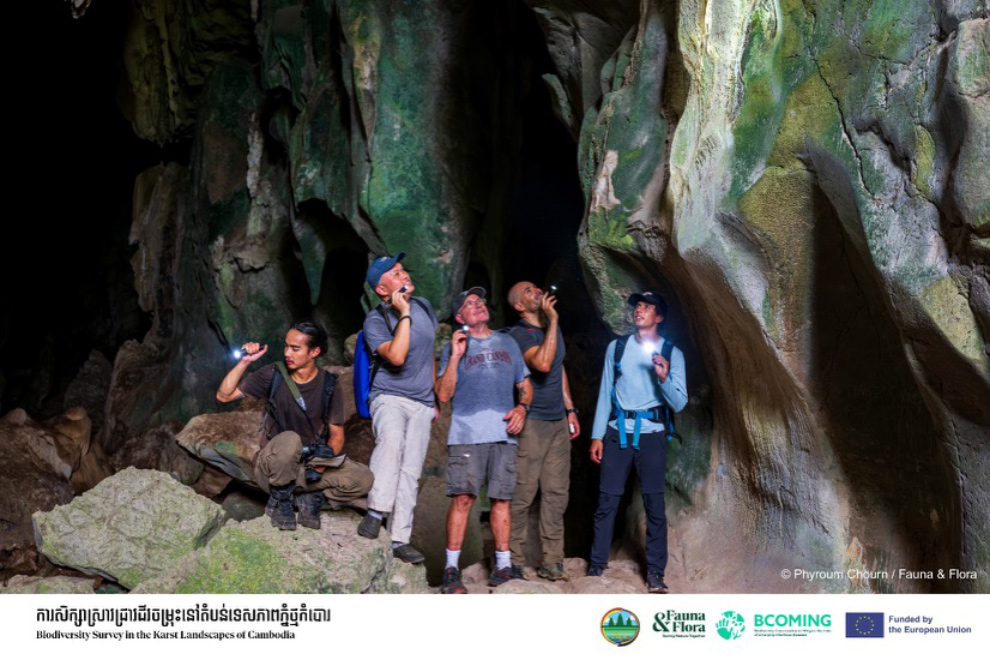
A new biodiversity survey, published March 23, has revealed the vast array of species living within Cambodia’s karst ecosystems. Exploring over 60 caves across ten hills in the Battambang Province, western Cambodia, the survey uncovers a treasure trove of extraordinary creatures, many found nowhere else on Earth.
Karst landscapes are formed from limestone hills and caves, creating unique features such as sinkholes, springs and underground streams.
A joint press release from Fauna & Flora-Cambodia and the Ministry of Environment shared some of the most significant findings of the survey.
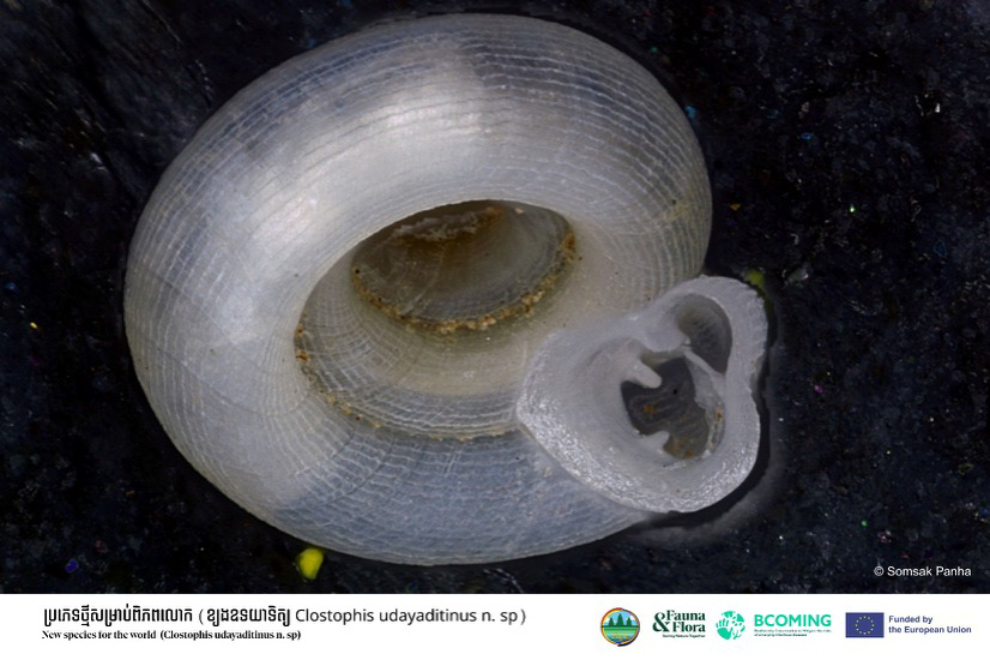
It included the discovery of many species that are new to science. They are three new geckos (Cyrtodactylus kampingpoiensis, Hemiphyllodactylus khpoh, and Dixonius noctivagus), two micro-snails (Clostophis udayaditinus and Chamalycaeus aduncus) and two millipedes (Orthomorpha efefai and Orthomorpha battambangiensis). All seven of these new species have been published.
The other new three geckos (Gehyra sp. nov., Cyrtodactylus sp. nov. and Dixonius sp. nov.) and a new pit viper species (Trimeresurus sp. nov.) are currently being described.

The survey confirmed the presence of several global threatened species, including the Sunda pangolin, Indochinese silvered langur, long-tailed macaque and green peafowl. This finding highlights the urgent need to protect this habitat.
Although still little explored, karsts are one of the most biodiverse habitats on Earth, with high levels of endemism. These landscapes are also culturally and spiritually important to local communities and are increasingly valued for ecotourism.
Karst areas, however, face growing threats from quarrying, poorly managed tourism, wildfire, illegal logging and wildlife hunting.
Environment ministry spokesperson Khvay Atitya noted that the survey once again demonstrates that Cambodia is a country of outstanding natural richness and global biodiversity significance.
“Our karst ecosystems are not only home to rare and newly discovered species, but they also provide cultural, spiritual and economic value to local communities,” he said Atitya, adding that the government, through the ministry, is committed to strengthening the protection and sustainable management of these unique landscapes.
He explained that the ministry will continue to work closely with its partners to ensure that development is balanced with conservation, so the Kingdom’s natural heritage is safeguarded for future generations.
Sothearen Thi, karst biodiversity coordinator at Faune & Flora, noted that Cambodia’s karst areas are a treasure trove of scientific secrets waiting to be uncovered.
“From undiscovered reptiles and snails, to hidden caves – there is still so much we do not know about these unique ecosystems and the diversity of creatures living within them. Without sustainable management, we may never find out what these areas truly hold,” she said.
“Karst landscapes are facing many human-driven challenges, and biologically significant species could go extinct before they have even been discovered,” she added.
Fauna & Flora is working with local partners to conserve Cambodia’s karsts, including the recent release of guidelines for sustainable development and management of cave ecosystems. The guidelines integrate international best practices with Cambodian context, providing practical measures to safeguard bat colonies, preserve rare and endemic cave biodiversity, promote sustainable guano harvesting and ensure responsible tourism development.