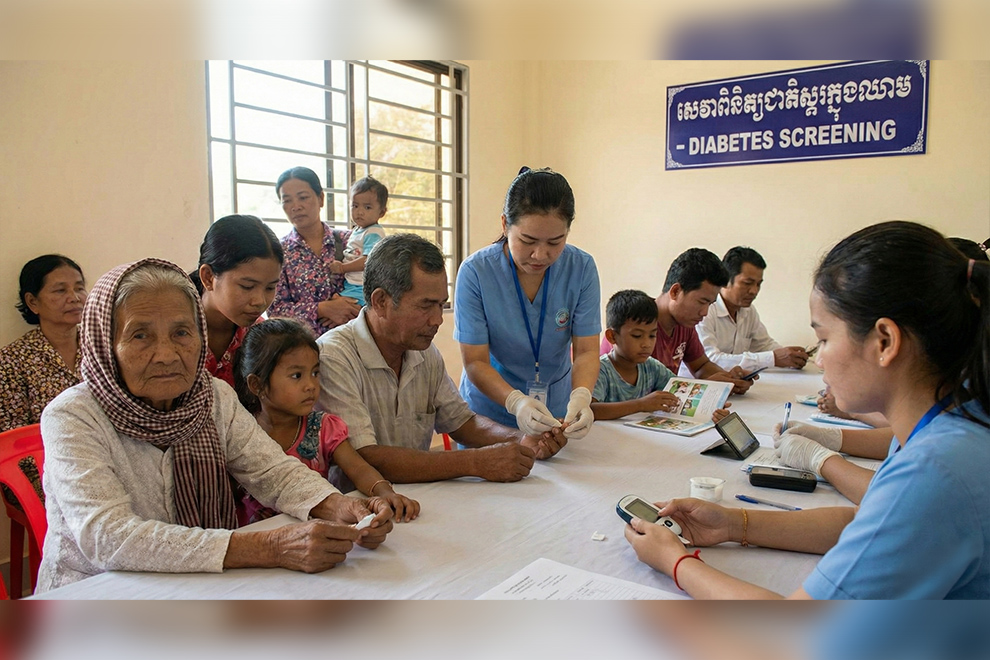
Cambodia is intensifying early screening and prevention efforts for diabetes, as cases continue to climb at an alarming rate, with health officials warning that the disease is now affecting people across all age groups.
Presiding over a World Diabetes Day 2025 event in Prey Chur district on November 25, Ministry of Health secretary of state Ngov Kang called the rise of diabetes and other non-communicable diseases (NCDs) a pressing national concern which requires stronger public awareness and earlier diagnosis.
The event brought together officials from the Department of Health Protection, Kampong Cham Provincial Administration, health centres, students, citizens and village health support groups — around 150 participants — underscoring the government’s push to strengthen cooperation with local authorities in tackling the growing disease burden.
The ceremony was themed “Diabetes can affect people of all ages”, reflecting a growing reality already visible in nationwide data.
In 2024 alone, Cambodia recorded more than 230,000 new diabetes cases — a 59 per cent jump from the previous year — with over 17,500 patients requiring hospital care.
“We are placing high attention on preventing the increase in non-communicable diseases, especially diabetes,” said Kang.
He noted that the health ministry and the Royal Government have supplied medicine and testing kits to each of the Kingdom’s referral hospitals and health centres to support earlier detection and treatment.
Kang urged Cambodians aged 40 and above to undergo diabetes screening at the nearest health centre or referral hospital, stressing the danger of delayed diagnosis.
“People should not wait until complications appear. Early detection saves lives,” he said.
The warning comes as Cambodia faces a broader surge in NCDs. Hypertension cases reached more than 400,000 last year, increasing by 21 per cent, while diagnosed mental health illnesses nearly doubled. Cancer cases also rose sharply, with over 31,000 patients recorded in 2024.
Kantha Bopha Hospital reported in July 2024 that nearly 700 children have been diagnosed with type 1 diabetes since its Phnom Penh and Siem Reap branches opened in 1992, with most cases occurring among children aged 10 to 14.
Dr. Yey Channa, director of Jayavarman VII Hospital (Kantha Bopha, Siem Reap), said of the 698 recorded patients, 309 are currently under treatment in Siem Reap.
Dr. Khun Leang Chhun, deputy director of the hospital, explained the cause of type 1 diabetes, clarifying that it is not caused by sugar intake, and stressed that “the only treatment is insulin”, which patients must take for the rest of their lives.
Health minister Chheang Ra said earlier this year that the increase reflects both greater public awareness and growing trust in government health services, but added that the rising burden of NCDs demands more complex and long-term care.
During the ceremony, Kang reinforced key prevention measures, encouraging people to increase physical activity, eat healthier foods, reduce salty, sugary and fatty diets, and avoid alcohol and cigarettes — behaviour strongly linked to diabetes and heart disease.
Cambodia’s average salt intake remains nearly double the WHO’s recommended limit.
Lifestyle changes remain a critical challenge as industrial development and modern living habits lead to reduced physical activity and increased consumption of fast food and sugary beverages.
Diabetes has emerged as a significantly more prominent cause of death in Cambodia over the past two decades, according to the latest Health at a Glance: Cambodia report by the WHO.
Once ranked 12th among the country’s top causes of mortality in 2000, diabetes mellitus had climbed to 8th place by 2021, reflecting the rapid rise of non-communicable diseases nationwide.
The report shows a clear shift in Cambodia’s health landscape, with communicable diseases declining and chronic illnesses such as cardiovascular disease, cancer and diabetes now driving the country’s leading causes of death.