The sound of longing for home continues to echo among thousands of displaced residents along the Cambodia–Thailand border, with families saying temporary shelters cannot replace the homes they have lost.
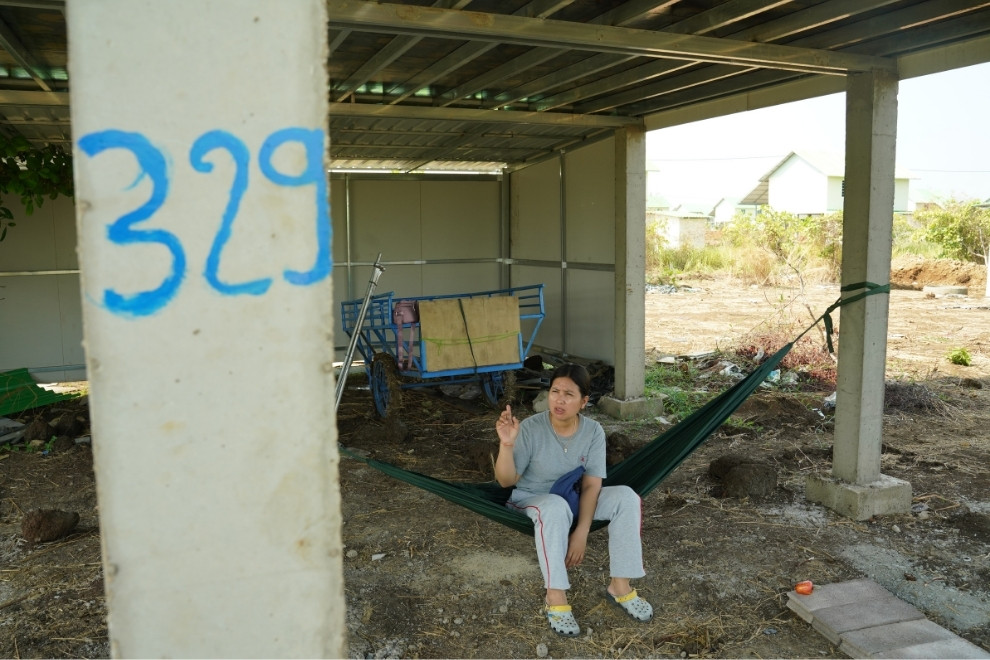
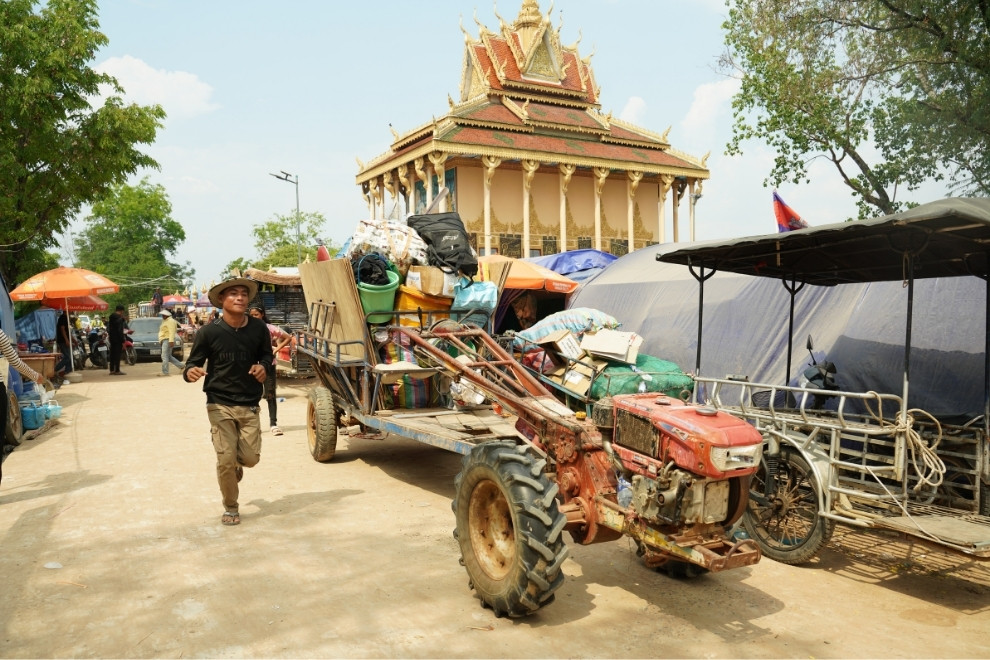
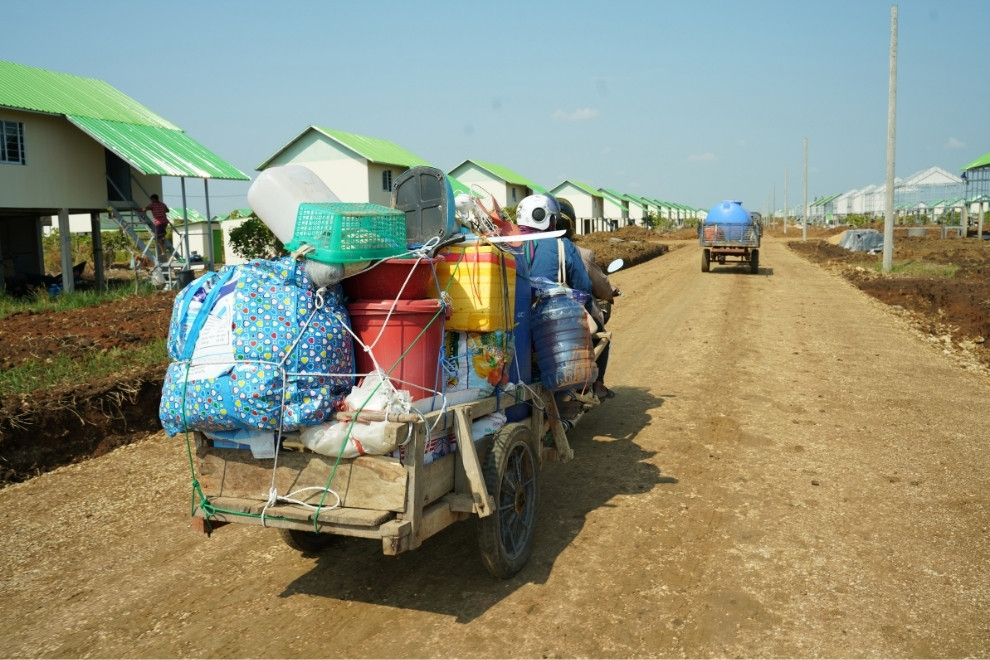
Rim Lay Khim, from Thnal Bambek village in the Boeung Trakuon area, said that although conditions at the new temporary site are better than the makeshift camp at Wat Kandoul, it is still not what people truly want.
“Temporary shelters are not our home. We want our houses back — our villages, the place that gave us warmth and happiness,” she says,
Life in the shelters remains difficult. Tents are unbearably hot during the day and prone to flooding during rain, while thousands of people share limited sanitation facilities. Now, new shelters are more comfortable.
Before clashes erupted in early December last year, Lay Khim ran a small wholesale and retail business. She had stocked goods in preparation for the New Year holiday, but everything was destroyed.

“I had just filled my house with goods for three days when the fighting broke out. Now, before the New Year, I have nothing left. My house is gone,” she told The Post.
As shelling intensified, she had the chance to load belongings into her pickup truck and flee. Instead, she chose to help neighbours, including a pregnant woman with no means of escape.
“I could not leave them behind. Even though she was pregnant, she climbed onto the truck for safety. I chose people, not property,” she explains.
She called on the government and international community to help displaced families return home as soon as possible, noting that children’s education has been disrupted and living conditions remain harsh.
“We do not want to continue living as displaced people. We ask for our land and homes back so we can return, especially for our children who need education,” she adds.
According to authorities, tensions in the Boeung Trakuon area persist despite the ceasefire that was declared on December 27.
Thai troops have reportedly continued installing razor wire and positioning equipment about one kilometre inside Cambodian territory.
Official data shows that around 292 hectares of land remain under occupation, including residential and agricultural areas. More than 1,365 houses have been affected, displacing over 6,000 people.
The Ministry of Foreign Affairs and International Cooperation noted that Cambodia has lodged repeated protests over actions it describes as violations of its sovereignty and territorial integrity, calling on Thailand to halt activities and resolve disputes through peaceful means.
Reports have also reported smoke rising from parts of Boeung Trakuon, believed to be from destroyed Cambodian homes, alongside land surveying and allocation activities near the border.
For Lay Khim and many others, the situation is not just political — it is deeply personal.
“We don’t want to live like this anymore. We just want to go home,” she says.