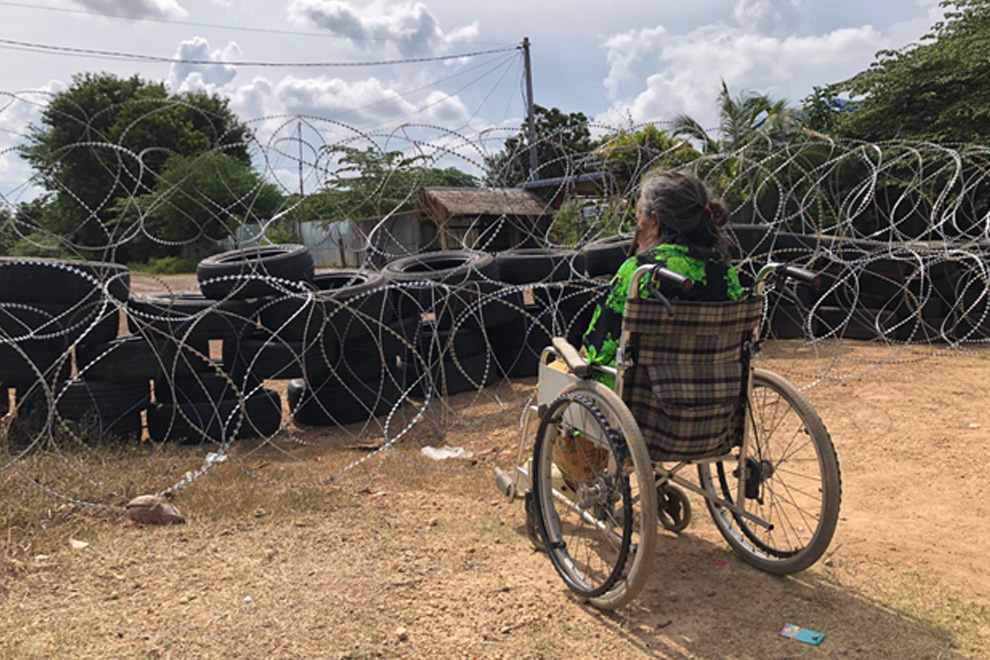
In the little know village of Prey Chan in Cambodia’s Banteay Meanchey province, Neang Choeun sits in her wheelchair, her eyes fixed on the barbed wire and tyre barricades that now mark the edge of her world.
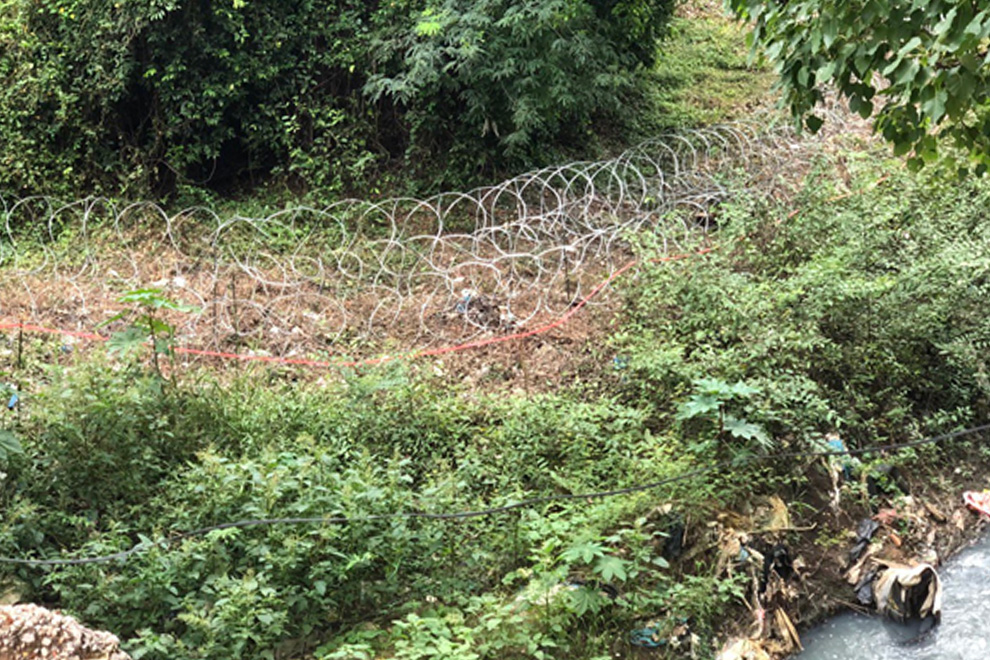
The 60-year-old grandmother has called this land home since 1983, a time when she cleared landmines with her own hands to carve out a life here. Now, Thai soldiers have forced her and five other families from their homes, erecting barriers that slice 200 to 300 metres into Cambodian territory.
The air is heavy with uncertainty, and Neang’s voice trembles with both sorrow and defiance.
“I have lived here since 1983. I am missing home and fear that my land will be taken,” she says, her hands gripping the arms of her wheelchair.
“They came and chased us away from our homes. The land I had cleared landmines from since the earliest days of our simple lives in this quiet village,” she continued.
The border between Cambodia and Thailand, long a flashpoint of tension, has erupted again. On July 24, gunfire shattered the still air at Ta Mone Thom temple and other areas along the border in Oddar Meanchey and Preah Vihear provinces.
Thai soldiers forced people in Prey Chan and nearby Chok Chey villages to flee their homes.
Since then, they have crept in and out of the village three times, until finally, six homes were blocked off with permanent barriers by Thai soldiers.
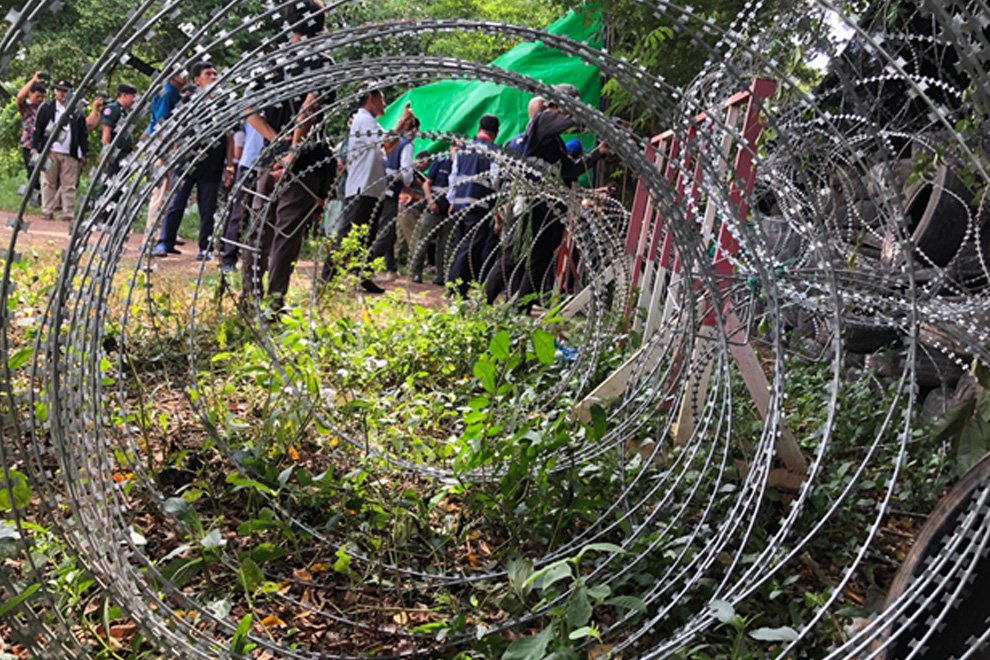

By July 29, the guns fell silent, thanks to a fragile ceasefire brokered after phone calls between the two nations’ leaders with US President Donald Trump, whose influence loomed large, thanks to threat of tariffs. But the quiet was deceptive. The Thais continued to lay barbed wire in many locations and now the villagers’ lives hang in limbo.
In Prey Chan, the community is not quiet. They gather not just to survive but to stand guard.
Nang Pov, a wiry villager in her 50, speaks for many when she says, “We dare not go anywhere, fearing further encroachment by the Thais.”
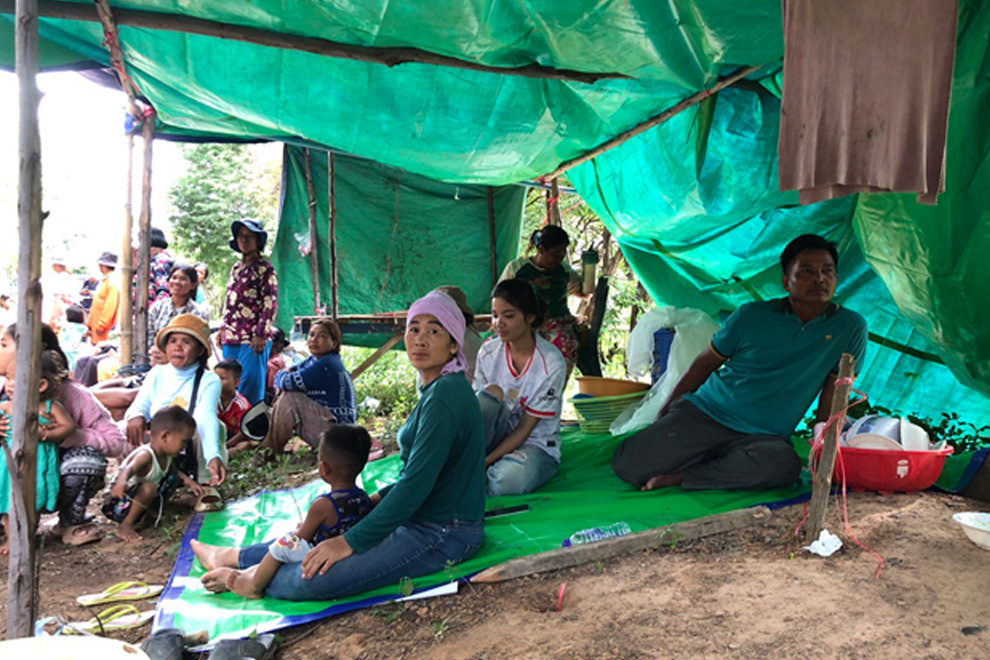
Jobless amid the border tensions, the villagers have become sentinels, watching the Thai soldiers’ every move. The barbed wire, reinforced with car tyres, is a constant provocation, a violation of the August 7 ceasefire agreement.
Even as diplomats and foreign attachés visited the Poipet border checkpoint, Thai forces continued their advance, undeterred by the presence of the ASEAN Interim Observer Team’s on August 14.
The human toll is stark. Oum Reatrey, governor of Banteay Meanchey province, paints a grim picture of the crisis.
Twelve families — 59 people, including four with disabilities, six children, two pregnant women and several elderly — have been displaced from Prey Chan and Chok Chey.
“Thai soldiers destroyed Cambodian border police posts and pushed the police and people out. Cambodian forces did not response with violence, out of respect for the ceasefire,” Reatrey told reporters on August 15.
“Our armed forces are here, and they are not afraid, but we have to think about safety of our people, and we respect the ceasefire,” he added.
Also contributing to the perception of Thai breaches of the ceasefire is the continued detention of 18 Cambodian soldiers who were captured on July 29, after the ceasefire came into effect.
The Cambodian military has accused Thailand of abducting their soldiers. Thailand first claimed the men were arrested for immigration violations, only to reclassify them days later as prisoners of war, a move that deepened the distrust.
While Cambodia is now relying on international pressure to ensure peace — either through legal measures, ASEAN mechanisms or the US administration of Trump, who Cambodia nominated for a Nobel Peace Prize — Thailand seemingly continues to provoke the Kingdom by breaching the conditions of the fragile peace.
For Neang Choeun and her neighbours, the barbed wire is more than a physical barrier — it’s a threat to their very existence. The land they tilled, the homes they built, the lives they forged after decades of war are at risk.
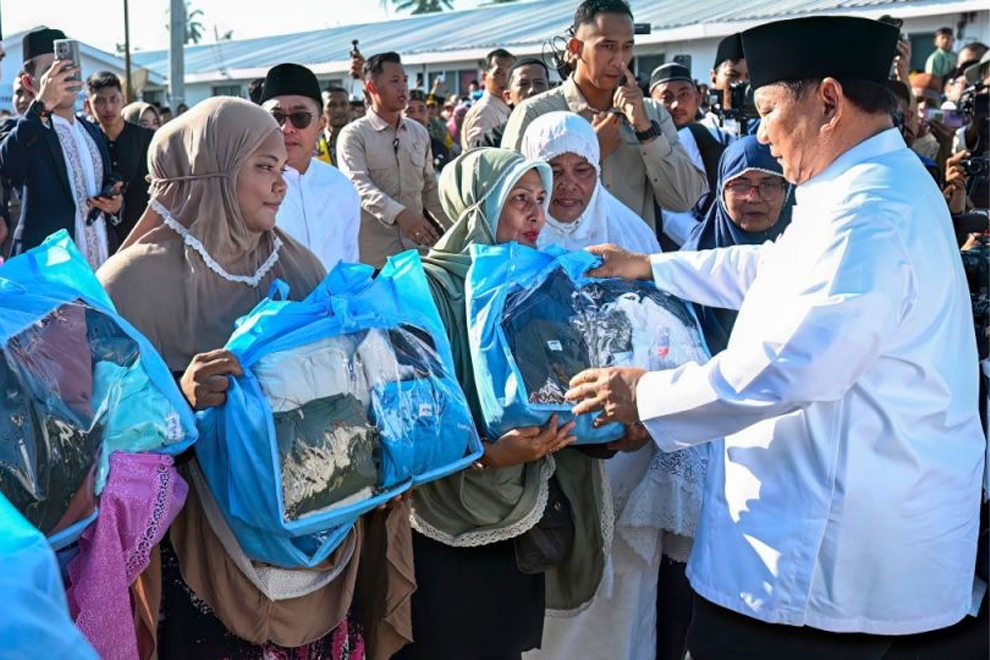
The Cambodian government has stepped in, providing aid to the displaced, but the uncertainty gnaws at them. Will their homes be lost forever? Will the ceasefire hold, or will the border flare up again?
As the sun sets over Prey Chan, the villagers keep their vigil, their silhouettes stark against the glint of barbed wire. The silence is not peace — it’s a pause, fragile and fraught. For Neang and her community, the fight for home is far from over.