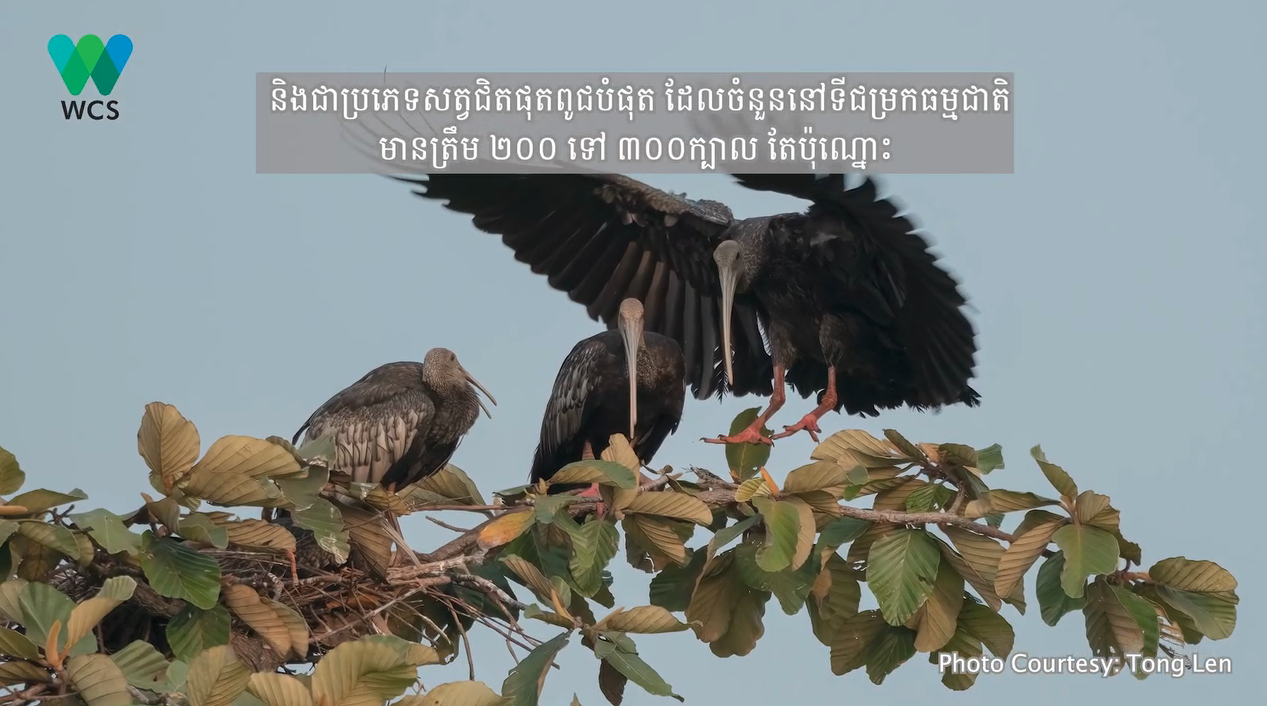
Three nests belonging to the giant ibis (Pseudibis gigantea) — Cambodia’s national bird and one of the world’s most endangered species — have been discovered by communities in and around the Keo Seima Wildlife Sanctuary so far this year. Of them, two successfully hatched three chicks in 2025.
The Keo Seima REDD+ Project reported that in 2025, community members discovered three giant ibis nests. Unfortunately, one of the nests was destroyed after falling from a tree, so only two successfully hatched chicks.
The three chicks fledged and flew from their nests following this year’s breeding season, a result which was described as showcasing the positive outcomes of WCS Cambodia’s bird nest protection programme.
Through financial support from the Keo Seima REDD+ project, local communities have become part of Cambodia’s endangered species conservation efforts, playing an essential role as guardians of the nests, from the moment the birds prepare to nest until chicks hatch and fly out of the nest.
WCS Cambodia works actively with local communities and other relevant stakeholders to safeguard this rare species and raise awareness about the importance of Cambodia’s natural resources. Wildlife conservation is vital for biodiversity studies and also protects the forest ecosystems that sustain wildlife and local communities.
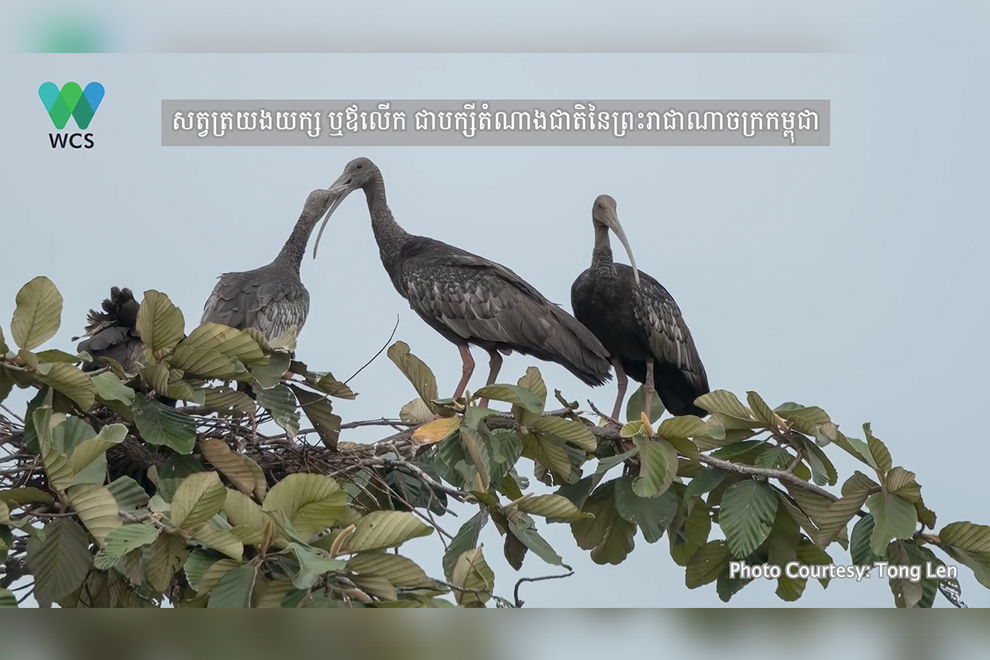

The giant ibis, the national bird of Cambodia, is listed as critically endangered on the IUCN Red List, with only 200 to 300 remaining in the wild. Cambodia has the world’s largest population of the rare birds, accounting for 90% of the world’s population.
The breeding season of the giant ibis in Keo Seima Wildlife Sanctuary is from May to September.
The Keo Seima REDD+ Project, launched in 2010, covers 166,983 hectares of forest within the more than 300,000-hectare Keo Seima Wildlife Sanctuary, located in Mondulkiri and Kratie provinces. This project was the first in Cambodia to receive funding through the sale of carbon credits on the international market.
The funds are used for natural resource conservation within the sanctuary and to support community development initiatives. The project is overseen by the Ministry of Environment and implemented by WCS Cambodia.